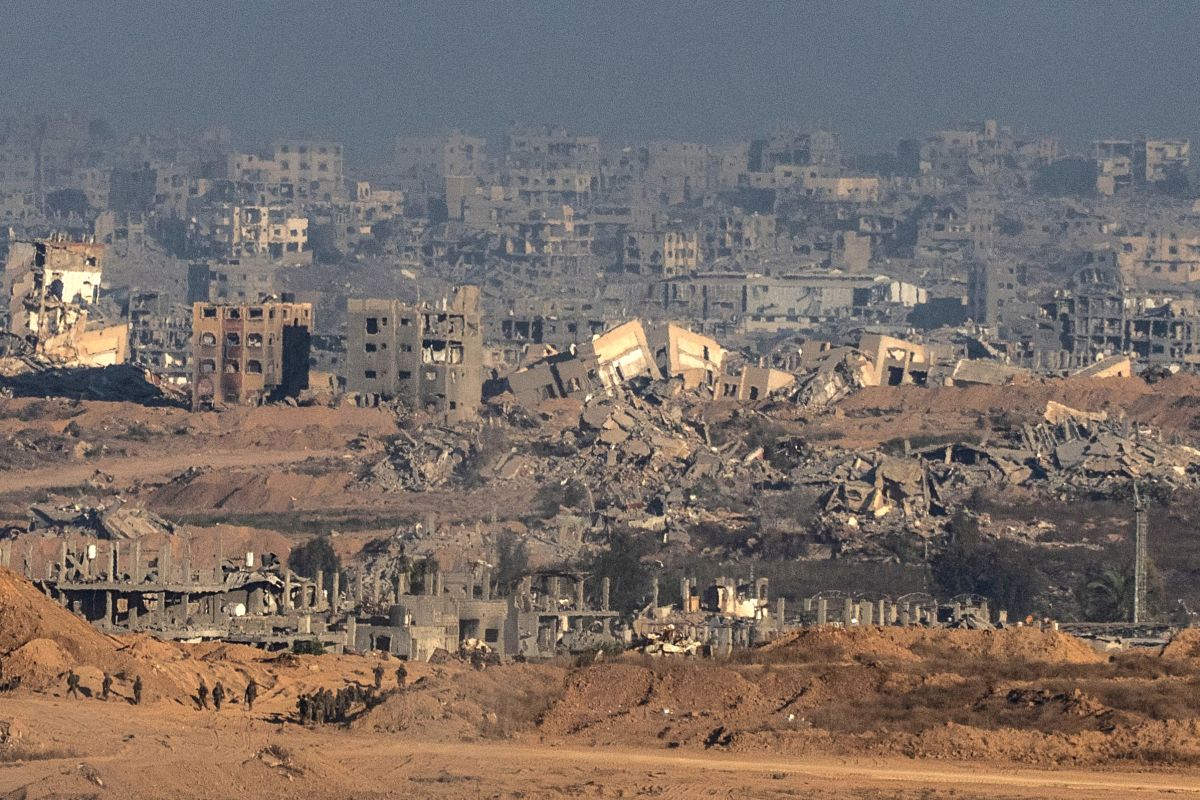
This photo, taken from a point near the border of Israel with the Gaza Strip, shows Israeli soldiers and vehicles inside the besieged territory on July 6, 2025. (Credit: Maya Levin/AFP)






The Tony Blair Institute (TBI) is reportedly involved in Gaza reconstruction planning, according to the Financial Times. Two of its staff members participated in discussions with Boston Consulting Group representatives and Israeli businessmen around a controversial proposal called The Great Trust.
This roadmap — with “Great” standing for Gaza Reconstitution, Economic Acceleration and Transformation — was presented by two Israeli businessmen. It includes proposals to rebuild Gaza and potentially relocate up to 500,000 Palestinians. BCG contributed by developing financial models estimating a $9,000 relocation fee per person and forecasting that Gaza’s “value” could increase from $0 to $324 billion. The plan involves managing public land through a trust that would sell it to investors using blockchain-based digital tokens.
Logos of companies such as Tesla, AWS, Ikea and IHG appeared in the presentation, though it remains unclear if those firms authorized their inclusion. The project was reportedly shared with the Trump administration, and President Donald Trump himself proposed in February turning Gaza into a U.S.-administered territory, envisioning it as the "Riviera of the Middle East."
According to the Financial Times, two Tony Blair Institute employees were part of an informal working group on The Great Trust. One of them authored a document titled Gaza Economic Blueprint, which proposed turning Gaza into a free-trade hub with artificial islands modeled on Dubai. Unlike the BCG-backed proposal, this plan did not include any forced displacement of Palestinians.
TBI denied any involvement in developing the final presentation, stating that the modeling was done solely by BCG. However, former UK Prime Minister Tony Blair met with businessman Phil Reilly in London in March 2025 to hear his ideas. Reilly, who founded the private security firm Safe Reach Solutions (SRS) in December 2024, previously worked as a part-time adviser for BCG’s defense division until early 2025.
A $4 million consulting mission by BCG
In October 2024, the U.S. security company Orbis hired BCG to conduct a feasibility study for a new aid delivery mechanism in Gaza, on behalf of the Israeli think tank Tachlit Institute. The first phase, initially presented internally as pro bono work, was later charged to BCG’s Social Impact division for over $1 million.
To avoid accusations of bias, BCG assigned the project to a team based in Washington, excluding any consultants based in the Middle East.
In January 2025, the project entered a new phase when McNally Capital — which has stakes in Orbis and SRS — retained BCG to support SRS operations from Tel Aviv. An eight-week contract was signed in March for over $1 million, with a team of local consultants later expanded in May. Total consulting fees reportedly reached $4 million.
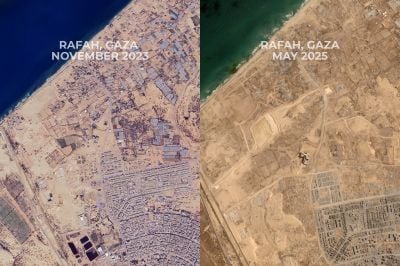
During this period, the Gaza Humanitarian Foundation (GHF) was created to oversee aid distribution in Gaza. BCG supported SRS in logistics and vendor selection, but growing international concern over the GHF’s model led BCG to withdraw from the project on May 25 and refuse further payments.
Despite management orders to disengage, the same BCG team later participated — unpaid — in The Great Trust initiative. BCG has since denied any formal involvement in its financial modeling and stated the work was unauthorized. The firm announced the dismissal of two partners, Matt Schlueter and Ryan Ordway, on June 4.
As President Trump pushes for a cease-fire in Gaza and begins shaping postwar planning, other reconstruction ideas have surfaced. According to Reuters, the GHF proposed creating “humanitarian transit” camps outside Gaza to expel Palestinians. Meanwhile, Israeli Prime Minister Benjamin Netanyahu is reportedly banking on Arab nations to take over governance of the enclave.