





Marc and Debra Tice, the parents of American journalist Austin Tice (portrait on the left), who was kidnapped in Syria more than six years ago, hold a press conference in Beirut on December 4, 2018. (Credit: Joseph Eid/AFP.)






BEIRUT — In the context of an investigation that began more than a year ago for a Radio 4 podcast series, the BBC has discovered secret Syrian intelligence files that allegedly prove that U.S. journalist Austin Tice was indeed imprisoned by the Assad regime.
Former Syrian officials have also confirmed this lead, according to the British media. Tice was working for AFP, McClatchy News, the Washington Post, CBS, and other media when he disappeared in 2012 near Damascus, while Syria had been a war zone for over a year.
Before its fall on Dec. 8, 2024, the Syrian authorities had always denied holding the journalist, dismissing accusations from the American government that claimed otherwise. The BBC claims that the materials it examined — and whose authenticity it has confirmed — provide numerous details on Tice's abduction and what happened to him afterward.
It specifically mentions files titled "Austin Tice" containing communications from different branches of Syrian intelligence, including a communication marked "top secret." According to these materials, Tice was arrested near Daraya, in the Damascus suburbs, and then detained by members of a paramilitary force loyal to President Assad, the National Defense Forces (NDF). A Syrian official confirmed to the BBC that the detention lasted at least until February 2013.
According to testimony, the journalist developed stomach problems and was treated by a doctor at least twice. Blood tests revealed that he was suffering from a viral infection at that time. A former NDF member stated that he had intimate knowledge of the American journalist's detention, telling the BBC that "Austin's value was understood" and that he was used as a "bargaining chip" between Baathist Syria and the United States.
The investigation also revealed that the detainee briefly escaped by slipping through a window in his cell but was later recaptured. He was reportedly interrogated at least twice by a Syrian government intelligence officer. The incident allegedly occurred between late 2012 and early 2013, according to the BBC.
Following the fall of the Baathist regime, then-U.S. President Joe Biden, as well as the NGO Hostage Aid Worldwide, had stated their belief that American journalist Austin Tice was alive, although concrete information about his whereabouts was lacking. The missing journalist's mother had also stated in January, during a press conference in Damascus, that the new leaders had expressed their "determination" to help her find her son.
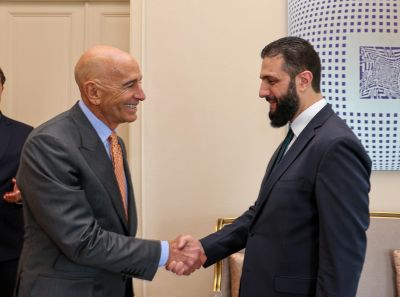
On May 25, the U.S. envoy to Syria confirmed this commitment from the Syrian authority of Ahmad al-Sharaa, who agreed to assist the United States in locating Americans who disappeared during the Syrian civil war.
The Syrian Observatory for Human Rights (SOHR), a U.K.-based monitoring group, estimates that 100,000 people have disappeared under the Assad regime.

 Evening recap: Netanyahu announces West Bank offensive; 7 killed in Jordan church shooting; tents burned in south Lebanon
 US strike on Iran this weekend? ‘Absolutely,’ says Barrack; ‘I have no idea,’ says Trump