






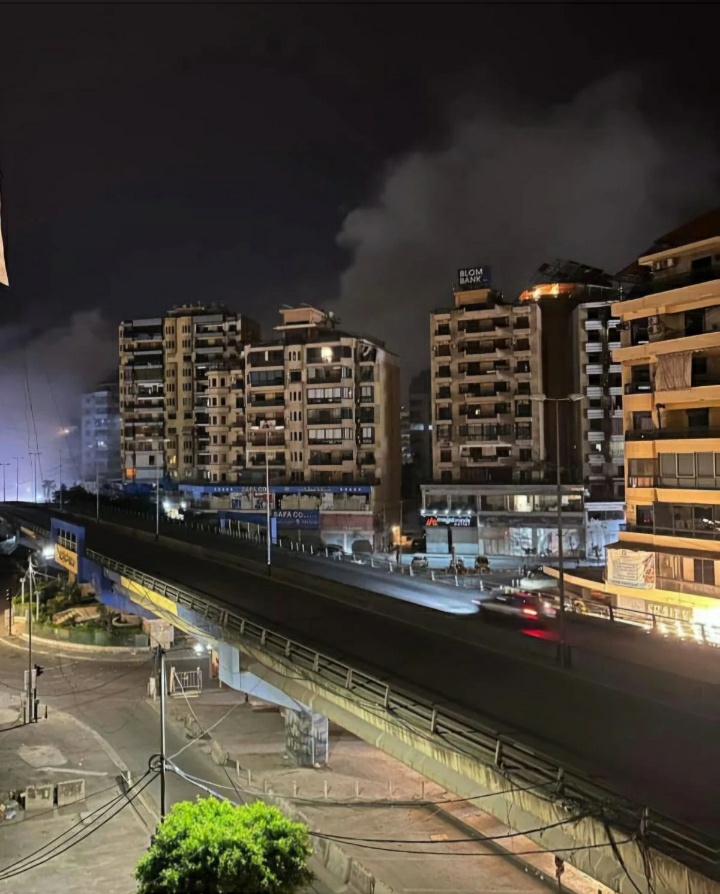
Photo circulating online shows smoke rising from the site of the strike early morning April 1, 2025.






BEIRUT — Around 3:30 a.m. Tuesday, Israeli jets bombed the Sfeir neighborhood of Beirut's southern suburbs without warning and despite a cease-fire in place between Israel and Hezbollah.
The strike killed at least four people and wounded seven, according to a preliminary assessment by the Health Ministry. According to witnesses, jets appeared to have targeted the top three floors of an apartment building near Imam al-Qazem mosque in the Madi Street area.
The explosion was heard in the capital, followed by the sound of fighter jets flying low across the country. A thick cloud of smoke rose over the area and several ambulances and first responders rushed to the scene.
According to L'Orient Today's count, Israel has killed at least 117 people in Lebanon since the cease-fire came into effect on Nov. 27.
A member of Hezbollah
A few minutes later, the Israeli army announced on its Telegram account that its planes had carried out a strike on the southern suburbs of Beirut, “following directives from the Shin Bet [Israeli internal security agency] ... against a Hezbollah terrorist who led Hamas operatives and assisted them in planning a significant and imminent terrorist attack against Israeli civilians.” The army claims that this individual, whose identity it does not specify, “represented a real and immediate threat.”
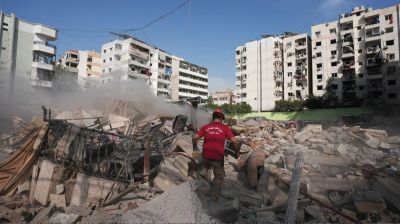
Unlike Friday's strike, this one was carried out without warning. On Friday, Israel bombed Beirut's southern suburbs for the first time since the truce was signed. The attack, for which Israel released an evacuation warning, was less than 100 meters from two schools. The strike was part of a slew of airstrikes and artillery strikes against southern Lebanon that followed unclaimed rocket fire launched from Lebanon targeting Israel — two rockets, one which fell inside Lebanon and the other which was intercepted.
Hezbollah firmly denied any involvement in the rocket fire.
Israeli Defense Minister Israel Katz threatened that the southern suburbs would be hit “at every attempt” to attack northern Israel, while Prime Minister Benjamin Netanyahu said that Israel would strike “everywhere in Lebanon against any threat.”
The following day, Hezbollah leader Naim Qassem deemed it “unacceptable” for Israel to continue its attacks on Lebanon: “If Israel thinks it can impose a new equation by using false pretexts to kill ... attack the South, the Bekaa and the southern suburbs of Beirut, this is unacceptable,” warned Qassem in a televised speech. "We cannot accept Israel attacking Lebanon and acting freely whenever it wants, while we stand idly by,” he added. "This aggression must stop."
During the all-out war between Hezbollah and Israel from September to November, Israel bombed Beirut's southern suburbs almost nightly and usually multiple times in a night. In the first two weeks of its bombing campaign alone, Israel leveled more than 60 buildings in the densely populated area.
Hezbollah has emerged very weak from its war with Israel, during which Israel killed nearly 4,000 people. Under the cease-fire agreement, only the Lebanese Army and U.N. peacekeepers can deploy in southern Lebanon, from which Hezbollah must withdraw. Despite the truce, the Israeli army is carrying out regular strikes in eastern Lebanon and the South.
 8 p.m. recap: Israel again threatens Beirut’s south suburbs; 2 ships hit near Hormuz; Riyadh football matches canceled