






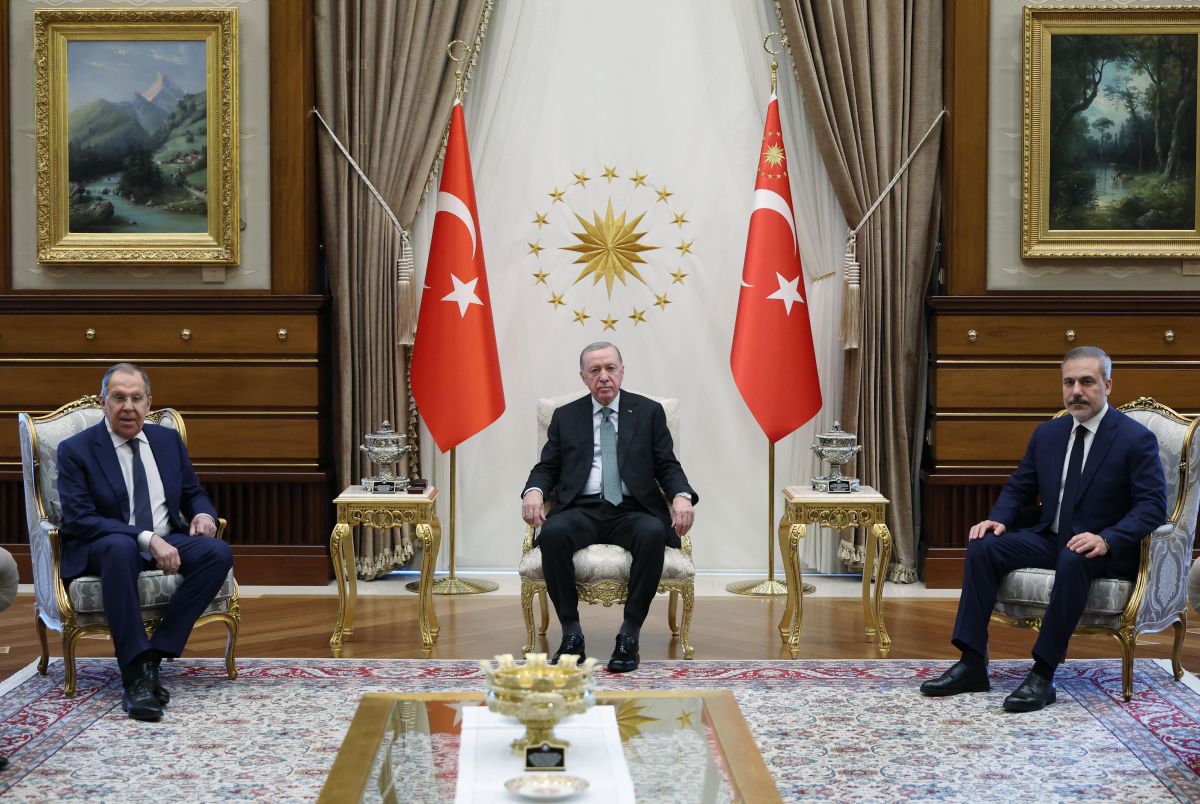
This handout photograph taken and released by the Turkish presidential press service on Feb. 24, 2025, shows Turkish President Recep Tayyip Erdogan (C) meeting Russia's Foreign Minister Sergey Lavrov (L) and Turkey's Foreign Minister Hakan Fidan (R) at the Presidential Complex in Ankara. (Credit: Turkish Presidential Press Service/Handout/AFP)






Iran said Turkey's criticism of its foreign policy risked worsening ties between the neighboring countries after Islamist rebels allied with Ankara ousted Syria's Bashar al-Assad.
In an interview with Al Jazeera in February, Turkish Foreign Minister Hakan Fidan said Iran risked plunging the Middle East into "disorder."
Iran leads the so-called "axis of resistance" against Israel, which includes Hamas in the Palestinian territories, Hezbollah in Lebanon, the Huthi rebels in Yemen and armed groups in Iraq.
It was also the main backer of Assad, who was ousted from power on December 8 following a lightning offensive launched by an Islamist-led rebel alliance with ties to Turkey.
"If this policy continues, I don't think it will be good," Fidan said, accusing Iran of seeking to "create disorder" in the region.
On Monday, Iran hit back, with Assistant Minister of Foreign Affairs Mahmoud Heydari warning against "false statements and unrealistic analysis that could lead to differences and tensions."
Heydari made his remarks during what Tehran described as a meeting with Turkey's ambassador in Iran, Hicabi Kirlangic.
Some Iranian media said the ambassador had been summoned, but the ministry did not describe the meeting thus.
Also Monday, foreign ministry spokesman Esmaeil Baqaei said Iran values "bilateral relations with Turkey very highly," but that the government thought it was key to respond to the minister's remarks "very clearly and decisively."
