






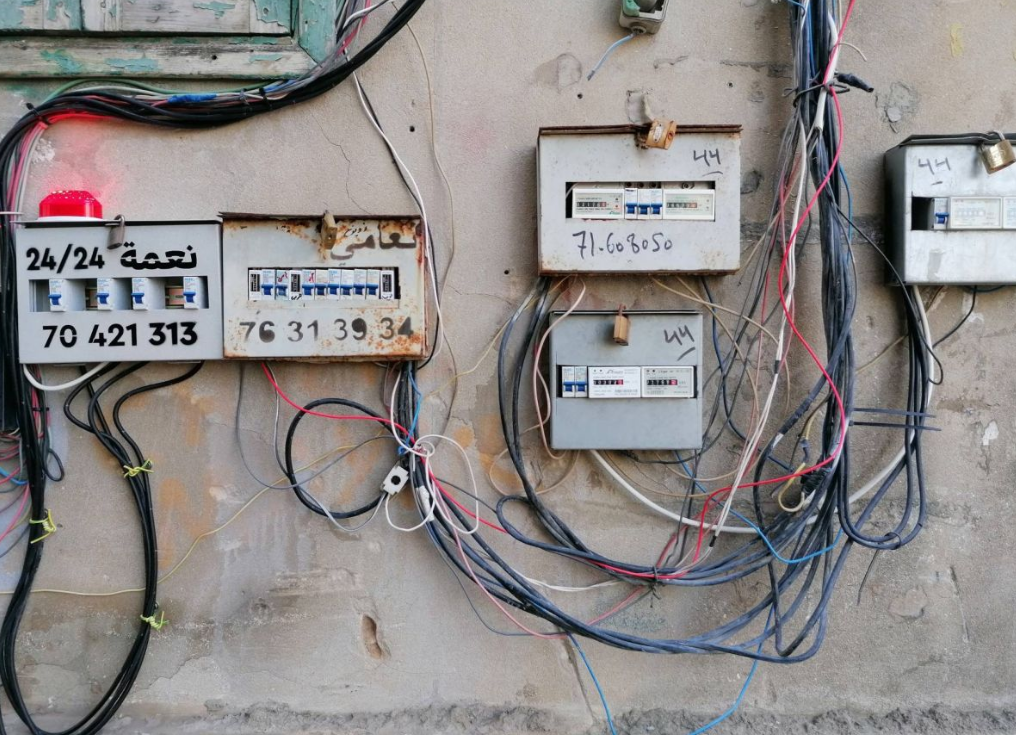
The rates for kilowatt-hours provided by private generators experienced a slight increase in October. (Credit: Fouad Gemayel/OLJ)






The price of the kilowatt-hour (kWh) produced and sold by private or neighborhood electric generators for invoices issued in this first month of 2025 has seen a moderate increase of a few hundred Lebanese pounds, extending the rise that began in December, according to the latest tariff grid published by the Ministry of Energy and Water.
Indeed, following a series of four consecutive months of decline, the tariff had registered its first, albeit slight, increase in December 2024, by about thirty Lebanese pounds.
The tariff now stands at LL 30,436, which is LL 698 more than the December invoices, where it was LL 29,738, representing a marginal increase of 2.35 percent. It equates to $0.34, converted at the rate of LL89,700 per dollar.
This new price is calculated based on an average price of diesel of LL 1,409,783 per 20 liters (+2.87 percent compared to December, for LL 1,370,383). The kWh price is usually increased by 10 percent for operators in mountainous regions (above 700 meters altitude) and/or rural areas, bringing it to LL 33,479 ($0.37).
The other pricing components have not changed. Regarding the fixed fees, for a maximum intensity of 5 amperes (A), the monthly package is still LL 385,000 ($4.29), while that of a 10 A intensity is at LL 685,000 ($7.64), with prices stable for some time now. The ministry also imposes an increase evaluated this month at LL 300,000 ($3.34) for the additional 5 A from 10 A. These tariffs also include a 10 percent margin for the operators.
For installations connected to a three-phase meter (such as elevators), an additional package is calculated based on a base capacity. Thus, for an elevator installed with three phases capable of supporting 15 A each, the generator owner should only charge LL 985,000 ($10.98) and not LL 2,785,000 ($31.05).
Private generators have been tolerated for decades, during which they have established themselves as a stopgap measure against the structural deficit of Electricity Lebanon's production, whose technical and financial limitations prevent it from supplying all its subscribers 24 hours a day, despite a recent overall improvement in its situation.
To calculate their bill, each subscriber must multiply the set price by the number of kWh corresponding to their consumption as recorded on an individual meter, which the operator is supposed to have installed for them, an obligation that came into effect in 2017 but only began to accelerate from October 2018. However, not all operators have complied with the decision and charge subscribers packages, regardless of the number of hours of power supply or consumption. Others require invoices to be paid in dollars.

 8 p.m. recap: Israel again threatens Beirut’s south suburbs; 2 ships hit near Hormuz; Riyadh football matches canceled