


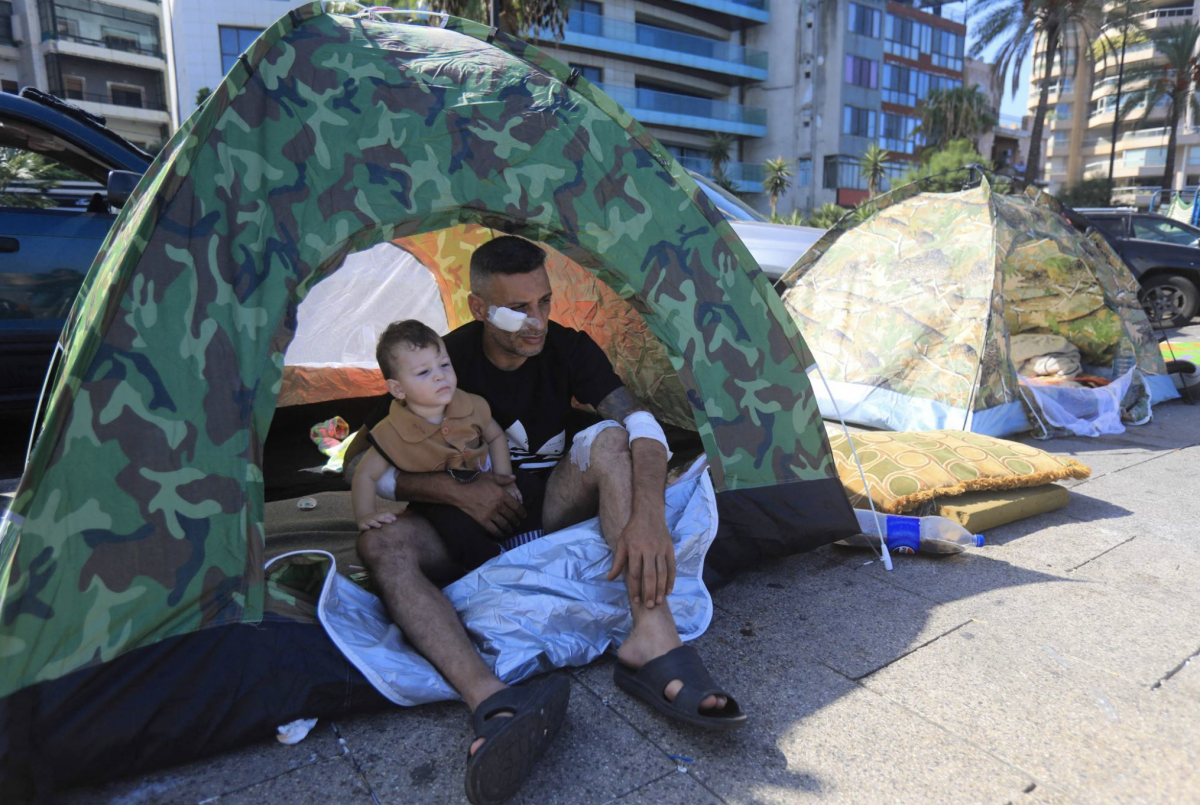
An injured displaced man sits with his child inside their tent in Ain al-Mreisseh, central Beirut, Oct. 7, 2024. (Credit: AFP)






Lebanon and its 600,000 internally displaced people are facing a "catastrophic humanitarian crisis," two U.N. officials warned on Wednesday, as the Israeli army expands its offensive in the south against Hezbollah.
As the Security Council met on Wednesday to discuss the humanitarian situation in the Gaza Strip, and is due to meet again on Thursday to discuss Lebanon, U.N. Special Coordinator for Lebanon Jeanine Hennis-Plasschaert told reporters that "Lebanon is facing a conflict and humanitarian crisis of catastrophic proportions."
Relaying the exhortations of the international community, led by Western states and U.N. Secretary-General Antonio Guterres, she expressed "the hope that Israel will now be willing to support the many calls" for de-escalation.
But Israeli Prime Minister Benjamin Netanyahu threatened Lebanon on Tuesday with "destruction and suffering like we see in Gaza" if it doesn't "free itself" from Hezbollah.
Since October 2023 and the start of cross-border exchanges of fire between Israel and Hezbollah, more than 2,000 people have been killed in Lebanon, including almost 1,200 since Sept. 23, according to an AFP count based on official figures.
Imran Riza, coordinator of the U.N.'s humanitarian arm in Lebanon, told reporters at U.N. headquarters in New York that the small Middle Eastern country was facing "one of the deadliest periods" in its history.
He put the number of internally displaced persons in Lebanon at 600,000, more than half of whom are children.
"Even wars have their rules," he said.
Israel's new ambassador to the United Nations, Danny Danon, said that his army was "not targeting civilians" in Lebanon, before adding: "But at the same time, if we discover Hezbollah activities or plans to launch rockets into Israel, we do what any other country would do."
 Israeli army carries out demolition at Jabal Amel School in Houla as strikes continue