



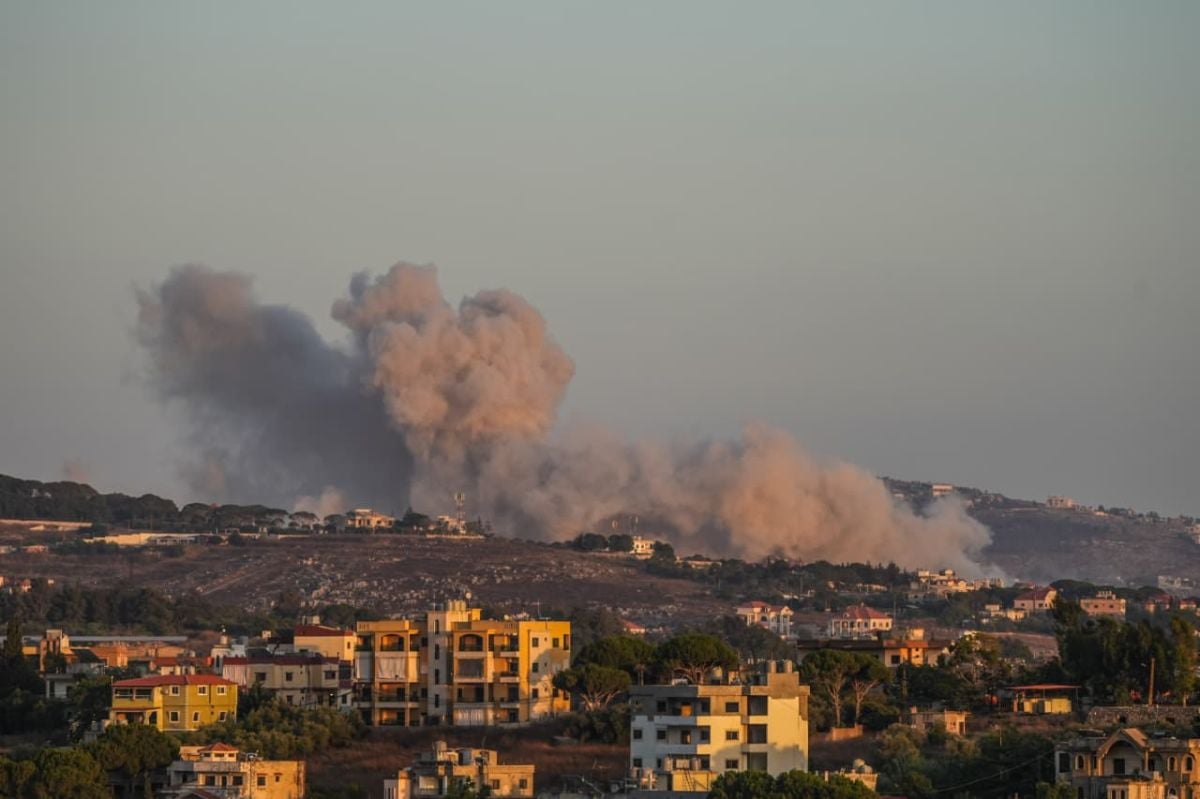
Smoke emanating from a major blasting operation carried out by the Israeli army in the village of Kfar Tibnit, south Lebanon, on July 24, 2026. (Credit: Mohammad Yassine/L'Orient-le Jour)






SOUTH LEBANON — Israeli troops carried out a new wave of demolitions targeting civilian infrastructure, including the water pumping station in the border village of Markaba.
Already targeted on Saturday by five separate demolitions of other buildings, Markaba was once again the scene of widespread destruction affecting several homes in addition to its water station. "This station is among the main facilities that, for decades, have been a fundamental artery for supplying water and pumping it to a large number of southern villages," emphasized the South Lebanon Water Authority in a statement, denouncing a "direct attack on the region’s water security."
"This attack constitutes a flagrant violation of international humanitarian law and all international conventions that prohibit targeting civilian facilities and essential infrastructure," it added.
The Lebanese Army, which has been deployed in the first two pilot zones identified by the framework agreement reached in June between Lebanon and Israel under U.S. auspices, said that "the continued Israeli attacks are preventing the completion of its deployment in accordance with the agreements in effect, delaying the return of residents to their villages and hindering the restoration of stability in southern Lebanon."
In a message published on X, the army directly pointed to the "systematic destruction of homes, leveling operations, bombings, and machine-gun fire in several localities in southern Lebanon," specifically citing the facilities of the National Litani Authority in Markaba, which Israeli forces have been accused of blowing up.
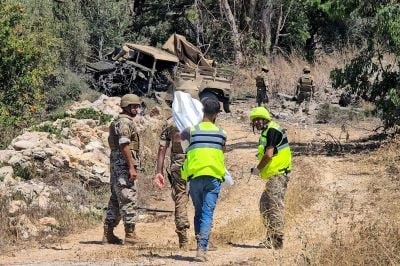
On Saturday, 22 Israeli demolition operations hit houses and civilian facilities in eight villages in the south, according to a tally by our correspondent in the region. The other most heavily impacted localities are Kfar Tibnit (Nabatieh district), which suffered seven demolitions, and Majdal Zoun (Sour), which endured four.
These demolitions continued on Sunday afternoon, with two large-scale blasts carried out in Aitaroun [Bint Jbeil] and Mais al-Jabal (Marjayoun). Meanwhile, Israeli fire targeted Lebanese Army positions in Kfar Tibnit, Nabatieh Fawqa and Zawtar Gharbieh."
Artillery fire and airstrike
The Israeli army had already blown up many other hydraulic and pumping stations, such as those in Marjayoun and Deir Mimas, since the start of its invasion of southern Lebanon, launched after the recent resumption of war on March 2. These systematic destructions of civilian infrastructure are hampering the survival of the thousands of inhabitants still present in villages within or near the more than 600-square-kilometer occupation zone declared by Israel in the south, as well as the prospect of return for the hundreds of thousands of displaced people.
The Israeli army's destruction has not been limited to these demolitions. Overnight, nine localities came under artillery and automatic weapon fire, as well as sonic bomb and illuminating smoke bomb drops. The villages affected by these attacks, occurring daily since the announcement of the last "cease-fire" on June 19, include Khiam, Taybeh, Tallousa (Marjayoun district), Mansouri, Byout al-Siyad (Sour), Haddatha (Bint Jbeil), the hill of Ali Taher, and Kfar Tibnit.
Around 1:30 a.m., Israeli aircraft also carried out two bombings in a raid that targeted the outskirts of the village of Alman, near Qsair, in the Marjayoun district.

The operations continued with another Israeli demolition reported in Haddatha, followed by new artillery fire against Mais al-Jabal (Marjayoun) and the heights of Ali Taher, a strategic hill in the Nabatieh district where the Israelis accuse Hezbollah of having a command center.
Intense fighting took place between the two sides there in the weeks leading up to the recent cease-fire announcement, while Israeli drone strikes and artillery shelling continue to regularly target this area.
Despite the recent resumption of hostilities between Iran and the United States over the past two weeks, the status quo established on the Lebanese front after the June 19 truce and the signing of a "framework agreement" between Lebanon and Israel, remains stable. Systematic destruction and sporadic Israeli strikes have not been met with retaliation from Hezbollah, which drew Lebanon into the war on March 2.
Under this framework agreement between Lebanon and Israel, the first "pilot zones" were reinvested this week by the Lebanese Army in Zawtar Gharbieh (Nabatieh) as well as in Srifa and Froun (Bint Jbeil) in the central sector.
Following the visit of President Joseph Aoun earlier this week to Washington, where he met for the first time with President Donald Trump, Israeli Prime Minister Benjamin Netanyahu will in turn be received at the White House next Tuesday.
In its latest official report, published Friday, the health ministry said it has recorded at least 4,330 killed and 16,566 injured by Israeli gunfire and bombings since March 2.