


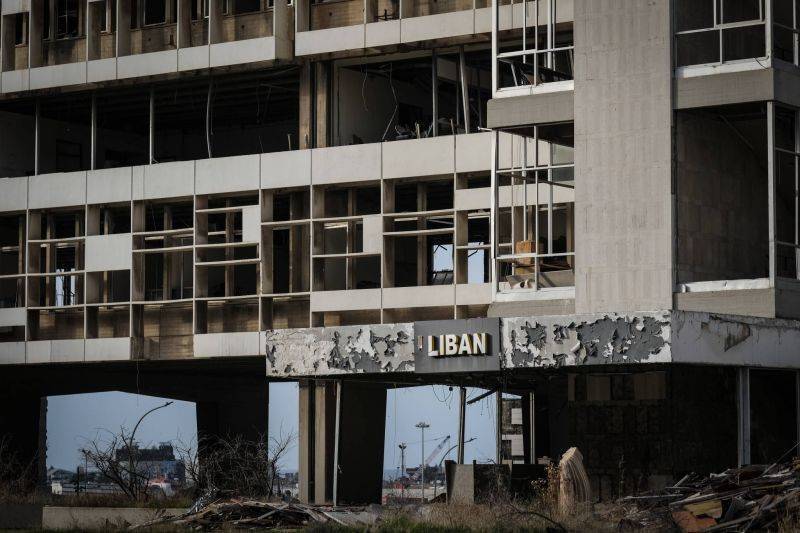
Électricité du Liban headquarters in Beirut. (Credit: João Sousa/L'Orient Today)






Électricité du Liban (EDL) confirmed on Monday that the Deir Ammar power plant, one of the country's two operational power plants, has "temporarily ceased operations" since July 6, while the Zahrani plant has "partially suspended operations" since Sunday due to financial constraints. Despite alarms raised by various parties, a source within the Energy Ministry stated that the plants should be supplied with power again "tomorrow" (Tuesday).
An EDL source told L'Orient Today that the public utility warned that some vital state facilities, including Beirut airport, could face power outages if these constraints are not lifted. "Due to financial disputes involving the Lebanese and Iraqi governments as well as the Central Bank of Lebanon (BDL), EDL was unable to offload the first part of the fuel shipment scheduled for June," the public operator said in a statement on Monday.
According to EDL, the ship carrying the shipment is currently anchored near the Deir Ammar plant, awaiting laboratory test results conducted by Bureau Veritas, whose offices are in Dubai, UAE. The second part of the shipment, which arrived on July 4, is also blocked due to financial holds. This has forced EDL to temporarily shut down the Deir Ammar plant since July 6 and partially suspend operations at the Zahrani plant since July 7. The last operational unit at the Zahrani plant is also expected to cease functioning on July 11 when the remaining fuel stock is depleted, EDL added.
"In response to this critical situation beyond our control, EDL has prioritized supplying electricity to vital facilities such as airports, ports, water pumping stations, sewage systems, prisons, and universities," it emphasized in a statement. The public utility also committed to quickly restoring operations at the affected plants once the financial constraints are resolved and the fuel shipments are unloaded.
An agreement reached in July 2021 and initiated the following September initially provided for the supply of one million tons of fuel oil from Iraq over 12 months. Lebanon intended to exchange this fuel oil for other types compatible with its power plants, as the fuel produced by the Iraqi oil company SOMO does not meet the specifications of Lebanese installations. The primary goal of the agreement, renewed in August 2022, was to partially meet Lebanon's fuel needs.
The Ministry of Energy promises fuel oil by Tuesday
A source within the Ministry of Energy stated that the minister has "intervened with the Iraqis over the past month and especially in recent days while the Lebanese Parliament and the interim governor of the BDL finalize measures to transfer Iraqi contributions to the Iraqi account at the BDL." The source also indicated that "the Iraqi Prime Minister sent a letter dated July 4 to the Iraqi Oil Minister and the Iraqi oil company SOMO to facilitate the loading of the cargo currently awaiting in Iraq, which resolves the (electricity supply) problem for July." According to the director general of SOMO, the Iraqi minister "was supposed to receive clarification from the Iraqi Prime Minister on Monday to validate the content of the letter." The Iraqi oil company estimates that "this will allow the cargo to be loaded by Tuesday at the latest," the source continued. The source finally estimated that "the problem should be resolved by the Iraqi side during the day (Monday), allowing the fuel oil to be unloaded into EDL's power plant tanks by Tuesday." It remains unclear if the cargo from Iraq or the ships anchored near Deir Ammar would be unloaded.
A BDL source told L'Orient Today that the central bank was not involved in the fuel shortage issue. It is not true that the BDL is blocking EDL funds, the source added, noting that "the Ministry of Energy is free to manage its bank account as it sees fit." "However, the problem is that the ministry wants to spend more than its budget or the funds available in its account," the source nuanced.
Reacting to EDL's announcement, caretaker Economy Minister Amin Salam called for "declaring a state of emergency for the energy sector to preserve public security." In a message posted on X, he also called for "taking national and bold measures to accept and implement Qatari energy projects, given that neither private generators nor EDL meets the needs of our public facilities."
Meanwhile, the South Lebanon Water Establishment called in a statement on Monday afternoon to "rationalize water consumption," noting that "electricity rationing will affect the water supply."
Electricity restored at the airport
According to several local media outlets, this issue caused power outages at the airport on Monday. Speaking on the matter, caretaker Public Works Minister Ali Hamieh told al-Jadeed channel that "by noon, power was restored and the air conditioning was working, but it was interrupted for half an hour when relying on private generators."
EDL's power plants regularly run out of fuel, causing chronic electricity shortages in the country and forcing Lebanese citizens to rely on private generators.

 7 p.m. recap: Netanyahu seeks mastermind behind Flydubai incident; Washington sanctions 2 French nationals; Ben Gvir's 'I want to kill you' threat