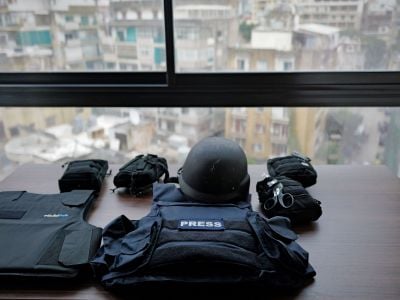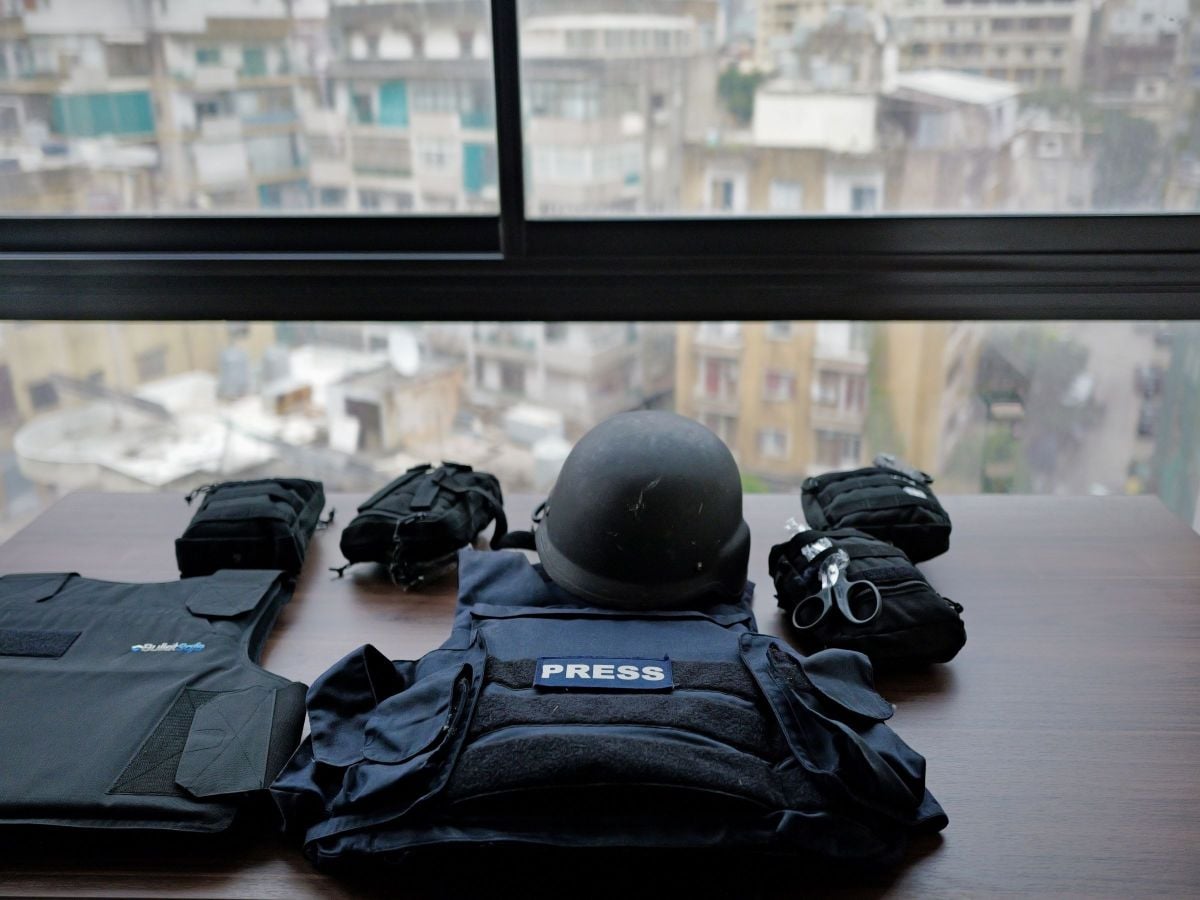
A helmet, first aid kits, and a press vest. (Illustrative photo: Matthieu Karam/L'Orient-Le Jour)






MP Ibrahim Mneimneh, from the protest movement bloc, said Monday that he and several of his colleagues have "presented a draft law to amend certain articles of Law No. 69 on information, adopted last Aug. 27, in collaboration with the Journalists’ Union in Lebanon."
"Our goal is to complete the reform process that began with this law and to amend anything in the text that contradicts its spirit and the goals it serves," he continued.
The other MPs, from protest-affiliated or independent blocs, are Halime Kaakour, Firas Hamdan, Bilal Abdallah, Ossama Saad, Michel Doueihy, Marc Daou, Najat Saliba, Melhem Khalaf, and Yassine Yassine.
The vote on this long-awaited law in August 2026 was widely praised, but some articles remained problematic, particularly Article 104, which maintains prison sentences in certain specific cases. Trade unions and organizations such as Amnesty International have considered this point a direct threat to journalists and freedom of expression. Several other points were also debated.
While recognizing the significant progress made with this law, Mneimneh said that "the proposed amendments are based on a clear principle: it is not possible to include in the law an approach intended to end the criminalization of opinion, while simultaneously retaining vague provisions or legal avenues that allow for the reinstatement of such criminalization by other means."
More specifically, the amendment proposal concerns three points, according to him: Article 104, "which criminalizes the deliberate publishing of what has been called false information or defamation"; Article 105, aiming "to clearly state all penalties that no longer apply to journalists in the course of their work"; and Article 114, "in order to reinforce safeguards in the event journalists are questioned, which should be limited to specialized judges."
For the MP, such amendments would cement the progress achieved by this law in terms of freedom of expression, while guiding investigations in cases of real intent to incite hatred, discrimination or violence.