

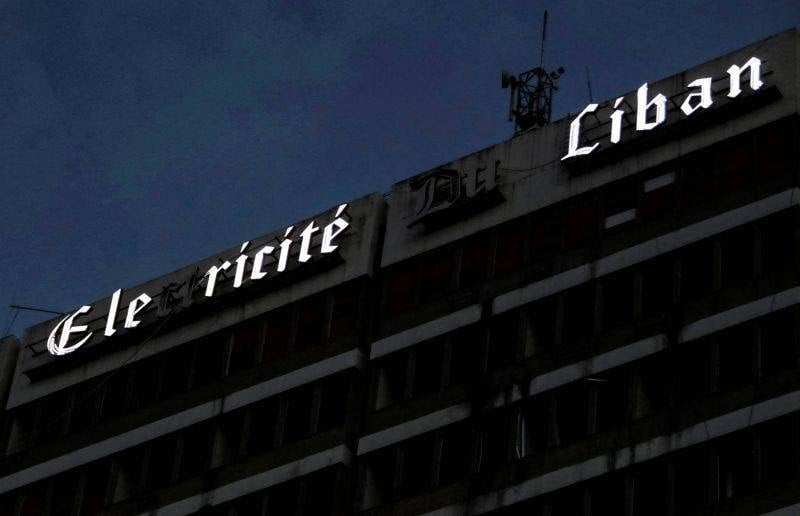
Electricité du Liban (EDL) headquarters in Beirut, April 3, 2021. (Credit: Archive photo Anwar Amro/ AFP )






BEIRUT — The Cabinet on Thursday appointed Nassib Nasr as chairman of the board of Electricité du Liban (EDL), while keeping Kamal Hayek as general manager of the state-run utility.
Lebanon’s electricity sector remains one of the country’s main structural challenges, despite some improvement in supply in recent years. EDL continues to face aging infrastructure, significant funding and maintenance needs, as well as losses that weigh on its finances.
Public electricity production remains insufficient to ensure a continuous power supply across the country, forcing households and businesses to rely on private alternatives. The government is therefore seeking to strengthen EDL’s capacity and improve its management, with reform of the sector having been a central condition for the sustainable restoration of public electricity service for years.
Following the Cabinet meeting, Information Minister Paul Morcos also announced that Jocelyne Jabbour had been appointed secretary-general of the Higher Council for Privatization and Public-Private Partnership, while Professor Hiyam Ishac was appointed head of the Center for Educational Research and Development (CERD).
Morcos also said that “the launch of the investment project in the North economic zone was approved, on the condition that the land investor assumes all costs.” Established in 2008, the special economic zone in Tripoli has returned to the spotlight in recent months. It is intended to host industrial, logistics and export-oriented activities under more favorable tax, customs and administrative conditions. The zone is intended to serve as a lever for the economic revival of Tripoli, Lebanon’s second-largest city and one of its poorest, by providing a more competitive regulatory and economic framework to attract investment, support productive sectors and promote more balanced regional development.
Morcos also said that “the Council continued to examine articles of the draft general budget and will continue its review at its next session.”
During the meeting, Finance Minister Yassine Jaber presented the efforts undertaken by his ministry that resulted in an agreement with public-sector representatives on salary increases for civil servants. The Cabinet approved the inclusion of the increases in the 2027 budget, which is currently being discussed by the government. The increases will amount to the equivalent of six months’ salary in total, based on their value in Lebanese Lira at the 1,500-to-the-dollar rate: three months will be granted at the beginning of 2027 and another three at the end of August. The necessary funds have been set aside for this purpose in the draft 2027 budget. The increases are in principle in addition to those already approved since the state began adjusting public-sector salaries in 2022.
Health Minister Rakan Nasreddine, for his part, said the government had discussed the cases of Lebanese nationals detained, missing or subjected to enforced disappearance in Israeli prisons. He said the Cabinet had reviewed a report prepared by the Lebanese National Human Rights Commission. Deputy Prime Minister Tarek Mitri was tasked with following up on the matter with Lebanon’s ambassador to Geneva so that it can be brought before the U.N. Human Rights Council, Nasreddine added.
