


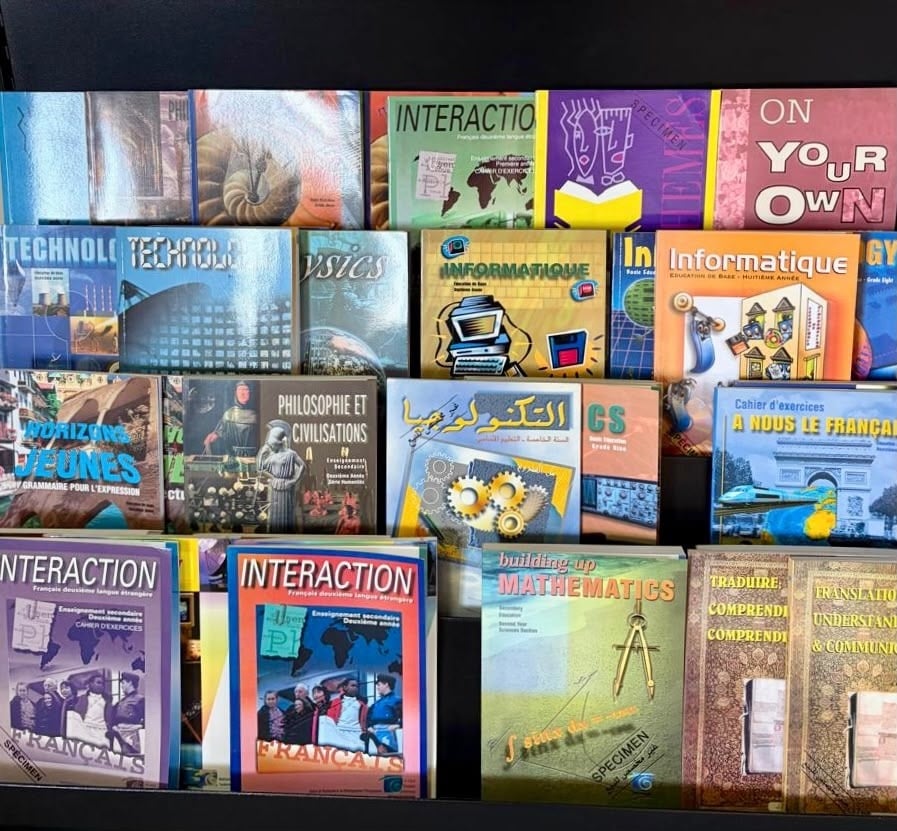
In the library of the Center for Educational Research and Development (CRDP), official school textbooks in Arabic, French, and English, on Sept. 9, 2026. (Credit: Anne-Marie Hage/L'Orient-Le Jour)






On July 15, after around 30 years of unsuccessful efforts, Lebanon’s government unanimously adopted a reform of the national school curriculum. The decision marked a major step for the Education Ministry but has sparked an outcry among historians.In elementary school, history will now be taught as part of human and social sciences, alongside geography, sociology, economics and administration. All these subjects will be grouped into a single textbook. Critics fear that history will be diluted and national memory neglected as a result.Under Decree No. 3445, the new curricula prioritize a competency-based approach over the previous goal-based method. Educational cycles will last two years instead of three; citizenship will be treated as an essential component and, to promote cross-disciplinary learning, subjects will be grouped into broader...
On July 15, after around 30 years of unsuccessful efforts, Lebanon’s government unanimously adopted a reform of the national school curriculum. The decision marked a major step for the Education Ministry but has sparked an outcry among historians.In elementary school, history will now be taught as part of human and social sciences, alongside geography, sociology, economics and administration. All these subjects will be grouped into a single textbook. Critics fear that history will be diluted and national memory neglected as a result.Under Decree No. 3445, the new curricula prioritize a competency-based approach over the previous goal-based method. Educational cycles will last two years instead of three; citizenship will be treated as an essential component and, to promote cross-disciplinary learning, subjects will be grouped into...

 7 p.m. recap: Sharaa in Riyadh; Qassem signals openness to cooperation; Ben-Gvir: ‘We demolish, again and again’