





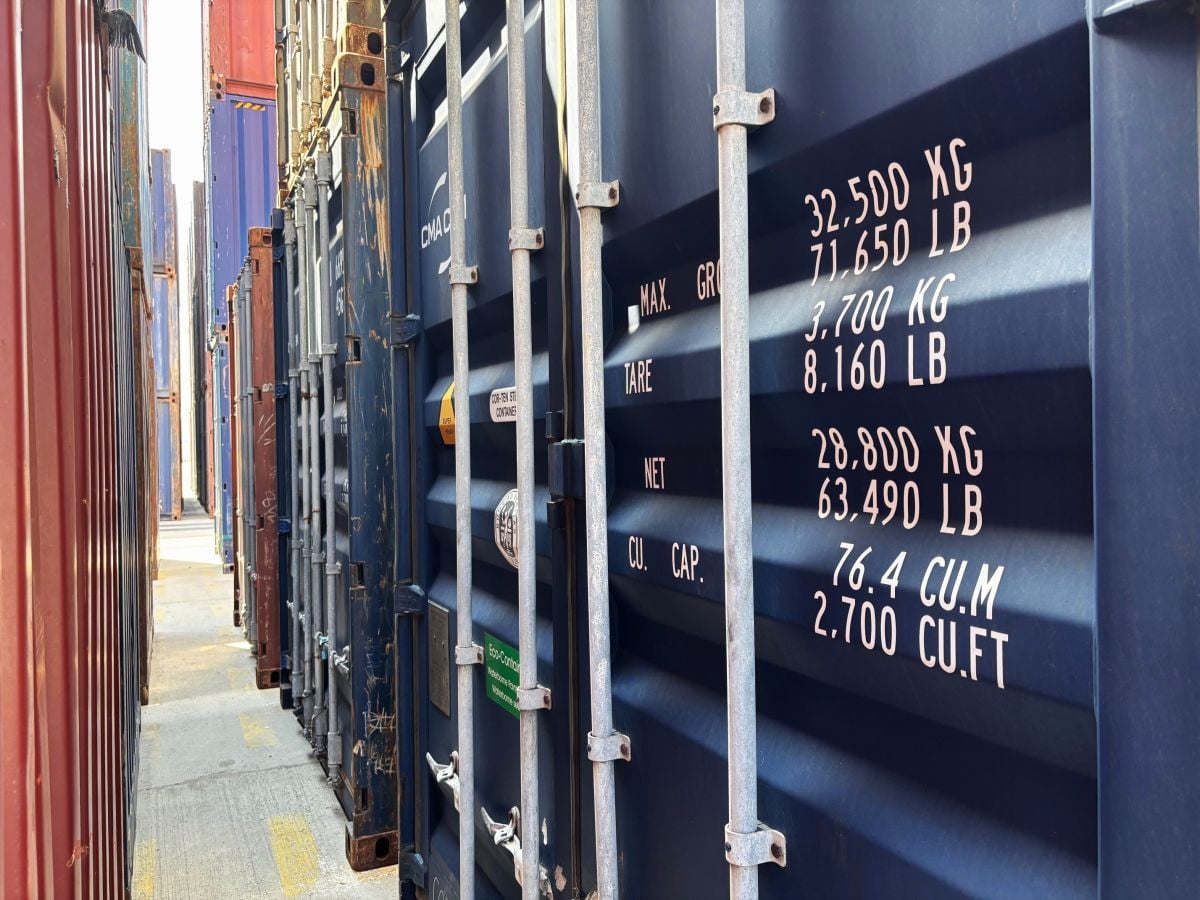
Containers stored in a storage area in northern Lebanon. (Credit: Philippe Hage Boutros/L'Orient-Le Jour)






Dropping from 50.7 points in July to 50.1 in August, the Purchasing Managers' Index (PMI), which measures the morale of purchasing managers at 400 companies in Lebanon, slipped by a few tenths of a point without falling below the 50-point threshold that marks the boundary between expanding and contracting activity, according to the monthly survey published by BLOM Bank.
This drop, however, breaks a trend that had seen it progress — though modestly — for four consecutive months, despite a tense environment marked by the regional war between Israel and Iran and its impact on energy prices, as well as the war between Israel and Hezbollah in Lebanon.
Fadi Osseiran, former CEO of Blominvest and now special adviser to the parent company BLOM Bank's management, attributed this trajectory to "uncertainty, security concerns, and price pressures, all of which weighed on demand." He also said that the weakness of the tourism sector and the sluggish performance of goods exports, in a challenging regional market, probably contributed to the decline in both output and the PMI, adding that the coming months will likely be no brighter.
"The economy seems doomed to stagnation, with the risk of even regressing to lower levels by fall. And, unfortunately, its fate remains tied to internal and regional wars at a standstill, as well as the difficulty in energizing the process of reforms and structural adjustments," he concluded.
The sub-indices making up the PMI showed fairly different trends. The one measuring output declined from 50.5 in July to 49.9 points in August, and the new orders sub-index went from 50.4 to 49.6, both following a similar trajectory in absolute value. However, the new export orders sub-index, which was already low last month, actually recovered, rising from 40.4 to 45.7, suggesting a modest rebound in foreign trade battered by war and the rising cost of maritime transport. The 12-month outlook among purchasing managers picked up several points but still reflects prevailing pessimism, rising from 35.6 to 39 points.
The World Bank expects Lebanon's GDP to contract by 6.4% in 2026, according to the latest edition of the Lebanon Economic Monitor, published in August. This estimate aligns with that of the Finance Ministry in the draft state budget for 2027, currently being reviewed by the government.

 Evening recap: Netanyahu announces West Bank offensive; 7 killed in Jordan church shooting; tents burned in south Lebanon
 US strike on Iran this weekend? ‘Absolutely,’ says Barrack; ‘I have no idea,’ says Trump