


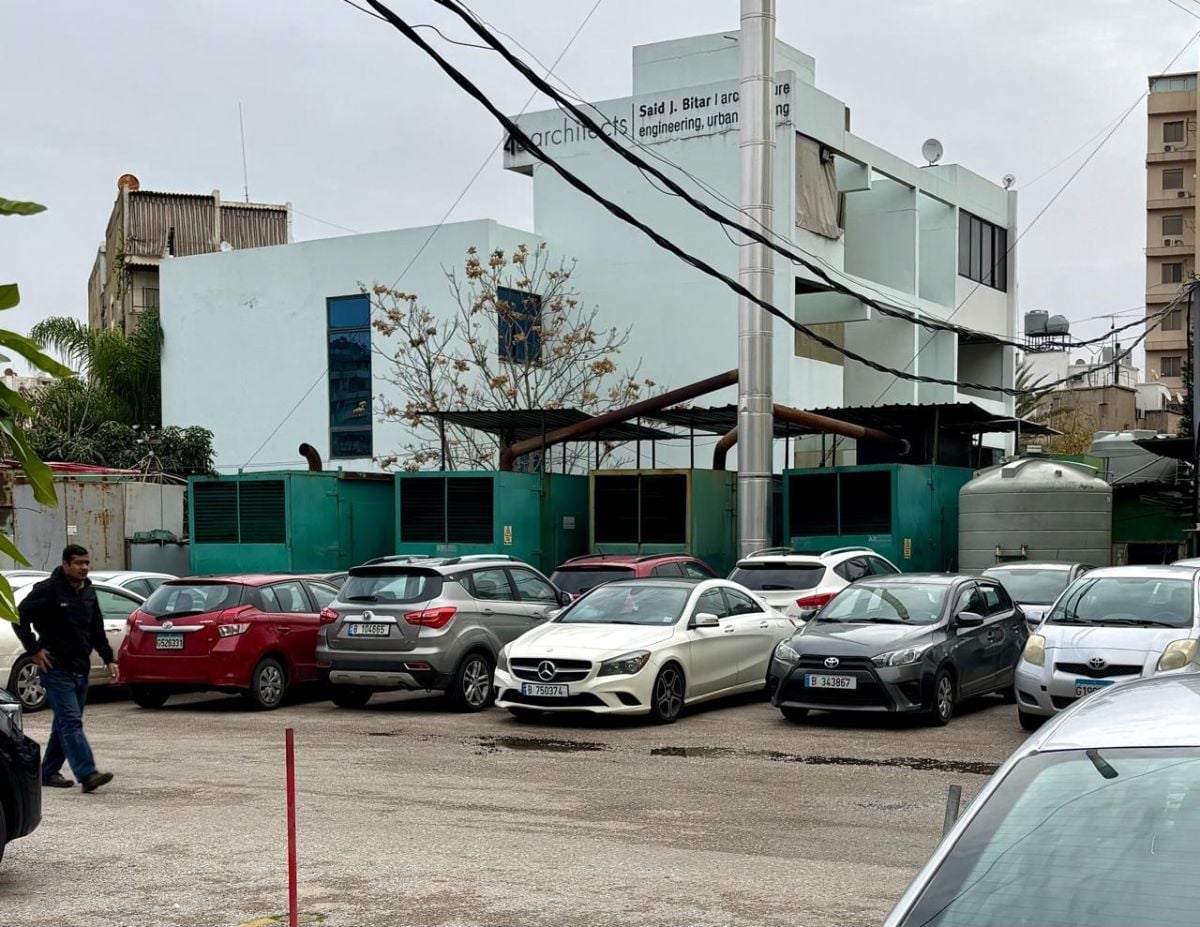
Neighborhood generators installed in Ain al-Rummaneh, Beirut, on Jan. 30, 2026. (Credit: Philippe Hage Boutros/L’Orient-Le Jour)






The Energy and Water Ministry has set the price of one kilowatt-hour to be billed to private generator subscribers in Lebanon at 48,241 Lebanese liras, or nearly $0.54.
These rates have risen by nearly 10 cents, or 19%, compared to those set for July bills. This increase also ends three consecutive months of decreases in May, June and July. As a result, the bill is likely to be very steep for many households during this summer period, when air conditioners run continuously, especially since Electricite du Liban experienced a sharp drop in production in August due to a delay in fuel supply.
The kWh price had not been this high since last April, the second month of the war between the United States and Iran, which had driven hydrocarbon prices up. It is almost 60% higher than the LL30,244 per kWh (almost $0.38) billed in February.
The price of a diesel can taken into account by the Ministry is LL2,415,495, or nearly $27, also a significant increase compared to July’s $22.2, representing a 22% jump. The price per ton of mazout, also set by the Ministry, rose from $1,183.25 to $1,270.04 between the end of July and the end of August, an increase of only 7.3%, a gap related to a difference in calculation methods between the two tables.
There is still no change, however, regarding the other terms of the grid: the price of kWh must still be increased by 10% in remote or sparsely populated areas, the fixed fees remain the same — LL385,000 ($4.29) for a monthly package of 5 amperes (A); LL685,000 ($7.64) for 10 A; and an additional LL300,000 ($3.34) for each additional 5 A increment — and an installation connected to a three-phase meter should not be billed three times.
The exchange rate used by the Ministry remains set at LL89,700.
