


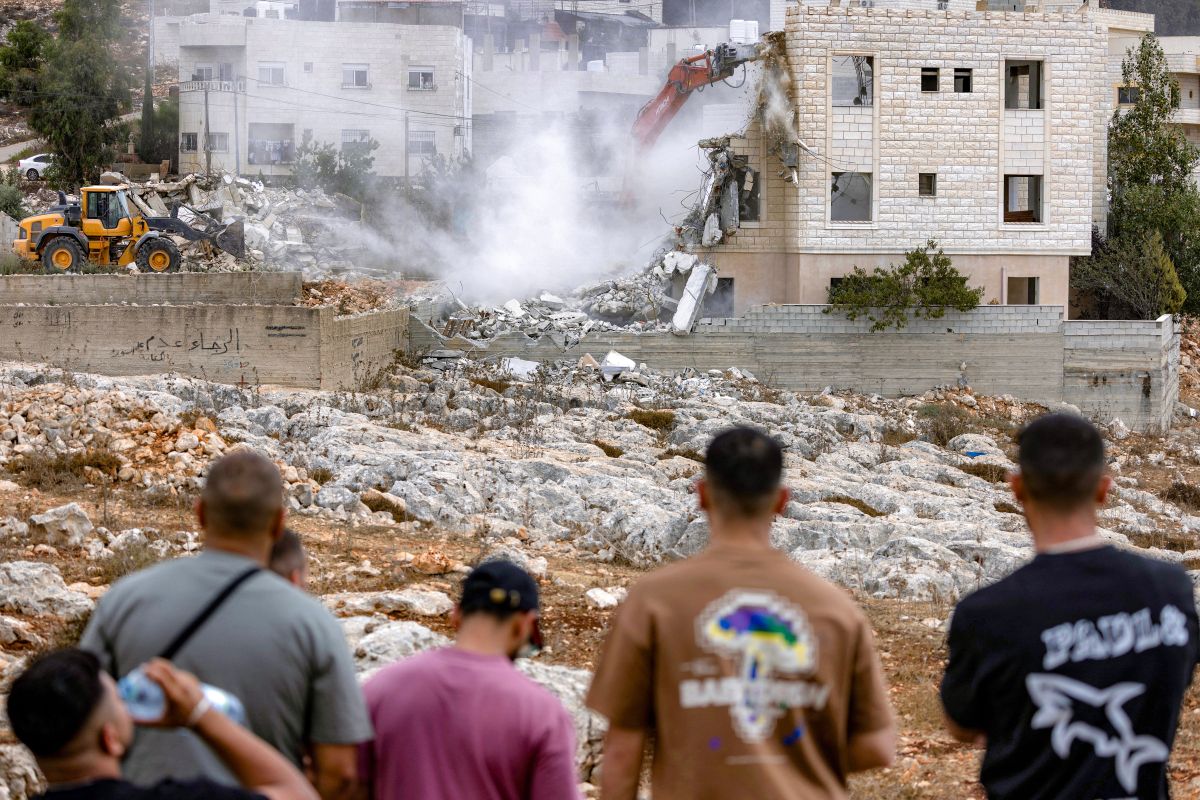
Palestinians watch as an Israeli army bulldozer demolishes a Palestinian building on the outskirts of Nablus, in the Israeli-occupied West Bank, on Aug. 31, 2026. (Credit: Jaafar Ashtiyeh/AFP)






Israeli authorities inaugurated a new settlement, named "Noa," on Monday south of Jenin in the northern occupied West Bank, according to various Israeli and Palestinian local media reports.
This settlement is located south of the Ganim and Kadim settlements, two illegal outposts evacuated by Israel in 2005 as part of the "disengagement" plan, but recently reoccupied by new settlers.
An inauguration ceremony was held Monday, attended by several Israeli ministers and members of parliament. According to Israeli media, the first families have already settled on the site, and the first residential buildings were inaugurated on Monday.

According to the Palestinian news agency Wafa, the creation of this new settlement "threatens Palestinian agricultural lands and further contributes to the fragmentation of communities in the Jenin governorate."
"Noa" is part of a group of 34 settlements whose creation was approved by the Israeli security cabinet on March 25, 2026. It is listed as a new settlement south of Ganim and Kadim, on land registered by Israel as "state land." These 34 projects are in addition to 68 other settlements whose creation or legalization the government of Benjamin Netanyahu had already decided upon since taking office, bringing the total to 102, according to the Israeli anti-settlement organization Peace Now.
The "Noa" project is part of a wider push for settlement in the northern West Bank. The Israeli opposition media outlet Haaretz revealed at the end of July that Avi Bluth, commander of the Israeli army's central sector, had signed 15 land requisition orders to create a connection between Noa and another new settlement, named "Emek Dotan." Some of the affected land is in Area A, which, according to the Oslo Accords, should theoretically be under full civil and security control of the Palestinian Authority.
The pace of Israeli settlement in the occupied West Bank has intensified further since the start of Israel's genocidal war on Gaza in October 2023. According to the Israeli organization Peace Now, Israeli settlers have established at least 26 outposts in Area B of the West Bank over the past two and a half years, including 19 since the end of 2024, most within the last few months.
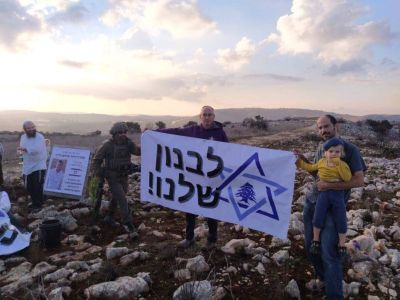
Peace Now also estimates that settlers have taken control of more than 10,000 hectares in Areas A and B, including 5,500 hectares in Area B. The organization also reports that violence and threats have been used to restrict Palestinian access to their lands and, in some cases, to force families to leave their homes.
In Qusra, in the Nablus governorate, the establishment of a new outpost in Area B on Aug. 9, near three Palestinian households in the Ras al-Ain area, was followed by increased presence of Israeli forces and settlers, damage to water and electricity infrastructure, and restrictions on the movement of Palestinians and their access to land.
This process has been accompanied by a surge in Israeli violence against the Palestinians. Since Oct. 7, 2023, Israeli soldiers and settlers have killed more than 1,100 Palestinians in the West Bank. Since the start of 2026 alone, Israel has killed 79 people, including 19 children, and injured around 1,870 others. Of these, 23 were killed and 1,040 others injured by Israeli settlers occupying stolen Palestinian land.
The frequency of injuries directly caused by Israeli settlers has risen sharply: it went from an average of one Palestinian injured every three days in 2020, to two per day in 2025, and to more than three per day since the start of 2026, according to the U.N. Office for the Coordination of Humanitarian Affairs (OCHA).

 7 p.m. recap: 1 person killed near border with Lebanon; 200 kilos of explosives carried by mules; Riyadh shuts its airspace