


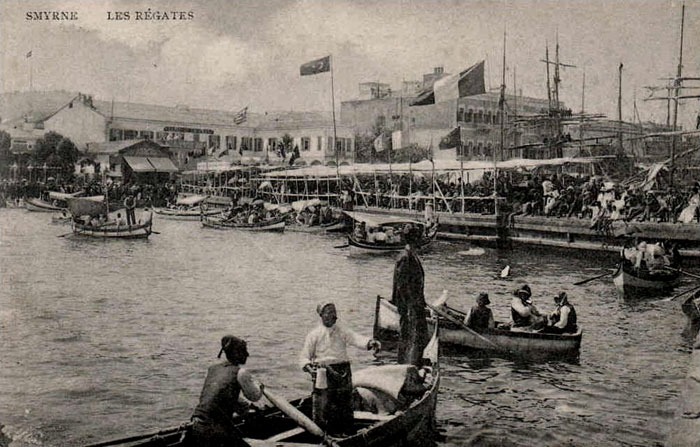
Every year as of 1893, the “Smyrna Regattas” drew some 10,000 spectators, including Turks, Jews, Armenians, Greeks, and Europeans, who came to watch the races. (Credit: Levantine Heritage Foundation archives)






“Tolerant Smyrna,” they called it. On the shores of the Aegean, halfway between Athens and Istanbul, the port city had become something of a legend. It was the dawn of the 20th century. Arabs, Greeks, Jews, Armenians, Turks, Europeans, and Americans lived side by side for decades in what looked like a cheerful disorder. On the city’s football team, the communities mixed. So did the languages. People moved from one world to another without formality.Beyond a multilingual press (11 Greek-language newspapers, seven in Turkish, five in French, five in Armenian, and five in Hebrew), residents also received the major dailies shipped in every day from European capitals.During the day, activity was at its peak. Life revolved around trade: cotton, fish, dried fruit, tobacco, among other things. Once night fell, the alleys of the old town emptied....
“Tolerant Smyrna,” they called it. On the shores of the Aegean, halfway between Athens and Istanbul, the port city had become something of a legend. It was the dawn of the 20th century. Arabs, Greeks, Jews, Armenians, Turks, Europeans, and Americans lived side by side for decades in what looked like a cheerful disorder. On the city’s football team, the communities mixed. So did the languages. People moved from one world to another without formality.Beyond a multilingual press (11 Greek-language newspapers, seven in Turkish, five in French, five in Armenian, and five in Hebrew), residents also received the major dailies shipped in every day from European capitals.During the day, activity was at its peak. Life revolved around trade: cotton, fish, dried fruit, tobacco, among other things. Once night fell, the alleys of the old town...

