



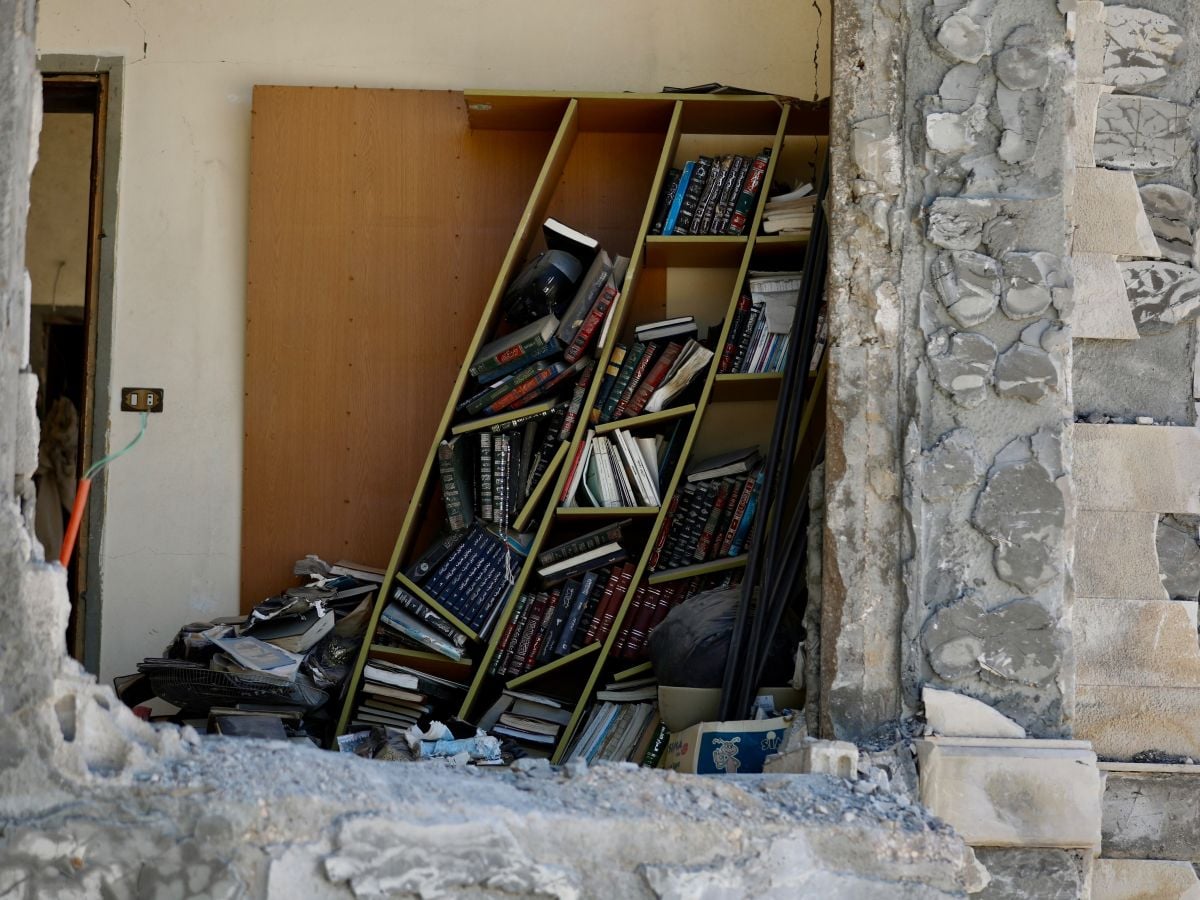
A library in a mosque severely damaged by an Israeli bombing, on July 1, 2025 in the village of Yater, in southern Lebanon. (Credit: Matthieu Karam/L’Orient-Le Jour)






When the bombings destroyed their house in Beirut's southern suburbs, everyone told Mohammad Nasser al-Din’s father that "material things can be replaced." He mourned only one thing: his library.
Built over decades and filled with works on history, philosophy and literature, it was far more than a collection of books. It held a lifetime of memories.
That story encapsulates the mission of the National Network for the Protection of Cultural Heritage in Lebanon, launched Friday at the National Library alongside the Beirut Global Call. The destruction caused by Israeli offensives has not been limited to homes and infrastructure. It has also wiped out libraries, archives, photographs and the places where a people's history is preserved. For the initiative's organizers, the project responds to what they describe as an attempt to erase Lebanon's cultural heritage.

Launched under the patronage of the Ministry of Culture, the Beirut Global Call appeals to the international community around a central idea: when a library is destroyed, it is not only books that disappear, but also stories, names and the traces of a shared legacy.
"Culture is not a military target, and human memory is not a battlefield," the statement declares.
Rejecting the idea that such losses are merely collateral damage, its authors call on cultural institutions, universities, NGOs and the international community to support preservation efforts, notably through the creation of emergency archives. They argue that these attacks — which they see as part of a continuum stretching from Palestine to Lebanon — seek to sever the bond between a people, their land and their history.
Protecting this heritage, they say, in line with UNESCO conventions, is essential to ensuring that future generations can know their own history.
"Silence is no longer an option," the statement concludes.
Working 'hand in hand'
Culture Minister, Ghassan Salameh, called for a broader understanding of heritage.
"Heritage is not limited to stones," he said.
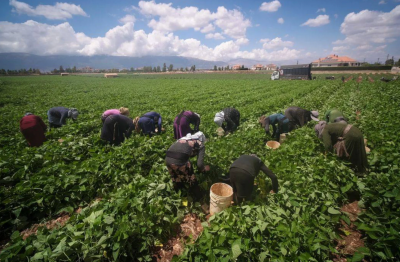
Beyond monuments, he argued that markets, libraries and communal spaces, as well as traditions, craftsmanship and music, are equally at risk. Together, they form a country's identity and ensure the transmission of its cultural heritage.
The ministry says it has stepped up its efforts both domestically and internationally. After raising the issue with more than 30 culture ministers and engaging with UNESCO in Paris, Lebanon is set to submit a request in South Korea in the coming days to have five Jabal Amel fortresses added to the World Heritage List.
Salameh also referred to the destruction of several cultural institutions, including the public libraries of Bint Jbeil and Taybeh. A three-year reconstruction program aims to rehabilitate and modernize 57 libraries. So far, $700,000 has been secured, but nearly $3 million is still needed.
Facing both financial and staffing challenges, the minister urged civil society organizations to work "hand in hand" with public institutions, describing attacks on heritage and the environment as "crimes against nature, against culture and against humanity."

Throughout the conference, one message resonated: behind every destroyed library are human lives.
Environment Minister Tamara Elzein lamented that public debate too often focuses on material losses while overlooking what disappears with them.
"The inhabitants of the South are not numbers," she said.
That reality was brought into sharp focus through the testimonies of librarians and residents.
Now partially destroyed, the Nasser al-Din library represents more than the story of a single family. Three generations grew up there, read there and forged their relationship with knowledge.
"Our duty is to protect these institutions for future generations," Mohammad Nasser al-Din concluded.
His words echoed the conference's central message: preserving a library is about more than saving books — it is about safeguarding a people's collective memory.
 7 p.m. recap: Iran defies Washington over Hormuz; Bab al-Mandeb ignites, Israel strikes the Bekaa