


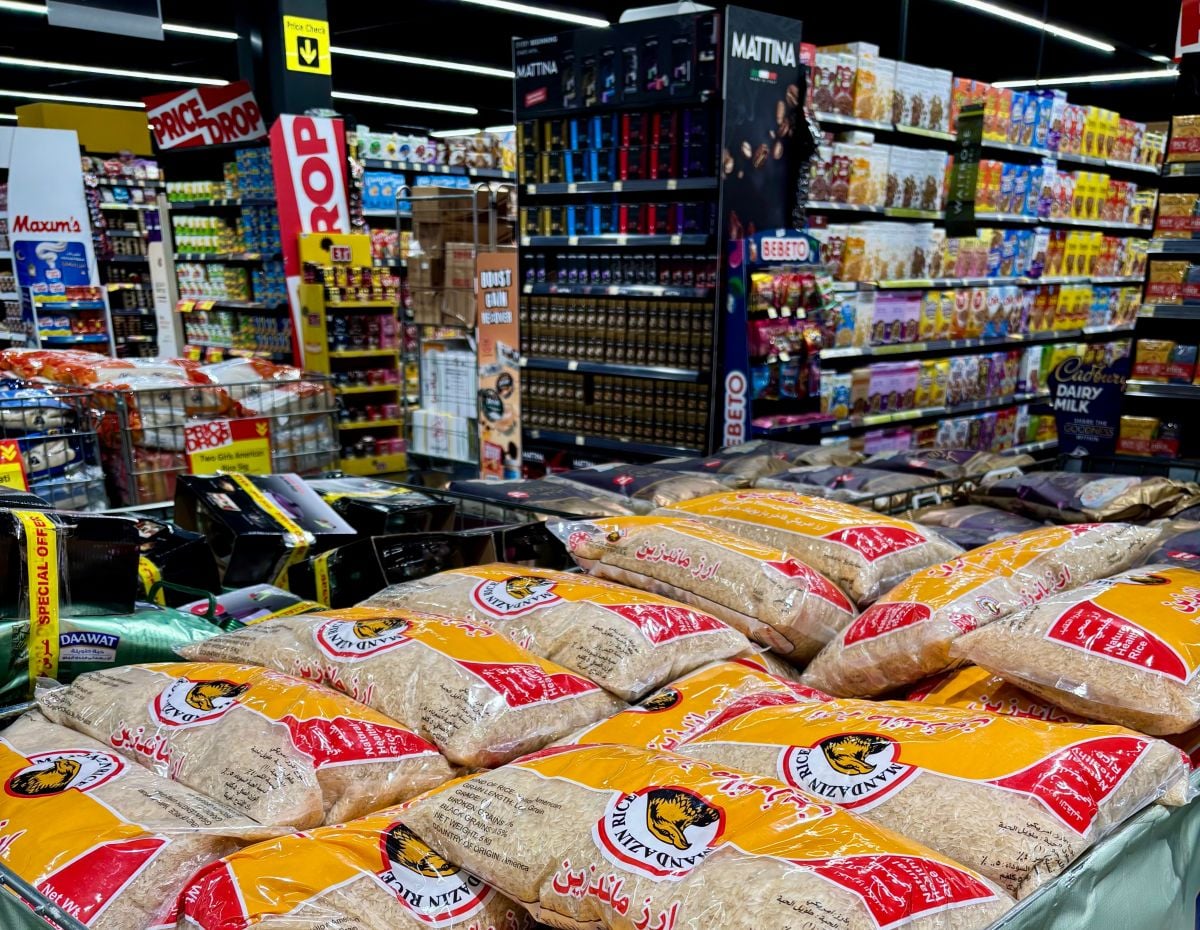
Displays and shelves in a supermarket in the suburbs of Beirut, Feb. 14, 2026. (Credit: Philippe Hage Boutros / L’Orient-Le Jour)






BEIRUT — After two months of war between Israel and Hezbollah, marked by monthly rises of 4.91 % and 3.04 %, the consumer price index (CPI) increased by only 0.49 % in May, according to the latest update from the Central Administration of Statistics.
A similar trend was seen on an annual basis, with a 19.04 % increase — nearly one point lower than the 20.02 % recorded in April. Based on our calculations, the CPI rose an average of 16.1 % over the first five months.
In terms of context, the conflict was marked by a cease-fire adopted in April between Lebanon and Israel, which has since been extended, although this has not ended Israeli bombardments in south Lebanon and the Bekaa region — or at times in the Beirut area — nor Hezbollah’s retaliatory strikes on areas occupied by the Israeli army in south Lebanon and northern Israel.
During this period, gasoline prices increased by 7 to 8 percent depending on octane level, while diesel fell by 5.7 % and gas by 15.11 %, amid a relative easing in hydrocarbon prices linked to the partial truce between Iran and the United States. These prices are reflected with a slight delay in the rates regulated by the Ministry of Energy and Water.

In a statement relayed by the state-run National News Agency (NNA), the president of the food importers’ union, Hani Bohsali, said the overall drop in energy prices “will inevitably have an impact on food product prices in the coming period,” while specifying that this will “take some time.” U.S. WTI and Brent crude traded between $75 and $80 a barrel on Monday, far from the $100-$110 peaks hit during the war launched by Washington and Tel Aviv against Tehran.
The CPI sub-indices that rose the most on a monthly basis were transportation (+4.04 %; +37.82 % over one year), recreation (+3.01 %; 48.40 %), and furniture (+2.77 %; +7.09 %). Several sub-indices also declined, including the energy bill for housing (-2.55 %; +30.07 % over one year), food (-0.96 %; +17.86 %), and the alcohol and tobacco tandem (-0.63 %; +8.56 %).
The CPI finally increased by less than a percentage point on a monthly basis in all governorates except Nabatieh (-0.03 %).
The CPI measures price changes in Lebanese pounds in a context of prolonged stability in the exchange rate, maintained at 89,500 Lebanese Lira to the dollar.
 2 Israeli soldiers injured in 'operational accident,' as army continues attacks in the South