


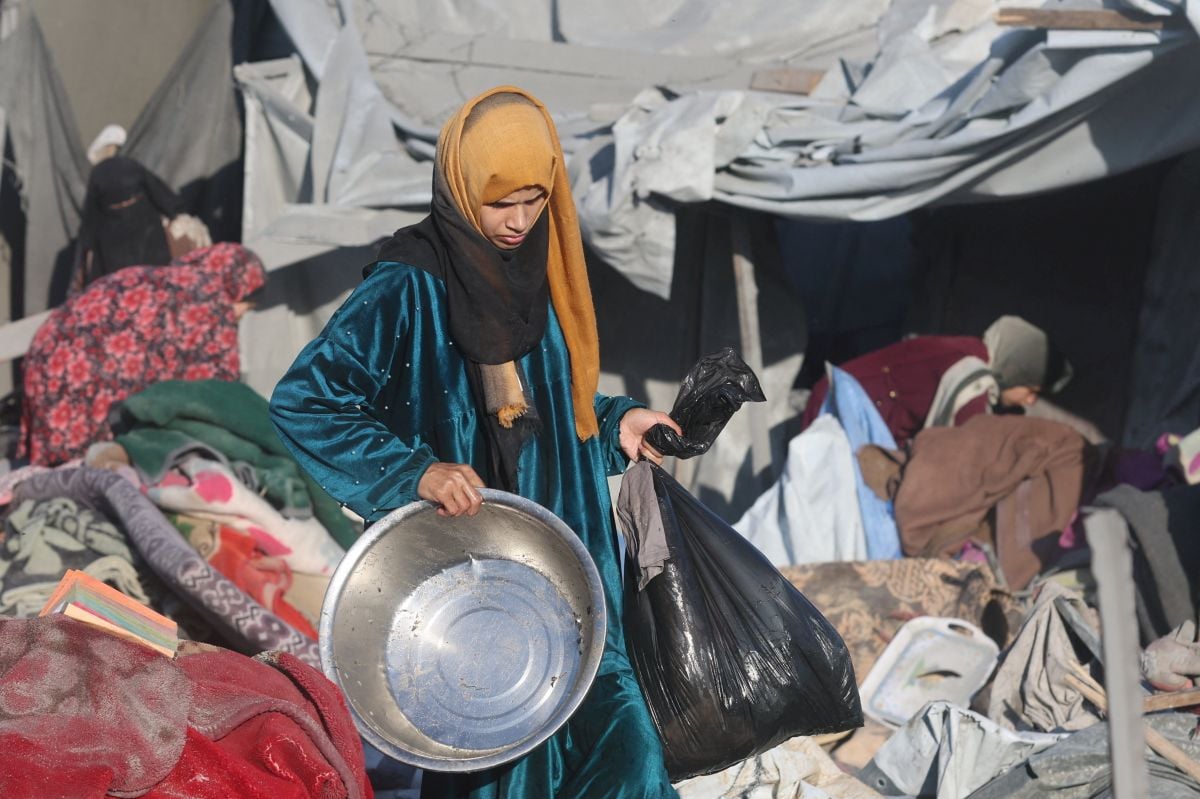
A Palestinian woman collects belongings at a damaged tent camp sheltering displaced people in the aftermath of an Israeli strike on a nearby house whose residents were warned to evacuate before the attack, in Khan Younis in the southern Gaza Strip June 7, 2026. (Credit: Ramadan Abed/Reuters)






“The day my husband was martyred was the hardest day of my life,” Islam Juha, a 22-year-old mother of two daughters, told me. Her husband was killed in 2024 while trying to bring home a bag of flour for his family. He left, hoping to feed his daughters, but never returned. “I would rather they took all my organs than tell me my husband was killed,” said Islam.But the loss of her husband was not the end of her suffering. Since then, she has been carrying a weight that no young woman should have to bear. While she herself needs support, she has been forced to become everything for everyone around her, raising her daughters alone while trying to hold together what remains of her family. Noor's last entry Diaries from Gaza: With the transportation crisis, one trip leaves me exhausted for two days Today, Islam lives with her parents and...
“The day my husband was martyred was the hardest day of my life,” Islam Juha, a 22-year-old mother of two daughters, told me. Her husband was killed in 2024 while trying to bring home a bag of flour for his family. He left, hoping to feed his daughters, but never returned. “I would rather they took all my organs than tell me my husband was killed,” said Islam.But the loss of her husband was not the end of her suffering. Since then, she has been carrying a weight that no young woman should have to bear. While she herself needs support, she has been forced to become everything for everyone around her, raising her daughters alone while trying to hold together what remains of her family. Noor's last entry Diaries from Gaza: With the transportation crisis, one trip leaves me exhausted for two days Today, Islam lives with her...
