


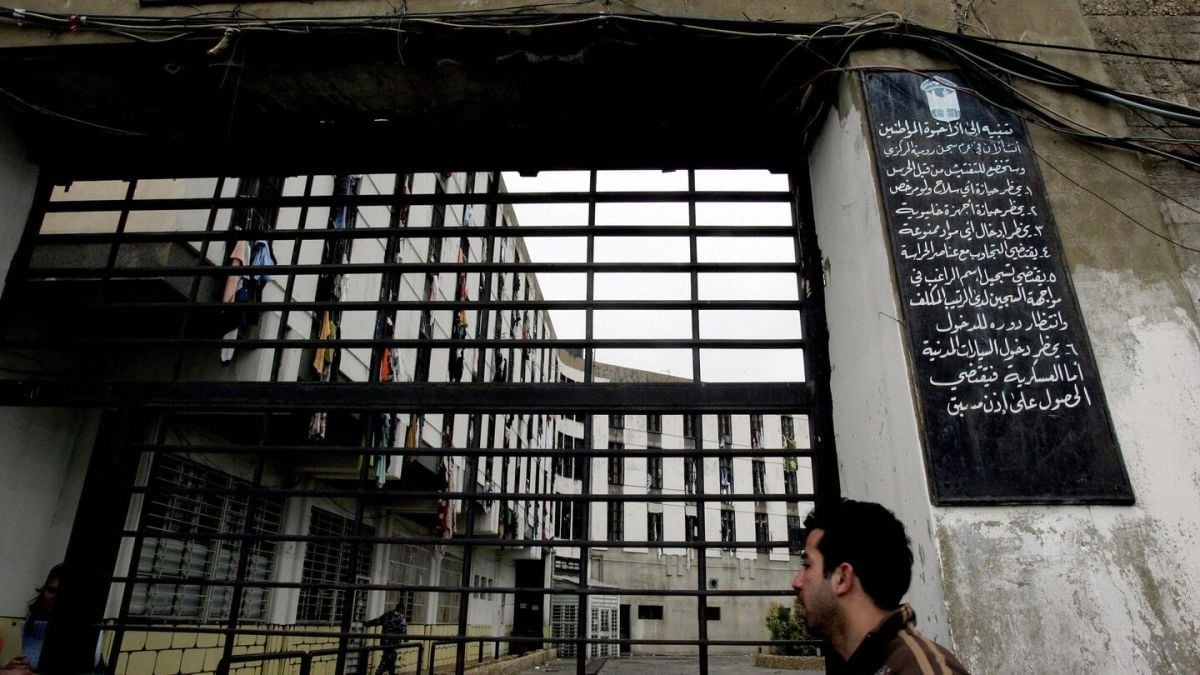
A Lebanese man coming to visit a detainee at Roumieh prison, northeast of Beirut, on April 7, 2006. (Credit: Ramzi Haidar/AFP)






BEIRUT — MP Michel Moawad accused Deputy Parliament Speaker Elias Bou Saab on Monday of "misleading" MPs and the public regarding the proposed general amnesty law, prompting rebuttal from him and several Sunni MPs backing the bill.
Speaking to Al Jadeed, Moawad said the debate surrounding the law had turned into a "state of hallucination," accusing Bou Saab of being "drowning in contradictions and losing his temper" over the issue.
Moawad said that while there are "wronged people inside prisons" whose situations should be addressed, "the general amnesty law is not the safest way to lift injustice."
He also accused what he described as the "Berri-Bou Saab amnesty law" of "deceiving a group of Sunni MPs," adding that "the manipulation was in the details in order to mislead Lebanese public opinion."
"We will not allow Elias Bou Saab to outbid us on the issue of the army's martyrs; we are the ones who truly understand the meaning of martyrdom," Moawad added.
The remarks drew a response from Sunni MPs who signed the proposed legislation, who rejected what they described as allegations that they had been misled during the drafting process.
In a statement issued Monday, the MPs said claims that they had been subjected to deception or "fraud" were "categorically rejected" and constituted "a direct insult to MPs who have followed this file with a high sense of national responsibility."
The MPs said the proposal was the result of "in-depth legislative and legal work" and "was never the product of side agreements or political deals."
They also denied any prior coordination with Parliament Speaker Nabih Berri or Bou Saab during the preparation of the draft law.
"Regarding what was raised about coordination with the Speaker of Parliament, Mr. Nabih Berri, and the Deputy Speaker, Mr. Elias Bou Saab, we clearly confirm that no prior coordination took place in the preparation or drafting of the bill," the statement read.
The MPs defended Bou Saab's role in subsequent discussions surrounding the proposal, saying he had acted with "great care and responsibility" while balancing the demands of detainees' families and concerns raised by the military.
They accused critics of turning the issue into a political dispute, arguing that such accusations would only delay efforts to pass the legislation.
Bou Saab also responded to Moawad's criticism, saying the MP "did not address the facts that we had presented to the public" and had instead resorted to personal attacks. He argued that Moawad failed to respond to questions raised about several judicial rulings linked to the debate and did not clarify why he had insisted during parliamentary discussions on including the term "final judgment" in the text.
Bou Saab also said fellow MPs had confirmed that the phrase had not previously been part of discussions surrounding the bill, accusing Moawad of misleading public opinion on the matter. He further alleged that Moawad had sought to lower an age threshold in the proposal from 28 to 27 years for political grandstanding.
Bou Saab rejected accusations that he and Berri had conspired to draft the law, calling such claims "a narrative that exists only in Michel Moawad's imagination." He also said that individuals directly concerned with the file had publicly contradicted Moawad's version of events.
The proposed general amnesty law has reignited longstanding political divisions over detainees, fugitives, and convictions linked to some of Lebanon's most contentious security and judicial cases. The issue has historically been the subject of negotiations among Lebanon's political parties, with different blocs advocating amnesty measures for constituencies and categories of detainees they consider to have been unfairly treated by the judicial system.

 1 p.m. recap: Salam in Nabatieh; up to 10,000 more US troops heading to Middle East
 Exchange of strikes between Saudi Arabia, Houthis; Sanaa, Medina targeted