






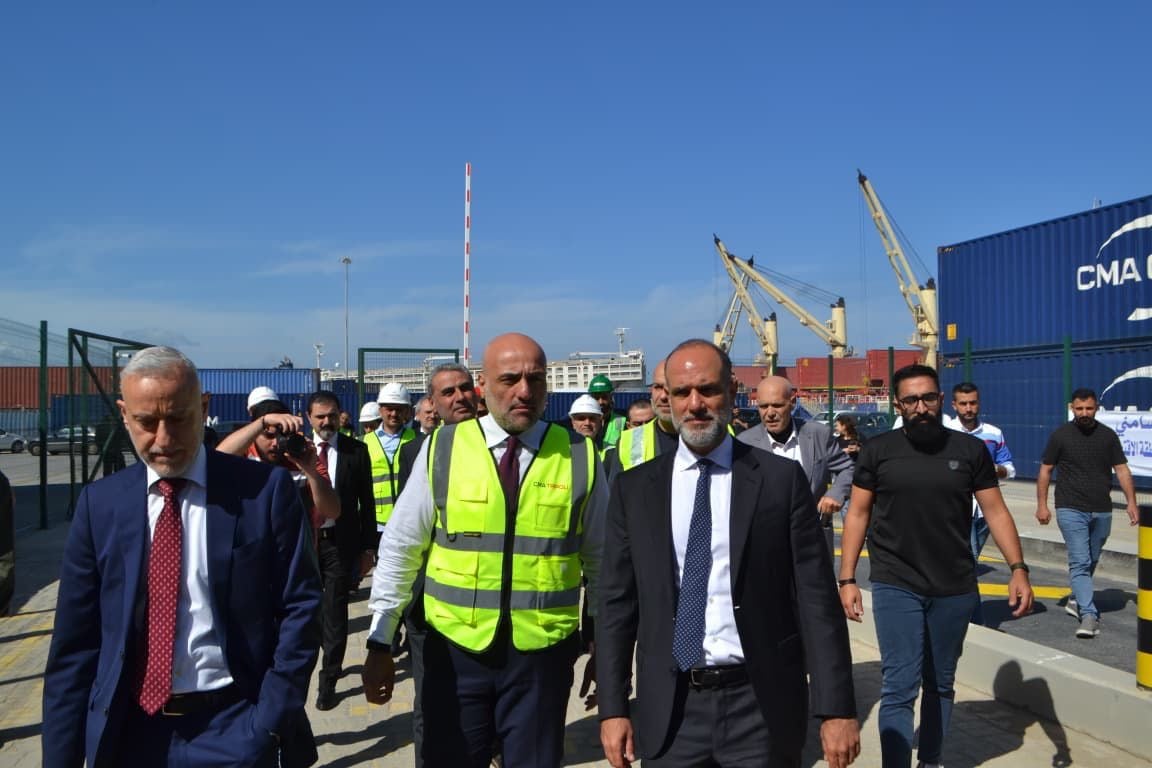
The Minister of Public Works, Fayez Rassamny, on a tour of the port of Tripoli, May 15, 2026. (Credit: Michel Hallak/ l'OLJ)






During a visit to the port of Tripoli in northern Lebanon, Public Works and Transport Minister Fayez Rassamny on Friday, approved a modest yet official first step toward the possible rehabilitation of the roughly 40-kilometer railway linking the country’s second port to the Abboudieh border crossing in Syria.
"The minister signed the terms of reference for a call for tenders through which the Railways and Public Transport Authority (OCFTC) will select a firm to carry out a feasibility study for the project. In addition to estimating the costs, the study must assess its economic, social, and environmental impact. The route must also take into account the Qlayaat airport, currently used by the army but set to be converted for civilian flights," according to Ziad Shaya, OCFTC general director, contacted by L'Orient-Le Jour. The study will be funded by the Port of Tripoli, which has been collaborating with the authority on this project since a memorandum of understanding signed earlier this year.
According to its promoters, the project is among those files reactivated last week during Prime Minister Nawaf Salam's visit to Damascus. It aims to strengthen the position of the Port of Tripoli as a regional transport hub and to "offer a competitive logistical alternative," according to a statement from the ministry covering the meeting in which the minister initialed the "documents related to the call for tenders for the modernization and design project" for the railway line, which has been out of use since the start of the civil war (1975-1990).
At a press conference following the signing, the minister added that through this project, Lebanon seeks "to integrate into major regional railway projects linking Syria, Turkey, Jordan and Saudi Arabia." He also stressed that "security is the cornerstone of any investment" and highlighted "the efforts of the presidency and the government to stabilize the country and resolve the crisis of the displaced in order to foster a business-friendly environment," as Israel and Lebanon begin direct negotiations for a lasting cease-fire aimed at ending intermittent war between the Israeli army and Hezbollah.
According to Shaya, the feasibility study should be awarded to a provider within a month. The selected firm will have six months to complete it and must also deliver ready-to-use terms of reference for a second phase to contract out implementation works. Meanwhile, a joint commission — including Shaya and his Syrian counterpart — will prepare to launch construction efforts on both sides of the border, as Syria must also prepare to rehabilitate its section of the railway.
In his remarks, the minister favored a public-private partnership model for implementing the project.
The first rails in Lebanon were laid more than 130 years ago with the inauguration, on August 3, 1895, of a line between Beirut and Damascus. During the civil war, most of the Lebanese network gradually disappeared under illegal built along its tracks.

 8 p.m. recap: Israel again threatens Beirut’s south suburbs; 2 ships hit near Hormuz; Riyadh football matches canceled