







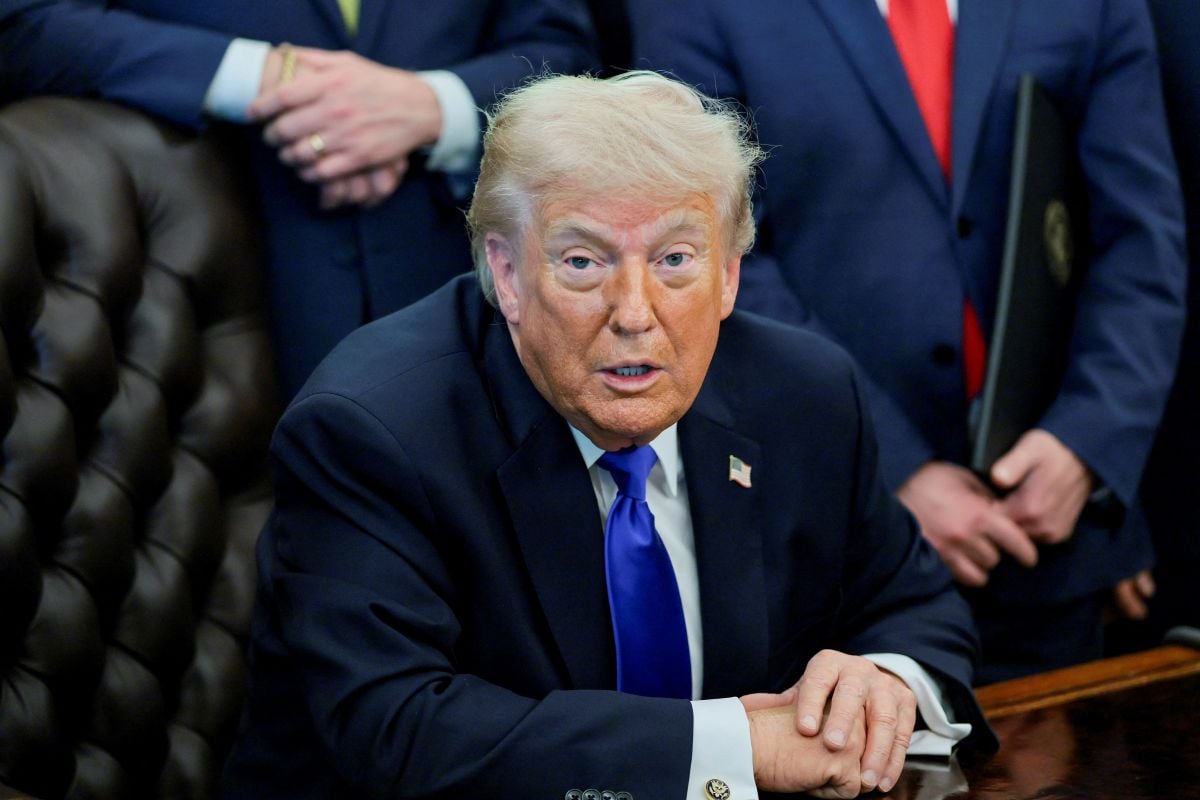
U.S. President Donald Trump takes questions from the media after signing an executive order in the Oval Office at the White House in Washington, D.C., U.S., April 30, 2026. (Credit: Jonathan Ernst/ Reuters)






Editor’s note: A previous version of this article published on April 30, 2026, included misdated quotes of U.S. President Donald Trump from an earlier press conference. L'Orient Today has made amendments to include the accurate dates and quotes.
BEIRUT — The U.S. Embassy in Beirut published a message on X stating that such a meeting would "give Lebanon the chance to secure concrete guarantees on full sovereignty, territorial integrity, secure borders, humanitarian and reconstruction support, and the complete restoration of Lebanese state authority over every inch of its territory—guaranteed by the United States."
"Lebanon stands at a crossroads," the embassy added. "Its people have a historic opportunity to reclaim their country and shape their future as a truly sovereign, independent nation."
"Direct engagement between Lebanon and Israel, two neighboring countries that should have never been at war, can mark the beginning of a national revival. The extended Cessation of Hostilities, achieved at the personal request of President Trump, has given Lebanon the space and the opportunity to put all of its legitimate demands on the table with the full attention of the United States Government," the message also said, adding that "This is Lebanon’s moment to decide its own destiny, one which belongs to all its people. The United States is ready to stand with Lebanon as it seizes this opportunity with confidence and wisdom. The time for hesitation is over."
During the second round of talks of direct negotiations between Lebanon and Israel, U.S. President Donald Trump pressed for a meeting between President Joseph Aoun and Israeli Prime Minister Benjamin Netanyahu. He said he expected the meeting to happen within the three-week cease-fire. Aoun has repeatedly expressed his opposition to such a meeting.
On April 29, Aoun said that Lebanon was waiting for the United States to set a date for the third round of talks with Israel.
The preparatory meetings between the Israeli and Lebanese ambassadors resulted in a first 10-day truce, which took effect on April 17 and was extended for three weeks (on April 24, 12 a.m.) after a second round of discussions.
Lebanon had previously set several conditions for its higher-level talks in Washington, including the cessation of Israeli attacks, strikes and assassinations; the withdrawal of Israel from all occupied territories and the abandonment of the so-called "buffer zone," referred to as the "yellow line" by Tel Aviv; the release of prisoners held by Israel; and the complete demarcation of land and maritime borders.
Hezbollah dragged Lebanon into the war in the Middle East on March 2 by launching attacks on Israel to avenge the death of Iran's supreme leader Ali Khamenei, who was killed in U.S.-Israeli offensive against Iran. Israel retaliated with deadly strikes that killed over 2,500 people and ravaged areas in southern Lebanon, the Bekaa Valley and Beirut's southern suburbs. Israeli attacks have also displaced over a million people. According to a study published Wednesday by U.N. organizations and the Lebanese Ministry of Agriculture, about 1.2 million people in Lebanon are at risk of acute food insecurity due to the war.
A cease-fire has been in effect since April 17. But following repeated Israeli violations, Hezbollah retaliated, and the two sides have continued fighting, each accusing the other of violating the truce.

 8 p.m. recap: Israel again threatens Beirut’s south suburbs; 2 ships hit near Hormuz; Riyadh football matches canceled