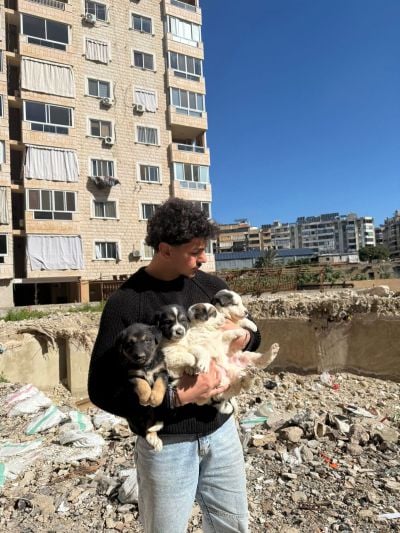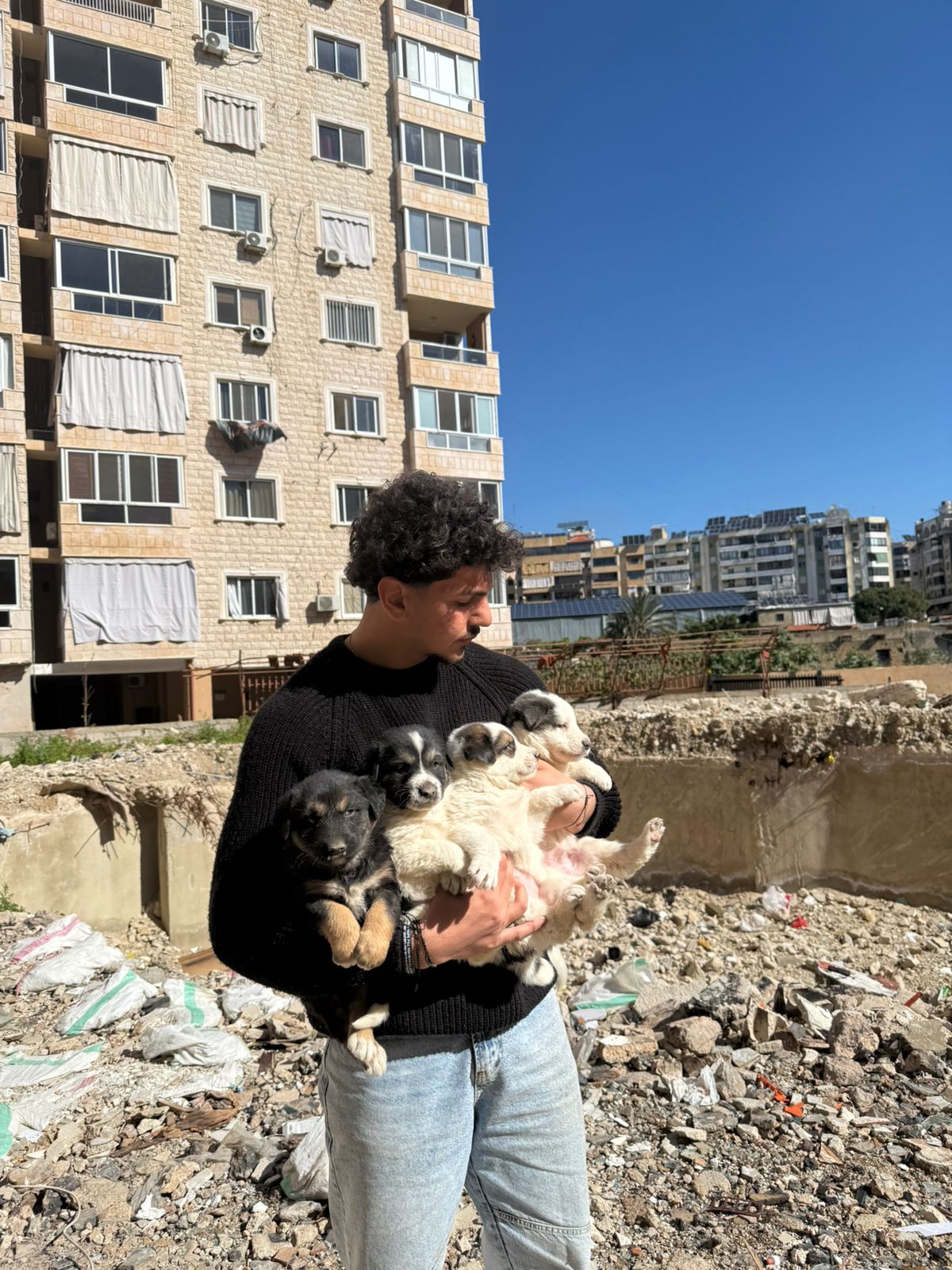
Mohammad Habli. (Credit: Hussein Hassoun)






"I'm ready to risk my life for animals. These are souls that cannot defend themselves," says Mohammad Habli, 20.
"As soon as I get a case, that's all I can think about. I can't sleep until I go out to help the next morning. When I rescue an animal, I feel at peace," he says. The young accounting student at CIS Technical and Vocational Training Institute claims he never feels scared during rescue missions. "Never," he insists.
Since the beginning of the war, many Lebanese have had to flee their homes in a hurry and sometimes could not take their animals with them. "Some left them tied up on rooftops, in gardens, or even birds in cages, without water or food. The doors stayed closed, preventing the animals from leaving and managing on their own," he explains.
To reach threatened or bombed areas in the southern suburbs, Mohammad is accompanied by his taxi driver, who knows the area well. "I only ride with drivers from the neighborhood, people everyone knows. You can't travel with strangers in these areas — you could be suspected." He says he coordinates with Civil Defense and the local neighborhood guards. "I do a video call with the homeowners when entering their houses to collect their animals," he says.
"The most beautiful thing that happened to me was when I rescued a traumatized little dog in the southern suburb Dahyeh and posted a video of him. His owners immediately recognized him! He had escaped during the evacuation. The reunion was wonderful," exclaims the young man, whose Instagram account, Rescuing.souls, has more than 10,000 followers.
He also recalls a delicate mission: "Another time, it was for six puppies whose mother had died under the rubble. The building was at risk of airstrikes. We couldn't find them. They started to threaten us to evacuate the area, but I refused to leave without them. Bombs were falling right in front of us, but I eventually found the six puppies. They were terrified and starving."
Mohammad collaborates with activist Ghina Nahfawi, who posts on Instagram about animals abandoned by their owners fleeing the bombings. "I take charge of saving some of these animals."
Among the survivors, some return to their owners, while others stay in his shelter when their families cannot take them in after displacement. The young man cares for them, handles their vet visits, vaccinations, sterilization, and even finds them adoptive families. "I've already sent 62 dogs to France. They have a real chance there," he explains.
Mohammad shares his parents' disapproval of his dedication: "They forbid me to go out because of the danger. I tell them I'm just going to my shelter, but when they find out the truth, it causes a big argument." "Saving an animal from death is sacred. Nothing will stop me," he maintains.
A promise made to Oreo
It all started when Habli was young. "I had a dog at home, but my parents had to get rid of her. Unfortunately, my dog fell into the wrong hands, and we lost track of her," he says sadly. From that day, Mohammad made a decision. "I promised my dog Oreo that every time I saw a dog in the street, I would help it." The 20-year-old has kept his word.
Today, he cares for more than 300 dogs at his animal shelter in Saida. His day starts at 6 a.m. "I go to my shelter to take care of my dogs... I clean, feed them and make sure they have food. Then I go home to look after my own dogs and cats." He continues his day with his accounting classes.
For the past two years, he has focused on rescue missions: "Sometimes I come across stray or distressed animals, injured, sick, hungry, or abandoned — I rescue them and bring them back to my shelter." The rescued dogs remind him of Oreo. "I see them all as my own dog. For me, these are souls that need help," he explains.
Mohammad also has another passion that he hopes to use to support his rescue mission: fashion, which led him to take design courses to develop it further. "My dream is to open a boutique," he says. "Each dress sold will help fund the shelter and care for stray animals," he adds.