







U.S. President Donald Trump speaks to reporters after the swearing-in ceremony of the new Secretary of Homeland Security, Markwayne Mullin, in the Oval Office at the White House in Washington, March 24, 2026. (Credit: Jim Watson/AFP)






BEIRUT — The Trump administration has reportedly sent Iran a 15-point proposal aimed at ending the ongoing Middle East war, which Tehran rejected and reportedly countered the offer with a six-point proposal.
The plan was transmitted via Pakistan, which maintains good relations with both countries.
The 15 points:
- Dismantle all existing Iranian nuclear capabilities.
- Iran commits never to pursue nuclear weapons.
- No nuclear material will be enriched on Iranian soil.
- All enriched nuclear material handed to the IAEA under an agreed timetable.
- Natanz, Isfahan, and Fordow nuclear facilities to be decommissioned and destroyed.
- Full IAEA access to all Iranian sites and information.
- Iran abandons its network of regional proxy forces.
- Iran stops financing and arming proxies like Hezbollah and Hamas.
- The Strait of Hormuz remains open as a free maritime zone.
- Iran’s missile program limited in quantity and range (details to be finalized later).
- Future missile use restricted to self-defense.
- All international sanctions on Iran are lifted.
- U.S. assistance for civilian nuclear projects (e.g., electricity generation in Bushehr).
- Threat of snapback sanctions removed.
- Not fully detailed in leaked reports — further discussion follows below.
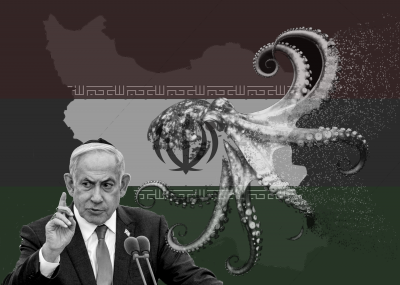
The final three points would constitute the quid pro quo offered to Iran, while a 15th — implicit, according to some observers — would relate to monitoring compliance and implementation of the agreement. Together, these provisions cover the full scope of U.S. and Israeli war aims, the channel reported, as quoted by The Times of Israel.
However, Channel 12 added that Israeli officials Trump and his team may seek to quickly impose "a framework agreement" or "agreement in principle" with Iran, rather than requiring these conditions to be met before ending the war.
"The scenario of a quick and ambiguous agreement in principle is keeping Israeli political and security leaders awake at night," the channel reported.
Six Iranian conditions
For its part, Iran has set six conditions for ending the war:
- Control over the Strait of Hormuz and the collection of taxes.
- Guarantees that the war will not resume.
- Cessation of Israeli strikes against Hezbollah in Lebanon and pro-Iranian militia in Iraq.
- Complete lifting of all sanctions against Iran.
- Maintenance of its ballistic missile program without negotiation or restrictions.
- Compensation for war damages.
Iran said Tuesday that "non-hostile vessels" could "benefit from safe passage through the Strait of Hormuz in coordination with the competent authorities," AFP reported. Nearly 20 percent of global maritime traffic of hydrocarbons passes through the strategic strait, where a de facto blockade by Tehran in recent weeks has driven oil prices to soar.
Trump on Tuesday referred to what he described as "a very big gift" related to hydrocarbons, without providing details, in remarks that could be linked to a partial reopening of the strait. Oil prices fell nearly 6 percent shortly after trading opened in Tokyo following the announcements. Trump also said negotiations with Tehran were ongoing "at the moment."
Reports of talks with Iran reportedly prompted Trump to delay a previously stated threat to target Iran’s electricity grid, by "five days," a move that briefly reassured markets. He later said Washington and Tehran had found "major points of agreement" in discussions with a "senior Iranian leader."
Pakistan has conveyed a U.S. proposal to Iran, an Iranian source told Reuters, though the location of any potential talks has yet to be decided. The source, who requested anonymity due to the sensitivity of the matter, did not disclose details of the proposal or confirm whether it corresponded to a reported 15-point U.S. framework. The source added that Turkey is helping explore options to end the war and that "either Turkey or Pakistan" are being considered as possible venues.
Turkey said it was playing "a role in conveying messages" between Iran and the United States to encourage de-escalation and direct negotiations, Harun Armagan, deputy foreign affairs chairman of President Recep Tayyip Erdogan’s ruling party, told Reuters. He did not elaborate on the content of the messages but said they were also being relayed to Gulf countries drawn into the broader regional war, which was sparked by the U.S.-Israeli strikes on Iran.
Russia, a strategic ally of Iran, said it had received "no information" about a purported U.S. 15-point plan and therefore could not assess the credibility of the reports, Kremlin spokesman Dmitry Peskov said.

 Evening recap: Netanyahu announces West Bank offensive; 7 killed in Jordan church shooting; tents burned in south Lebanon