






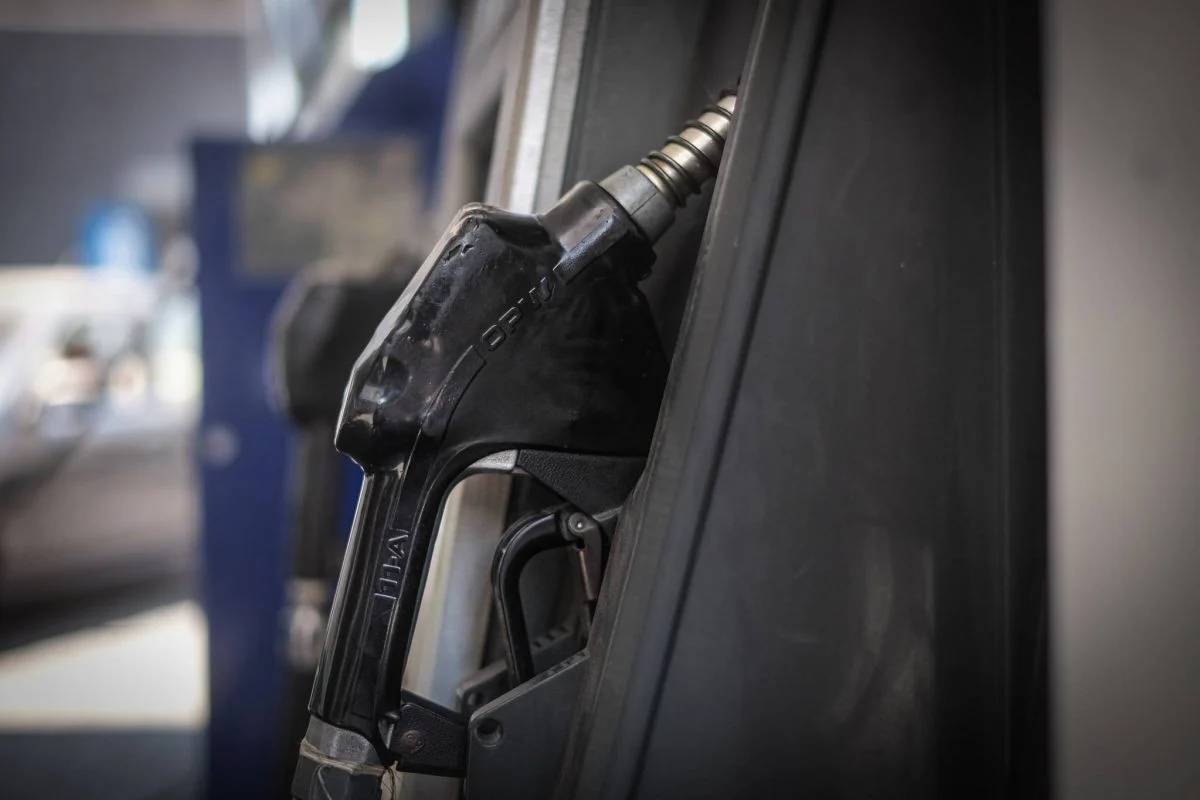
Fuel pump nozzle at a gas station in Lebanon. (Credit: João Sousa / L'Orient-Le Jour)






Thirteen days into the U.S.-Israeli offensive against Iran and the near-closure of the Strait of Hormuz – which is disrupting both the region and the global economy – fuel prices in Lebanon continue to soar. The cost of a kiloliter of diesel for generators has surged to $1,032.53, up $194.82 in just one week compared to last Friday, putting a direct strain on Lebanese households.
In its bi-weekly price update, the Ministry of Energy announced another round of fuel hikes, adding to the sharp increases already recorded last Tuesday.
– 20 liters of 95-octane gasoline: 2,131,000 Lebanese Liras, an increase of 127,000 LL since the last rate published last Tuesday.
– 20 liters of 98-octane gasoline: 2,172,000 LL (+125,000 LL).
– 20 liters of diesel (for vehicles): 2,002,000 LL (+133,000 LL).
– Kiloliter of diesel (used to supply private power generators): $1,032.53 (+$123.91 compared to Tuesday’s rate).
– Domestic gas cylinder: 1,680,000 LL (+79,000 LL compared to Tuesday’s rate; gas prices are updated weekly).
Since the start of the war, these increases amount to 19.7% for gasoline compared to the February 27 rate, 19.9% for gas, and 29.4% for diesel.
These developments come as fears of renewed inflationary pressures mount, driven by volatile oil prices linked to disruptions in the Strait of Hormuz amid the U.S.-Israeli war in Iran. Because energy is a fundamental input across the economy, rising oil prices ripple through supply chains, notably pushing up production and transportation costs.
Everything depends on Brent
Commenting on the situation, Georges Brax, head of the union of gas station owners in Lebanon, told L’Orient-Le Jour: “We are still far from reaching the ceiling if the current situation continues.” He emphasized that “fuel prices will keep rising because everything depends on the price of Brent crude,” the international benchmark for oil, which on Thursday rose above $100 a barrel amid concerns over the Middle East conflict. “Before the war, it was around $70,” he recalled. “As long as the price of a barrel rises on international markets, gasoline, fuel, and domestic gas prices in Lebanon will also increase, since these products are imported.” He added that “since the start of the war, diesel prices have increased far more sharply than gasoline.”
However, Mr. Brax sought to reassure the public. “The quantities of available fuel – diesel, gasoline, and domestic gas – are currently sufficient to meet local demand. There is no need to panic or rush to gas stations,” he said. “Stockpiles in the depots are adequate, and the sea route to Lebanese ports remains open. Imports are continuing as normal, as long as maritime access is not interrupted,” he concluded.

 8 p.m. recap: Israel again threatens Beirut’s south suburbs; 2 ships hit near Hormuz; Riyadh football matches canceled