


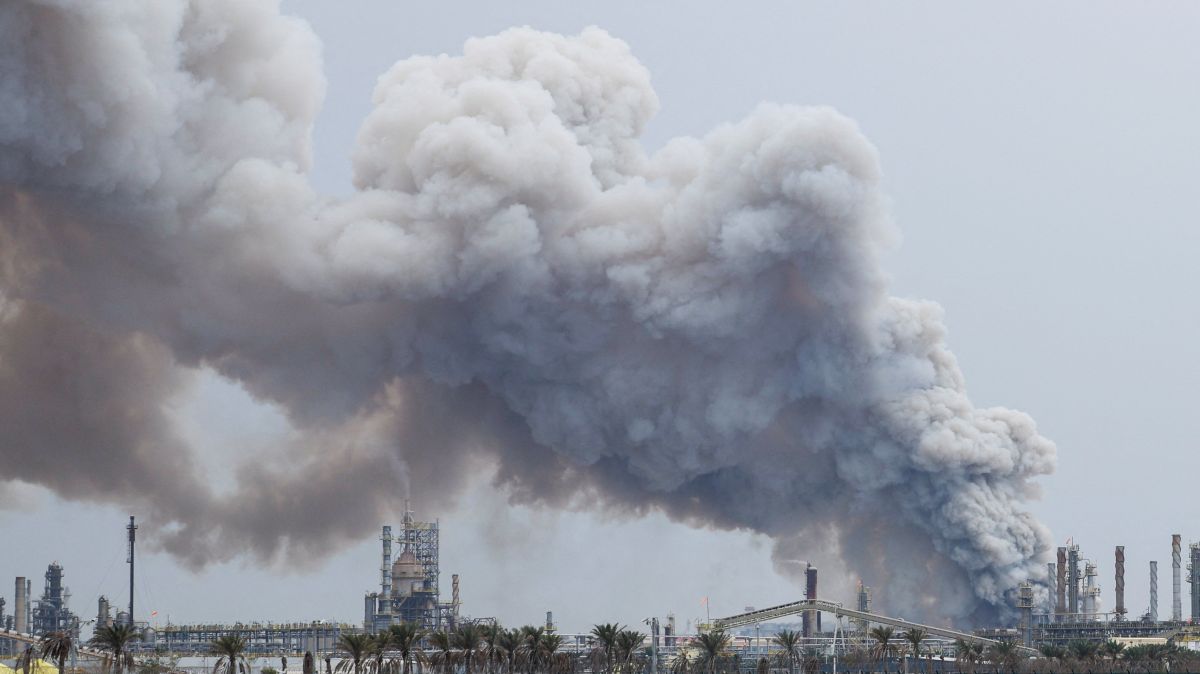
Smoke rises from the Bapco oil refinery on Sitra Island, Bahrain, following a strike. Stringer/Reuters Smoke rises following a strike on the Bapco Oil Refinery, amid the U.S.-Israeli conflict with Iran, on Sitra Island Bahrain, March 9, 2026. REUTERS/Stringer






The ongoing war involving U.S.-Israel and Iran is severely disrupting travel and transport across the Middle East, forcing airlines, land crossings and shipping routes to operate under heightened security and restrictions.
While movement is still possible, logistics are fragmented, with airspace closures, reinforced border controls and heightened maritime vigilance. The following update is based on data from the MAX Intelligence Portal as of March 9.
Airspace remains largely closed
Air travel is the sector most affected in the Middle East.
Kuwait and Bahrain have fully closed their airspace, and Iraq continues to suspend all flights. Qatar may partially reopen its airspace for repatriation flights. In Israel and the United Arab Emirates, airspace is highly restricted, mostly limited to returning citizens. Saudi Arabia, Egypt, and Oman continue to allow flights, though delays and cancellations are frequent.
Lebanon: Beirut airport remains open, but operations are severely disrupted, with major flight suspensions and very limited capacity.
Land borders open but under pressure
Most regional land borders remain open, but security measures have tightened, resulting in long waits.
The Hatta crossing between the UAE and Oman — an important evacuation route — is now restricted to travelers holding confirmed plane tickets from Oman within 24 hours. Between Israel and Jordan, the Allenby/King Hussein crossing occasionally denies entry to certain foreign nationals, leaving the Sheikh Hussein crossing as the main alternative.
Lebanon: The Masnaa crossing with Syria operates 24/7, remaining a key transit point for land travel.
Maritime routes on high alert
Shipping continues but under a fragile security environment.
The Strait of Hormuz, a strategic global trade passage, remains closed to commercial traffic, disrupting maritime flows across the Gulf. While no new attacks on vessels have been reported, shipping companies remain on high alert due to ongoing risks to commercial transport.
Lebanon: The ports of Beirut and Tripoli remain open, though heightened security measures are in place.
Infrastructure and logistics: fragile stability
Despite military escalation, essential services in most Gulf states remain relatively stable.
However, recent attacks on desalination facilities highlights the vulnerability of critical infrastructure in the region.
 Israeli army carries out demolition at Jabal Amel School in Houla as strikes continue