





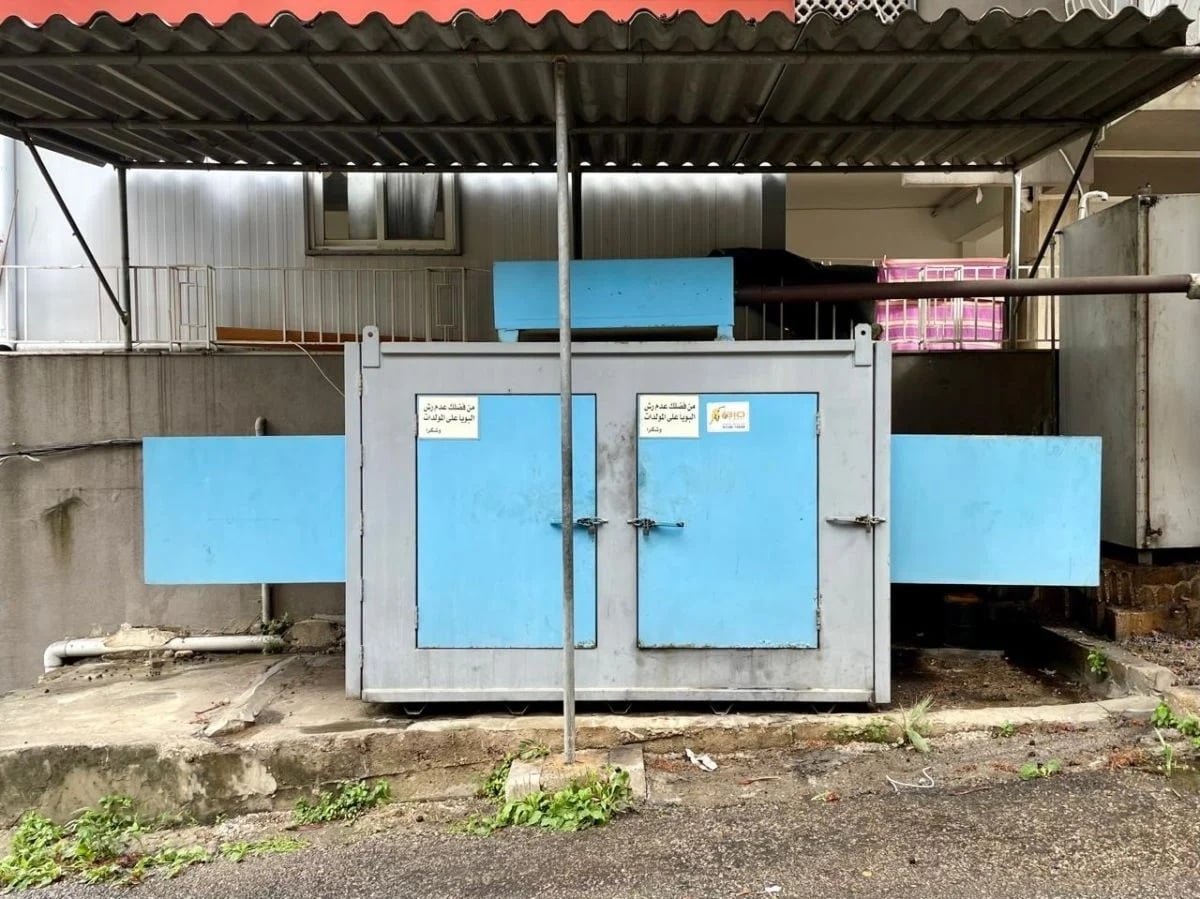
A generator in Hazmieh (Credit: Philippe Hage Boutros /L'Orient-Le Jour)






Despite the ongoing Israeli military escalation, the Ministry of Energy and Water has maintained its routine and released the new tariff schedule for private generators. It has set the price of one kilowatt-hour at 30,244 Lebanese Lira (around $0.34) for bills issued to subscribers in February. This represents an increase of LL 1,909 (just over $0.02) compared with January rates, ending a three-month period of declining prices.
These generators provide electricity to Lebanese households during the rationing periods of Électricité du Liban (EDL), which still cannot supply enough power to the entire country, even under normal conditions. To calculate a bill, each subscriber multiplies the fixed price by the number of kilowatt-hours consumed, as recorded by an individual meter that the operator is required to install.
To set the tariff, the ministry used a diesel price of LL 1,398,957 ($15.60, up nearly 9%) for 20 liters of fuel – the amount consumed by most generators – and assumed a still-stable exchange rate of LL 89,700 per dollar.
As is customary each month, generator operators can raise the price per kilowatt-hour by 10% in the most remote areas — above 700 meters in altitude and/or in rural zones — bringing it to LL 33,268 (about $0.37).
Fixed fees remain unchanged: LL 385,000 ($4.29) for a monthly flat rate covering up to 5 amperes (A), and LL 685,000 ($7.64) for 10 A. For consumption beyond 10 A, the ministry maintains a surcharge of LL 300,000 ($3.34) for each additional 5 A increment.
For installations connected to a three-phase meter, such as elevators, an additional flat fee is calculated based on a reference capacity. For example, an elevator drawing 15 A on each of the three phases should be billed only LL 985,000 ($10.98) by the generator operator, instead of LL 2,785,000 ($31.05).

 Evening recap: Netanyahu announces West Bank offensive; 7 killed in Jordan church shooting; tents burned in south Lebanon
 US strike on Iran this weekend? ‘Absolutely,’ says Barrack; ‘I have no idea,’ says Trump