





This combination of pictures created on Feb. 20, 2026 shows US President Donald Trump (L) gesturing during a bilateral meeting on the sidelines of the 47th Association of Southeast Asian Nations (ASEAN) Summit in Kuala Lumpur on Oct. 26, 2025; and a handout picture provided by the office of Iran's Supreme Leader Ayatollah Ali Khamenei shows him waving during a ceremony in Tehran on Au. 24, 2025. (Credit: Andrew Caballero-Reynolds/various sources /Kamenei.ir/HO/ via AFP)






Iranian Foreign Minister Abbas Araghchi said U.S. negotiators have not requested Tehran end its nuclear enrichment program, contradicting statements from American officials.
"We have not offered any suspension, and the U.S. side has not asked for zero enrichment," Araghchi said in an interview on the Morning Joe show published online Friday by US TV network MSNBC.
Aragchi added that technical and political "confidence building measures" would be enacted to ensure the program would remain peaceful in exchange for some kind of action on sanctions, but he gave no further details.
He gave no specific timing on Iran's counterproposal for U.S. envoys Steve Witkoff and Jared Kushner but said he believed a diplomatic deal was within reach and could be achieved "in a very short period of time"
The top diplomat also said the next step in talks between the two sides is for him to present a draft of a possible deal to Washington "in the next two, three days."
"What we are now talking about is how to make sure that Iran's nuclear program, including enrichment, is peaceful and would remain peaceful forever," Araghchi said.
His comments stand in contrast to information relayed by high-ranking U.S. officials including President Donald Trump, who has repeatedly said Iran must not be allowed to enrich uranium at any level.
Araghchi's remarks come after Washington and Tehran concluded on Tuesday a second round of Oman-mediated talks in the Swiss city of Geneva.
The two foes held an initial round of discussions on February 6 in Oman, the first since previous talks collapsed during the 12-day Iran-Israel war last June in which the US took part by striking Iranian nuclear facilities.
On Thursday, Trump suggested the U.S. would attack Iran again if Tehran does not make a deal with Washington within 10 days, which he later extended to 15.
Washington has repeatedly called for zero enrichment but has also sought to address Iran's ballistic missile program and its support for militant groups in the region — issues which Israel has pushed to include in the talks.
Western countries accuse the Islamic republic of seeking to acquire nuclear weapons.
Tehran denies having such military ambitions but insists on its right to the technology for civilian purposes.
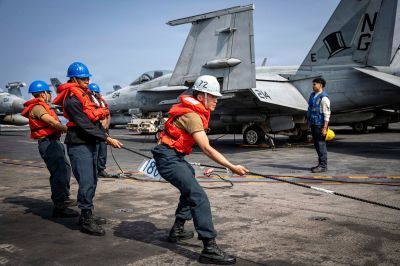
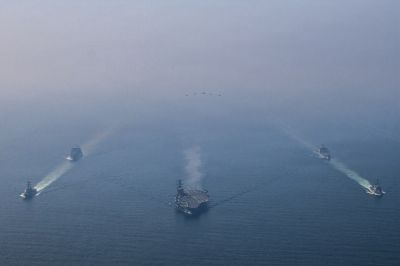
Trump, who has ratcheted up pressure on Iran to reach an agreement, has deployed a significant naval force to the region, which he has described as an "armada."
After sending the aircraft carrier USS Abraham Lincoln and escort battleships to the Gulf in January, he ordered a second carrier, the Gerald Ford, to depart for the Middle East.
Meanwhile, Iranian naval forces this week conducted military drills in the Gulf and around the strategic Strait of Hormuz in their own show of force.
