






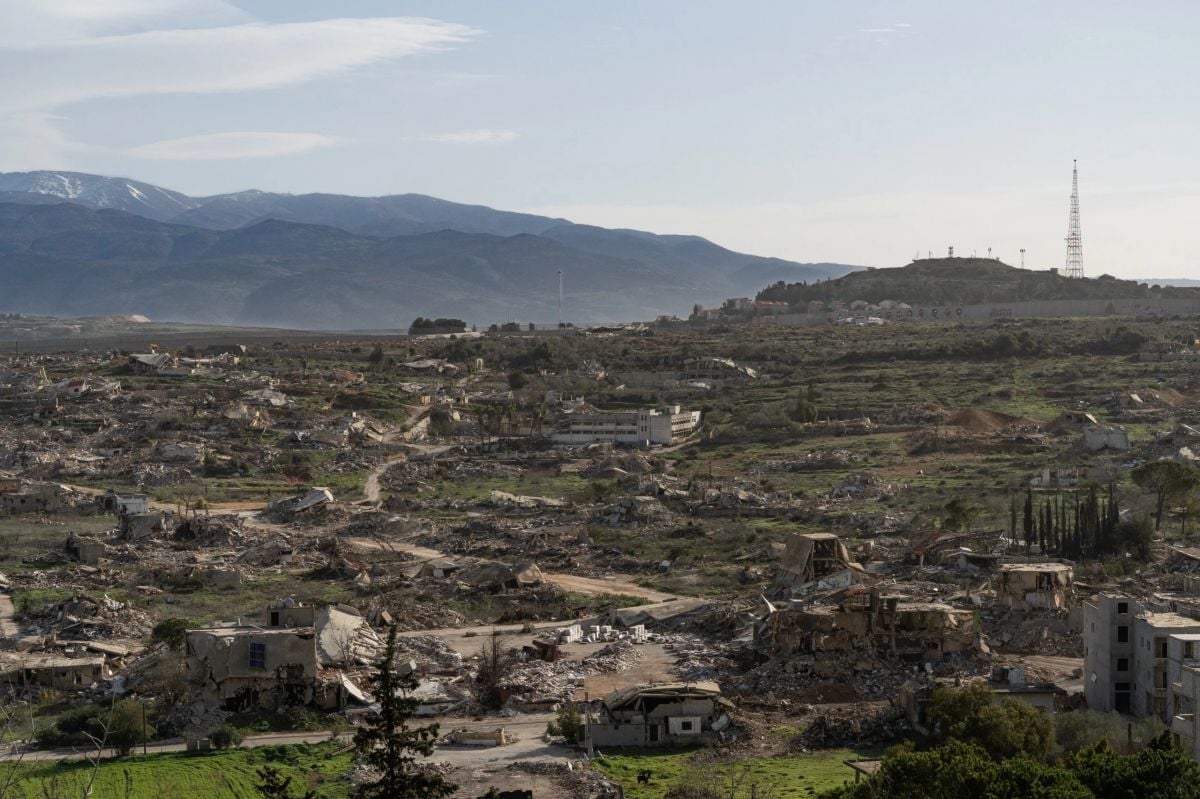
View of the devastated village of Kfar Kila, in south Lebanon, on Feb. 8, 2026. (Credit: Mohammad Yassine / L'Orient-Le Jour)






A large joint patrol of UNIFIL peacekeepers and the Lebanese Army was deployed Thursday in the strategic valley of Wadi al-Hujeir (South Lebanon district) – regularly inspected by the military – reports our correspondent.
Deployments like these have been relatively frequent in recent months, as the Lebanese Army regularly inspects valleys in the South as part of its operations to disarm Hezbollah — sometimes at Israel’s request — through the cease-fire supervision “mechanism.”
The Wadi al-Hujeir valley is considered a strategic route between three major regions in the South: the districts of Marjayoun, Bint Jbeil and Nabatieh. The Israeli army had tried, unsuccessfully, to deploy there during its ground offensive in Lebanon between late September and November 2024, before entering without opposition, for several hours, after the cease-fire in late December 2024, to carry out clearing operations.

Meanwhile, three homes were blown up by the Israeli army on Wednesday night in south Lebanon. An Israeli patrol infiltrated Odaisseh (Marjayoun district) near the Hounine valley, and blew up two buildings that were totally destroyed. Another force entered Lebanese territory in the area of Kfar Kila, a village neighboring Odaisseh, and blew up another building, according to our correspondent.
Israeli artillery shelled the vicinity of Yaroun (Bint Jbeil district) and targeted an empty house in the Christian quarter of the city, while at night, a drone dropped stun grenades on an excavator in Aita al-Shaab (Bint Jbeil district) and machine-gun fire targeted the outskirts of Alma al-Shaab (Sour) from the position Israel continues to occupy in the neighboring Labbouneh area, southeast of Naqoura.
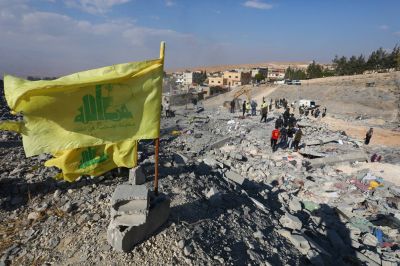
In addition to the Labbouneh position, the Israeli army still occupies at least five outposts on Lebanese territory and continues to strike the South daily. It claims to be targeting Hezbollah fighters or attempts by the party to rebuild and rearm in the area.
The United Nations Interim Force in Lebanon (UNIFIL) also issued a statement on Thursday indicating that it had recorded “thousands of air and ground violations and handed over hundreds of weapons caches to the Lebanese Army” since Nov. 27, 2024.
Last November, UNIFIL told our publication that it had recorded some 7,500 violations of Lebanese airspace and around 2,500 Israeli military activities north of the Blue Line between Nov. 26, 2025, and Nov. 27, 2024.

