






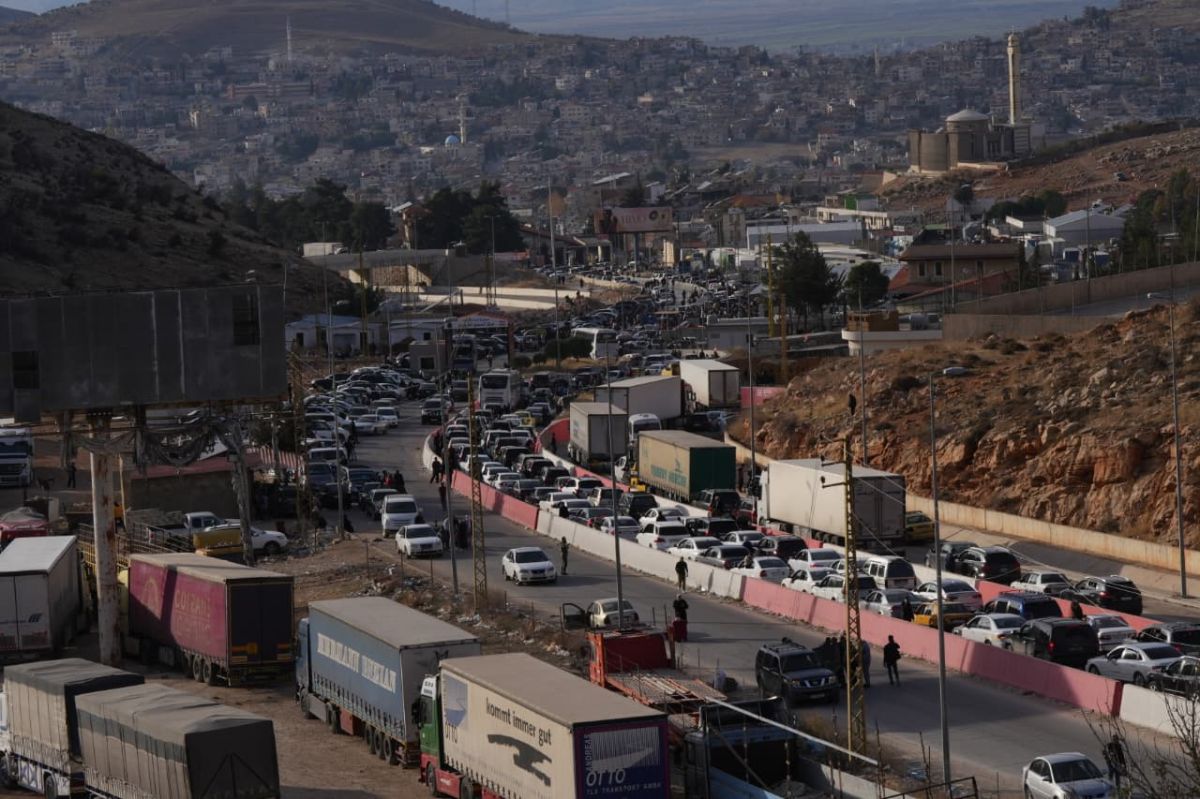
A long line of vehicles at the Masnaa border crossing between Lebanon and Syria, Dec. 9, 2024. (Credit: Mohammad Yassine/L’Orient-Le Jour)






Truck traffic between Syria and Lebanon will resume for one week starting Friday, Feb. 13, under certain conditions, "while an agreement is reached on a new organizational mechanism" for the entry of Lebanese trucks into Syrian territory.
This "transitional mechanism," based on reciprocity, is the result of discussions on Thursday between Lebanese and Syrian delegations in Masnaa, following the Syrian transport minister's decision on Tuesday to prohibit trucks from neighboring countries from entering Syria.
This ban requires trucks to unload their cargo at Jdeidet Yabous and transfer it to Syrian trucks, according to a joint statement obtained by our correspondent in the Bekaa.
On Thursday afternoon, the army announced the closure of two informal crossing points located in Akkar and the Bekaa. "As part of the fight against infiltration and smuggling operations across the northern and eastern borders, an army unit closed illegal crossing points in the areas of 'Martissa' and 'Mikyal Farah,' in Akkar and North Bekaa," the army stated.
Reciprocity and exceptions
Specifically, "once they arrive at the Syrian border crossings, trucks coming from Lebanon will have to unload their goods," the statement said. “They will then load goods destined for Lebanon, transported to the border crossings by Syrian trucks.”
This same principle will apply to Syrian transporters throughout the duration of the agreement.
According to the statement, certain goods are exempt from this procedure, including those transported in tankers, hazardous substances, cement and the raw materials for its manufacture, as well as any product that does not permit transshipment, particularly pharmaceuticals.
This decision comes on the second day of talks, following Wednesday’s meeting between delegations from the two neighboring countries at the Jdeidet Yabous border crossing in northern Lebanon.
It allowed traffic to resume at the border crossings, which had been blocked by endless lines of trucks waiting for authorization to cross, according to our correspondent.
New Lebanese-Syrian meeting on Feb. 19
Both sides also authorized all Syrian and Lebanese trucks held at a border crossing due to blockages to recross the border, provided they unload their cargo, and that this regularization would not be considered a precedent.
They agreed to meet again on Feb. 19 to assess the situation before amending, expanding or ending the process.
The meeting in Masnaa was attended, on the Lebanese side, by representatives from the General Directorate of Land and Maritime Transport within the Transport Ministry, the Agriculture Ministry, General Security, Customs and transport unions, including transit transport unions.
The Syrian side was represented by, among others, the director of the Jdeidet Yabous border crossing, Ahmed Khatib; representatives of the customs and port authorities in Syria; and the head of customs.
This desire for reciprocity between the decision made by Damascus and the application of a similar mechanism in Lebanon had been expressed the previous day by the Lebanese Transport Minister Fayez Rassamny before the start of discussions on Wednesday.
This position was considered "firm" by the president of the National Union of Farmers, Ibrahim Tarshishi. He believed that this Lebanese stance had swayed the Syrian transport minister and prompted Wednesday's meeting in Jdeidet Yabous.
According to Tarshishi, about 20 Syrian trucks enter Lebanon daily, compared with about 100 Lebanese trucks crossing into Syria.
He stated that the Syrian authorities expected "this unjust decision to pass without any significant Lebanese reaction," which was not the case this time.
For Lebanese trucks transporting goods, particularly agricultural products, to the Gulf, Syria is an essential transit point, as it is the only open border, given the state of war with Israel.
The repercussions on agriculture and agricultural exports are therefore considerable.
