






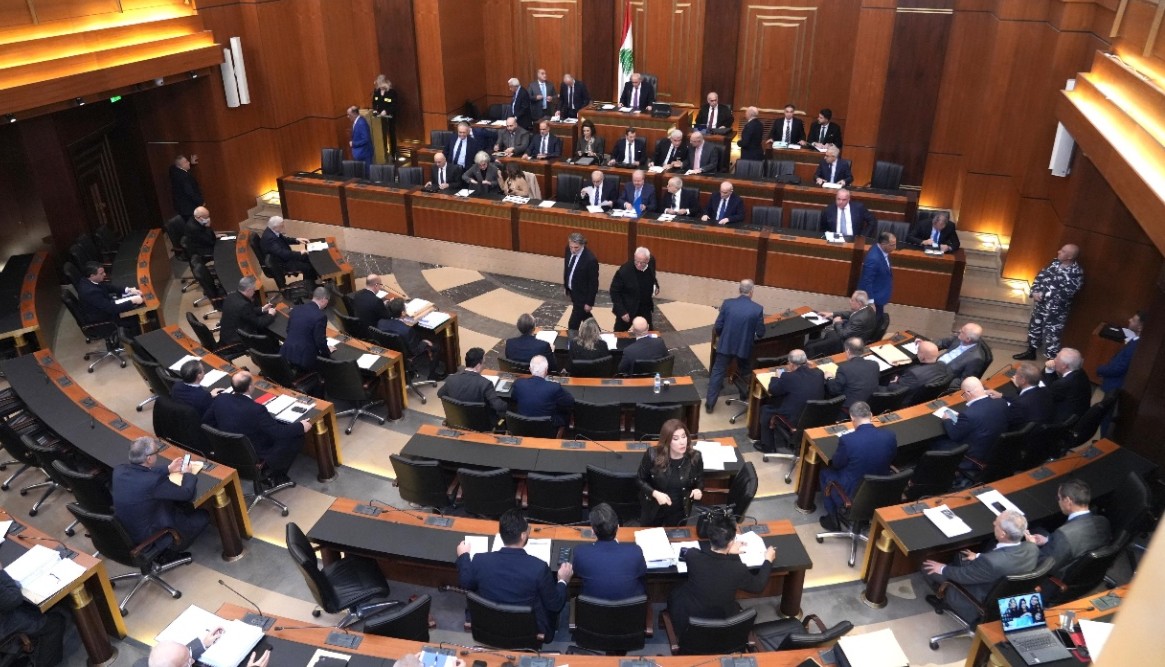
Lebanese Parliament meets to review 2026 budget. (Credit: NNA)






BEIRUT — Lebanon’s Parliament discussed the 2026 state budget in the last week of January, hoping to pass it before the end of the month and prevent the government from promulgating it unchanged for the second year in a row.
Lawmakers have three days to vote on the partially revised bill, drafted by the Finance Committee. Much of the session was dominated by speeches from deputies, with tensions heightened by comments made the previous day by Hezbollah Secretary-General Naim Qassem, who said the party would not remain neutral if Washington were to bomb Tehran.
According to the official state-run National News Agency (NNA), deputies made early efforts to show responsiveness to the demands of thousands of public sector employees, active and retired, calling for adjustments to salaries that have not been updated to reflect the Lebanese Lira's devaluation since the 2019 economic crisis.
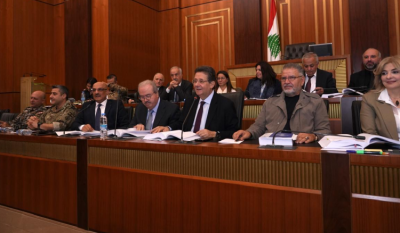
Finance Committee Chair Calls for New Pay Scale
The head of the finance committee, Ibrahim Kanaan, opened the debate by calling for “a new salary grid for the public sector.” He added, “What destroyed the economy was not the old pay scale, but anarchic recruitment in the civil service, executive waste, and the lack of judicial decisions on cases reviewed by the Finance Committee.”
Kanaan noted that the last salary scale adopted in 2016 raised public sector wages by an average of 15 percent, increasing pressure on Lebanon’s fragile, import-dependent, 'dollarized' economy. Public sector employment, estimated at around 300,000 including the armed forces, remains large relative to the country’s size. Even before the crisis, salaries accounted for more than a third of the state budget, just behind debt servicing.
Kanaan also criticized the government for submitting the budget without adjusting salaries and for requesting increased credits for most ministries and institutions.
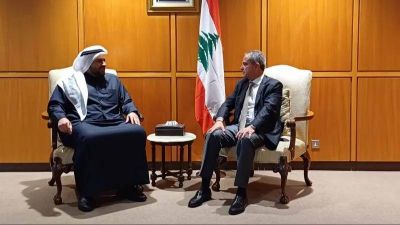
Lawmakers Stress Public Sector Concerns
During his remarks, Deputy Speaker Elias Bou Saab said, “Eighty percent of budget spending goes to salaries and wages, and only 20 percent to other expenses,” acknowledging that current pay levels are “unfair.” He added that retired military personnel are seeking only the restoration of their pensions to half the pre-2019 crisis levels. During a break, Bou Saab met with retired soldiers, informing them that ten lawmakers had signed a bill addressing school allowances for retired military personnel.
Before the session, the Democratic Gathering bloc, led by Walid Jumblatt, urged adoption of a proposal to integrate 50 percent of social benefits and allowances for civil and military employees into the base salary. Shouf MP Bilal Abdallah echoed these calls. Opposition MP Firas Hamdan said the state “cannot ignore retirees’ demands since 2019 and must take serious measures to protect citizens,” while Hezbollah MP Ali Mokdad emphasized that “military and public sector employees must be treated fairly.”
Other Critiques and Tensions
Kanaan also highlighted longstanding issues: the budget would again be adopted without closing accounts from the previous year, and he called for a full audit of Treasury advances. He noted the Finance Committee had frozen the budget line for ESCWA’s rent, citing unrealistic costs that had accumulated over $50 million, urging the government to acquire the building to reduce expenses.
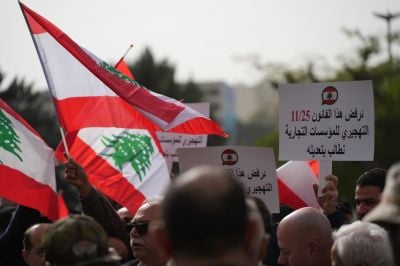
Other criticisms focused on the budget’s lack of vision, neglect of residents affected by Israeli bombardments, and failure to address recent building collapses in Tripoli. The session erupted in a confrontation between Hezbollah deputies and others after Hamdan criticized using southern Lebanese as leverage in regional conflicts, responding to Qassem’s remarks about Iran. Parliament Speaker Nabih Berri attempted to intervene, prompting Kataeb Party leader Samy Gemayel to insist, “No one has the right to interrupt another member.” Hezbollah MP Ali Fayad accused Hamdan of misusing the chamber and said, “Attacking a brother state is unacceptable.”
Opposition MP Paula Yacoubian asked whether the budget serves Lebanon or Iran, adding, “No government can prepare a budget for a country whose national decisions are made abroad, whose parties override the Constitution, and whose sovereignty is seized by foreign entities.”

 8 p.m. recap: Israel again threatens Beirut’s south suburbs; 2 ships hit near Hormuz; Riyadh football matches canceled