





Members of the armed wing of Hamas attend the funeral of two fighters in Gaza on January 24, 2025. (Credit: Omar al-Qattaa/AFP)






Hamas is seeking to integrate its 10,000 police officers into a new Palestinian administration for Gaza, backed by the United States, according to Reuters. This demand is expected to be met with resistance by Israel as the Hamas debates giving up its arms.
Hamas retains control of just under half of Gaza following a cease-fire agreement reached in October under the auspices of U.S. President Donald Trump. The deal hinges on the withdrawal of Israeli troops in return for Hamas surrendering weapons. The 20-point plan to end the war, currently in its second phase, would transfer Gaza governance to the National Committee for the Administration of Gaza (NCAG), a Palestinian technocratic body under U.S. supervision that would exclude Hamas.

Cooperation with the NCAG
In a letter sent to its employees on Sunday and seen by Reuters, the Hamas-run government in Gaza urged its more than 40,000 civil servants and security forces members to cooperate with the NCAG, while assuring them it was working on their integration into the new government. This would include the roughly 10,000-strong police force controlled by Hamas, according to four sources familiar with the matter. Many of them continue to patrol in Gaza as the Islamist movement strengthens its presence in the areas it still controls.
It is not yet known whether Israel, which has categorically rejected any Hamas involvement in Gaza’s future, would accept the inclusion of civil and security staff in the NCAG. Israeli Prime Minister Benjamin Netanyahu’s office did not respond to a request for comment.

Hamas spokesman Hazem Kassem told Reuters the group was ready to immediately transfer governance to the 15-member NCAG headed by Ali Chaath. “We are fully confident that the committee will operate with qualified personnel and will not harm any employees who worked during the previous period,” Kassem said, referencing the integration of the 40,000 people involved. The four sources indicate Hamas is open to a restructuring of ministries by the NCAG and sending some staff into retirement. Large-scale layoffs risk causing chaos, they said.
Hamas and NCAG head Ali Chaath have yet to meet in person to discuss governance, according to a Hamas official. Chaath’s office did not respond to a request for comment. Another unresolved issue is the capacity of Sami Nasman, the former Palestinian Authority general appointed to oversee security under the NCAG, according to a Palestinian official. Nasman, originally from Gaza, moved to the occupied West Bank after Hamas ousted Palestinian Authority forces from the enclave in 2007 following a brief civil war. A Hamas court in Gaza later sentenced him in absentia for inciting chaos, charges Nasman denies.
Neutralization of weapons
The Trump administration wants an immediate dismantling of heavy weapons, with “registration of personal arms and gradual disarmament by sector as the NCAG police become able to guarantee individual security,” according to a document distributed by the White House last week. An American official said Tuesday that Hamas fighters would benefit from some form of amnesty. The group is believed to still have rockets — estimated at several hundred by various diplomats—as well as thousands of light weapons, including rifles.
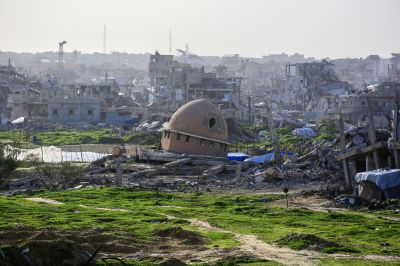
According to sources, Hamas has recently agreed to discuss disarmament with other Palestinian factions and with mediators. However, two Hamas officials told Reuters that no detailed or concrete disarmament proposal had been presented to them by Washington or mediators.
A Palestinian official close to the disarmament talks said the U.S. had approached Hamas to explore possible disarmament mechanisms bringing together Israel, Qatar, Egypt and Turkey. “Hamas has mentioned the possibility of neutralizing weapons, which could be considered if there is a truce, and it is ready for a long-term cease-fire — five years, or even a bit longer,” the official said. “But Hamas maintains that a serious political process must begin on the Palestinian state question, so that weapons and fighters would come under the authority of the State of Palestine,” he added.
Hamas is not the only armed group with weapons in the enclave. A member of a Hamas-allied faction in Gaza said other groups were also discussing disarmament but feared being left defenseless. In a speech to parliament on Monday, Israeli Prime Minister Benjamin Netanyahu said the next phase of the Gaza agreement “is not reconstruction.” He added: “The next stage is the demilitarization of the Gaza Strip and the disarmament of Hamas.”

 Evening recap: Netanyahu announces West Bank offensive; 7 killed in Jordan church shooting; tents burned in south Lebanon
 US strike on Iran this weekend? ‘Absolutely,’ says Barrack; ‘I have no idea,’ says Trump