



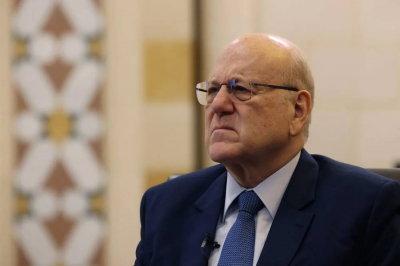
Former Prime Minister Najib Mikati. (Credit: AFP)






BEIRUT — Former Prime Minister Najib Mikati on Monday denied any connection to what he described as an “alleged investigation” involving files related to Bank Audi, responding indirectly to questions raised last week by five protest MPs.
The MPs addressed their questions to the government, Banque du Liban (BDL, central bank) and other institutions regarding a suspected embezzlement case linked to an acquisition carried out by Bank Audi in recent years. No further details have been made public at this stage.
In a statement issued by his office, Mikati said he was once again the target of political and media campaigns aimed at damaging his reputation and associating his name with cases “with which he has no connection.”
“Over recent years, several legal cases have been fabricated and brought against him and his family, both in Lebanon and abroad,” the statement said. “The decisions and final judgments issued by all competent courts have consistently confirmed their lack of foundation, unequivocally affirming the integrity and probity of the conduct followed by Prime Minister Mikati.”
The statement added that such campaigns continue to resurface “according to the political objectives that drive them and the plans of their instigators.”
Mikati said he acts “in accordance with the law” and called on the judiciary to take the necessary legal steps “to set the record straight and reveal the truth to public opinion,” warning against any exploitation or defamation. He also said he reserves the right to pursue legal action to “put an end to the harm” inflicted on himself and his family.
In September 2025, France’s National Financial Prosecutor’s Office opened a preliminary investigation following a complaint alleging money laundering, concealment and criminal conspiracy against Mikati, his brother Taha, and several other family members.
The complaint was filed by the French association Sherpa and the Collectif des victimes des pratiques frauduleuses et criminelles au Liban, which represents depositors affected by the illegal withholding of funds since Lebanon’s financial crisis erupted in 2019.
 7 p.m. recap: Iran defies Washington over Hormuz; Bab al-Mandeb ignites, Israel strikes the Bekaa