





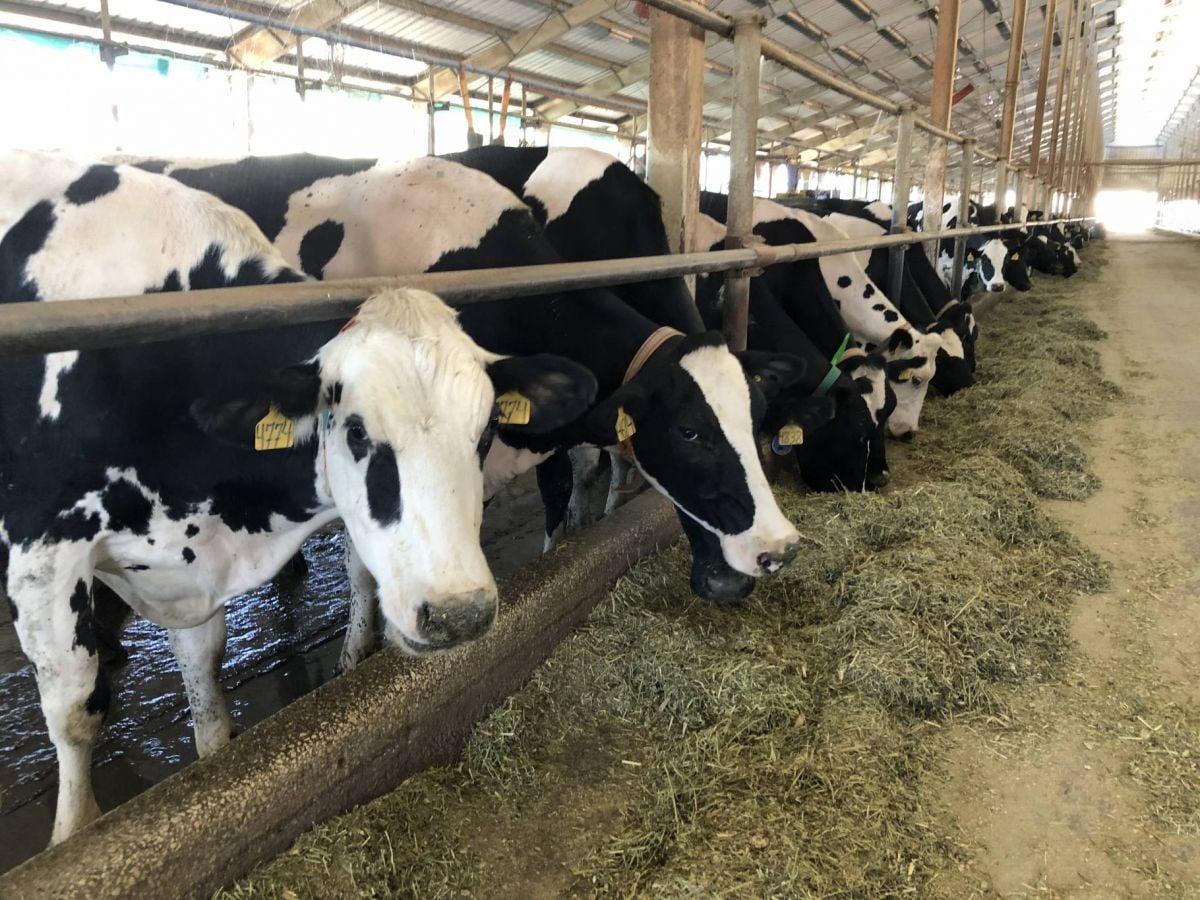
Cows on a farm in Lebanon. (Credt: Illustrative photo Philippe Hage Boutros/L'Orient-Le Jour)






BEIRUT — The Agriculture Ministry announced Monday that cases of foot-and-mouth disease have been confirmed among cattle illegally brought into Lebanon.
According to the ministry, the virus subtype identified is related to strains circulating in the region, particularly in Turkey and Azerbaijan, and has no connection with legal imports from Egypt.
In a statement, the ministry said, "Preliminary analyses of samples from infected animals, sent to the world's reference laboratory in Pirbright, United Kingdom, revealed the presence of the SAT1 serotype of the foot-and-mouth disease virus, as well as subtype III [topotype III]."
"This subtype is genetically related to strains previously reported in some countries of the region, such as Turkey and Azerbaijan, and has no connection with the Arab Republic of Egypt," the statement specified.
The ministry thus asserts that the virus was introduced to Lebanon through "the illegal smuggling of cattle," and not through official channels of importing cattle or other livestock.
Last December, sources from the Agriculture Ministry estimated that the foot-and-mouth disease virus, which had already been spreading in Lebanon for two months, may have been introduced by herds entering illegally from Syria, but this information had not been confirmed.
At the time, the veterinarians' syndicate described the disease as "a major threat to livestock that could lead to significant economic and health losses," even advocating for a "state of emergency" in response to the virus.
This highly contagious disease, which does not affect humans, primarily strikes cloven-hoofed animals, such as cows, goats and sheep. It causes blisters in the mouth and on the hooves, fever, loss of appetite and painful mastitis (inflammation of mammary tissue).
It is particularly deadly for the youngest animals due to their low immunity. Last December, foot-and-mouth disease mainly affected farms in the North, Bekaa, and Baalbek-Hermel. South Lebanon was less affected. It is a new strain for which there is currently no vaccine available in Lebanon.
In light of the situation, the Agriculture Ministry is calling for "increased vigilance" and "strengthening preventive veterinary measures" across all livestock farms, in order to protect cattle, sheep and goats, and to ensure sanitary safety in local production.
The ministry says it is monitoring the situation daily, ensuring compliance with veterinary guidelines, and adapting prevention protocols in line with recommendations from international laboratories.
