


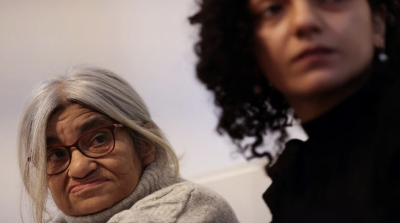
(L-R) Supporters of Palestine Action activists on hunger strike while detained awaiting trial in the UK attend a press conference in London on Dec 18, 2025: Doctor James Smith, Teuta Hoxha's sister Rahma Hoxha, Qesser Zuhran's designated next of kin Ella Moulsdale, MP Jeremy Corbyn, Prisoners for Palestine's Francesca Nadin and Kamran Ahmed's sister Shahmina Alam. (Credit: Henry Nicholls/AFP)






Six Palestine solidarity activists taking part in Britain's biggest prison hunger strike in decades have been hospitalized after relatives and supporters warned Thursday that some are at "imminent risk" of dying.
Pressure to take action is mounting as more than 800 doctors, nurses and other healthcare professionals in the U.K. have decried the lack of proper medical attention the hunger strikers have received.
The U.K. government, meanwhile, continues to refuse to meet with campaigners to discuss the prisoners' demands amidst their deteriorating health.
Some of the eight Palestine Action activists, detained in custody for over a year while awaiting trial, have gone without food for up to 49 days, protesting their treatment and calling for their release on bail ahead of their respective trials.
The detained activists, most of whom are part of the Filton 24 and are aged between 20 and 31, took part in a direct action as part of the group Palestine Action to protest Israel's war on Gaza in August 2024.
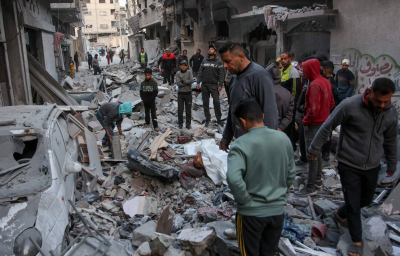
Their main objective was to disable the weapons at a facility belonging to Israel’s largest arms manufacturer, Elbit Systems, near Bristol, south-west England, and to draw attention to the complicity of arms companies such as Elbit Systems in what they and many international organizations have concluded is a genocidal war against the Palestinian people in Gaza.
A different group of activists broke into a U.K. air force base nearly a year later, in June 2025, allegedly causing an estimated £7 million ($9.3 million) of property damage. Following this action, the U.K. Home Secretary designated Palestine Action a proscribed group, officially banning it under the UK's Terrorism Act 2000.
The Filton 24 activists and detainees have been handed charges relating to break-ins and criminal damage, and anyone supporting the organization now faces criminal charges under U.K. terrorism laws in an unprecedented crackdown on the right to protest.
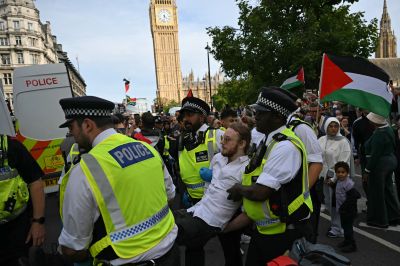
Two protesters began their hunger strikes in early November, according to their supporters, with others joining in the following weeks. Two of the eight have paused while one has been participating on alternate days due to their diabetes, leaving five in the most perilous conditions.
"Today's day 47 — any day after day 35 is considered a critical and severe stage of starvation," Ella Moulsdale, next of kin of one of the hunger strikers, Qesser Zuhrah, told reporters in London on Thursday.
"This is a very deadly period," the tearful 21-year-old said, adding that Zuhrah had lost 13 percent of her body weight during the nearly seven-week hunger strike which has seen her taken to hospital twice.
James Smith, an emergency physician, has been in contact with some of the protesters and their relatives. At a news conference, he warned of "the imminent risk to the health and the risk of death for all of the hunger strikers at this stage."
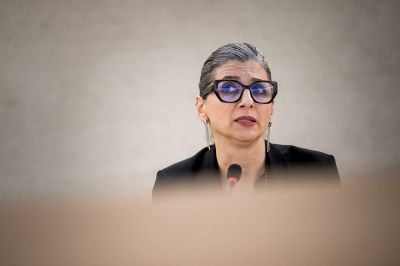
Smith said hundreds of healthcare workers wrote jointly Thursday to Justice Secretary David Lammy and other senior government and health officials raising concerns about the handling of the hunger strike. "On this trajectory, put simply, the hunger strikers are dying."
Asked about it in parliament Wednesday, Prime Minister Keir Starmer said "rules and procedures" were being followed.
Palestine Action co-founder Huda Ammori challenged the ban in July, and High Court judges are expected to rule at a later date on whether to uphold it.
Campaigners say the prison action is the largest coordinated in the U.K. since the 1981 hunger strike by IRA inmates in Northern Ireland demanding political prisoner status. Then, Bobby Sands was the first of 10 Irish republican hunger strikers to die after refusing food for 66 days.
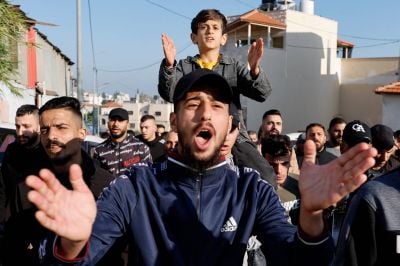
"The state let them die, and now that is what they're doing," Rahma Hoxha, whose sister Teuta Hoxha has been on hunger strike for 40 days, told reporters. "Even though she's feeling very weak, she's quite firm for her demands to be met," she said.
The demands of the hunger strikers include: granting them immediate bail, the right to a fair trial, ending censorship while in prison, lifting the government ban on Palestine Action and shutting down all Elbit System sites across the U.K.
Francesca Nadin, of the Prisoners for Palestine group campaigning for the eight hunger strikers, said Thursday that "we can end this situation safely" if Lammy agreed to a meeting with their lawyers.
The legal team spearheading their cases — with the support of several MPs including veteran leftwinger and campaigner for Palestinian rights Jeremy Corbyn — said it had repeatedly written to Lammy and his ministry requesting a meeting but had been rebuffed.
The Ministry of Justice did not immediately respond to a request for comment.
Shahmina Alam, sister of hunger striker Kamran Ahmed — who has been on hunger strike for 39 days and been in hospital twice — said his family were anxiety-ridden.
"I do not want to receive the call that my brother has succumbed, succumbed to this hunger strike. His heart is slowing down. So what are we waiting for? For it to stop?"

 1 p.m. recap: Salam in Nabatieh; up to 10,000 more US troops heading to Middle East