





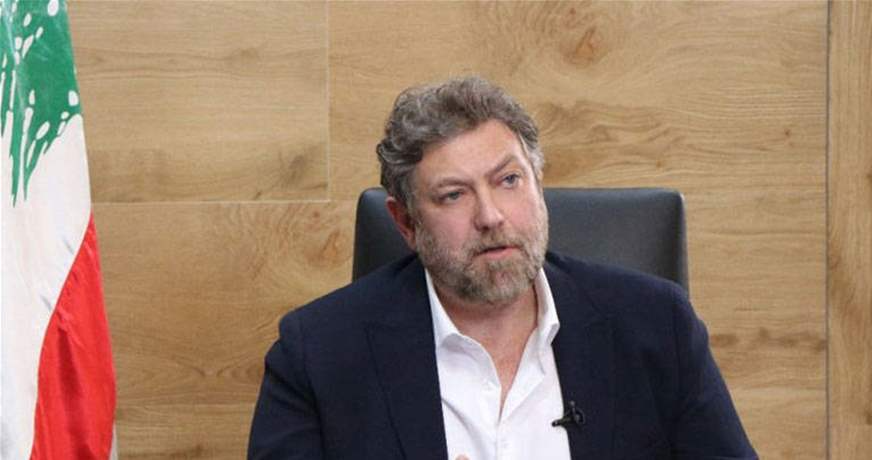
The deputy of Kesrouan, Neemat Frem. (Credit: NNA)






"It is true that legislative elections are a national demand and that it is fundamental for them to take place within the constitutional deadlines... But in the current situation, it seems obvious that obstacles are standing in the way of their being held under such circumstances."
With these words, included in a statement published by the state-run National News Agency (NNA), Neemat Frem, the independent MP for Kesrouan, on Monday raised for the first time the idea of a postponement with no fixed date.
The independent MP Ghassan Skaff, who recently passed away, had submitted a draft law for a postponement until the summer, and Druze leader Walid Joumblatt said in a televised interview last week that the elections would be delayed by a few months, but Frem's statement goes clearly further, stating that "without a real calm and an end to [Israeli] aggressions, the climate will not be conducive to holding a vote."
One of the main reasons cited by the MP relates to the controversy over the expatriate vote: the current law provides that they are to vote for six additional MPs, but the executive decrees have not been published, and a draft law allowing them to vote for the 128 MPs according to their constituency in Lebanon — supported by a majority of MPs— c lashes with the opposition of the Parliament Speaker, Nabih Berri.
"This draft law is still not on Parliament's agenda, which puts us in an impossible situation: a law in force but unenforceable, and a proposed law that is applicable but not adopted," said Frem.
The other reason cited by the MP is the ongoing war in South Lebanon and sometimes in other regions such as the Bekaa.
Despite the cease-fire of Nov 27, 2024, which officially ended the conflict between Hezbollah and Israel, Israeli violations of Lebanese territory remain daily, producing new victims — mostly members of Hezbollah, but also civilians.
"Holding parliamentary elections while war continues and blood is shed every day is not likely to effect significant and real change in the political landscape," Frem continued, afraid that "the only tangible change would be the formation of a new government, without any guarantee that it would perform better than the current one."
In his view, "as long as Israeli violations continue and new martyrs fall every day, the results of the elections will not reflect the real will of the voters, but rather the result of a mere reaction by the Shiite community, since no one can vote against blood and martyrs."
Frem acknowledged "that there is not yet a unified position from the sovereigntist MPs on this issue, but developments on the ground might lead us to revise our priorities, so that the issue of stopping the security and military bleeding, and controlling weapons, become the gateway to any political and electoral process."

 Evening recap: Netanyahu announces West Bank offensive; 7 killed in Jordan church shooting; tents burned in south Lebanon
 US strike on Iran this weekend? ‘Absolutely,’ says Barrack; ‘I have no idea,’ says Trump