


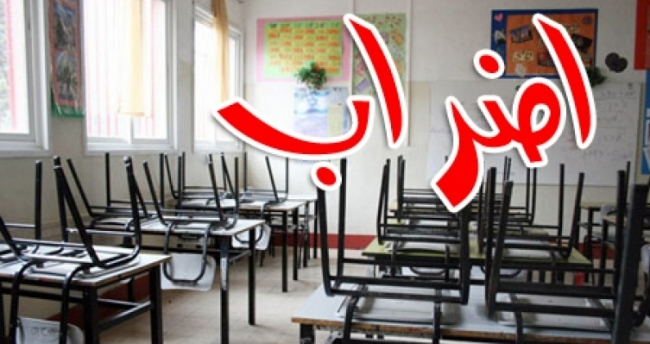
An empty classroom. (Credit: NNA)






BEIRUT — Associations of tenured teachers in Lebanon’s public schools held a general strike on Thursday, joining several public sector unions and threatening to escalate next week if their demands are not addressed.
The teachers are denouncing what they call the government's "procrastination" and its "refusal to put salary adjustments on the agenda for Friday’s Cabinet meeting."
However, a rift has emerged within the movement: contract teachers have refused to join the strike, since their salaries are only paid if they teach their classes — unlike tenured teachers, whose salaries are maintained even during strikes, according to the state-run National News Agency (Ani, official).
Since the collapse of the Lebanese pound in 2019, the salaries of public school teachers — set on the same pay scale as civil servants — have been all but wiped out.
Despite cosmetic adjustments and bonuses rewarding attendance, they still have not regained their pre-crisis value. This is widely seen as a political choice to reduce the size of the public sector workforce — both teachers and others — at a time when authorities are under pressure from the international community to streamline state finances and implement reforms. Meanwhile, hiring of public school teachers has long been governed by clientelist practices.
The unions for tenured teachers in secondary, primary, and technical education called on Wednesday for a work stoppage the following day at all public educational institutions. As part of this, they invited contract teachers to join the movement and come to schools to record their hours so that these would be counted.
But the Committee of Primary Education Contract Teachers, as well as the Movement of Secondary Contract Teachers, rejected the call, announcing their refusal to strike and at the same time accusing the tenured teachers’ union representatives of encouraging them to commit fraud.
"A contract teacher is only paid for teaching their class. Showing up just to sign your name without teaching is cheating," said Nisrine Chahine, founder of the Committee that emerged from the popular protest movement, in a statement.
"The law must apply to everyone. The law gives you a salary in exchange for work, not just for formal presence to sign in," the Movement of Secondary Contract Teachers emphasized.
Beyond the question of professional ethics, Chahine reproaches the tenured teachers’ unions — and especially the primary school union, headed by her colleague Hussein Jawad — for "representing only 20 percent of the teaching staff and ignoring the specific demands of contract teachers," notably "transportation allowance for each day of work, counting paid holidays and strike-imposed days, and payment of salaries that have been owed for months."
The issue now appears to be taking on a political dimension, with union reps close to the Amal-Hezbollah alliance calling for escalation, while the two contract teacher unions are appealing to Education Minister Rima Karameh to "enforce the law."
 7 p.m. recap: Flames, smoke reported near Aramco site near Riyadh; Houthis accuse Saudi Arabia of 56 strikes on Sanaa