





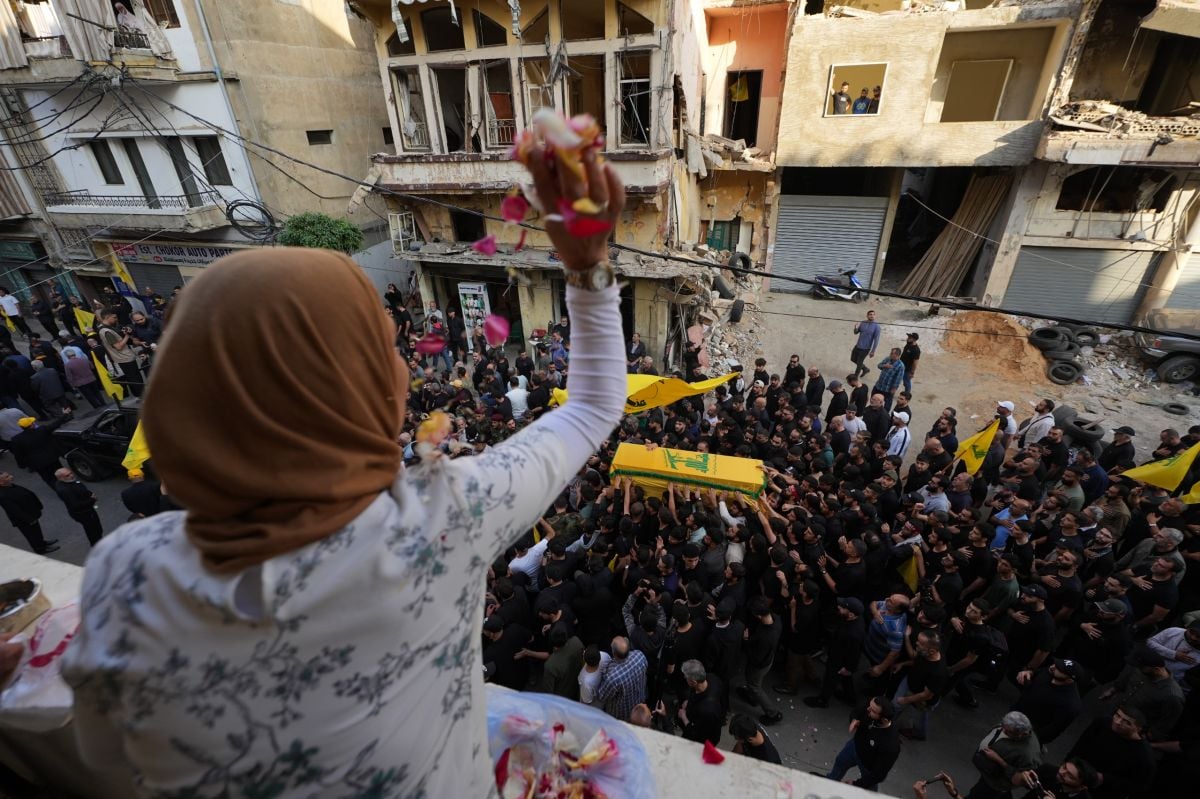
Funeral of Haytham Ali Tabataba'i, senior military official of Hezbollah, in the southern suburbs of Beirut. (Illustrative photo: Mohammad Yassin/L'Orient Today)






Iran has transferred hundreds of millions of dollars to Hezbollah over the past year via currency exchange offices and companies based in Dubai, revealed the Wall Street Journal on Thursday, specifying that Tehran is seeking new avenues to transfer money to its Lebanese proxy, amid the ban on Tehran-Beirut flights, restrictions imposed on Lebanon, and the closure of supply routes through Syria.
Hezbollah, designated as a terrorist organization by the United States, needs these funds to rebuild and rearm its militia and to cover costs related to its losses in the war it waged against Israel between October 2023 and November 2024, including compensation promised to the displaced and to families of victims.
Its smuggling routes in Syria were disrupted after the fall of the Assad regime, an Iranian ally, in December 2024, and Lebanese authorities intensified the crackdown on passengers carrying suitcases of cash at the Beirut International Airport (AIB).
"These limitations have prompted Iran and Hezbollah to turn more toward Dubai, the global financial hub of the United Arab Emirates, which has long been used by Tehran to launder funds and circumvent sanctions, according to sources familiar with the matter, including a senior U.S. official," says the American outlet, citing "sources familiar with the matter" without further clarification.
Also according to the WSJ, "revenues from the sale of oil are sent to currency exchange offices, private companies, businessmen and couriers linked to Iran in Dubai, who transfer them to Hezbollah in Lebanon via Hawala, a traditional informal money transfer system that is entirely based on trust. The funds are deposited with a broker in Dubai and paid out by a broker in Lebanon, with accounts settled later."
UAE cooperation to prevent illicit transfers
An official from the United Arab Emirates said the Gulf monarchy is committed to preventing the illicit use of its territory for illegal financing and is working in this regard with international partners.
Hezbollah and the Lebanese prime minister's office did not respond to requests for comment from the WSJ. The Iranian mission to the United Nations also did not reply to requests from the American outlet.
"Hezbollah is currently focusing on reconstruction. And Iran is not pulling back from its commitment to its main regional ally," emphasized David Schenker, director of the Arab Politics Program at the Washington Institute. According to the U.S. Treasury, which sanctioned three Hezbollah operators in early November, "Iran's Quds Force, tasked with supporting allied militias abroad, has transferred more than $1 billion to Hezbollah since January, mainly via currency exchange companies."
Hezbollah, once the best-armed non-state militia in the world, was especially weakened during the two-month escalation last fall, launched on September 23, 2024, in which Israel conducted a massive bombing campaign that notably killed the party's secretary-general, the iconic Hassan Nasrallah, and significantly reduced its arsenal. A year after the cease-fire, the group still struggles to cover its financial needs. "One billion dollars used to be their total annual budget, but after the war they need much more," Hanine Ghaddar, senior fellow at the Washington Institute, told the WSJ.
The United Arab Emirates had long had a reputation as a hub for illicit funds and was placed on the Financial Action Task Force's (FATF) "gray list" in 2022 for not doing enough to combat money laundering and terrorist financing. The international organization removed the country from this list two years later, judging that it had improved its controls, though some anti-corruption organizations believe additional progress is needed.
Funds transfers via Turkey and Iraq
The United States is also concerned about funds routed to Hezbollah via Turkey and Iraq, a senior American official said. John Hurley, Deputy Treasury Secretary for Terrorism and Financial Intelligence, visited the UAE and Turkey in November before traveling to Lebanon to discuss efforts to combat Iranian money laundering and terrorist financing.
The cease-fire that ended the war between Israel and Hezbollah requires Lebanon to secure its entry points and prevent the flow of weapons to non-state militias, primarily Hezbollah.
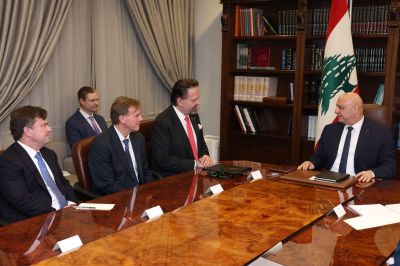
To circumvent restrictions imposed since the beginning of the year by the new post-cease-fire mandate, including the suspension of flights between Iran and Lebanon and restrictive measures at the port and AIB, Iran is sending more travelers carrying small amounts of cash or jewelry, which are easier to hide and need not be declared, according to Arab officials. Hezbollah also has its own funding sources through global networks reaching West Africa and South America, involved in drug trafficking, diamonds, and services such as money laundering, these same Arab officials added.
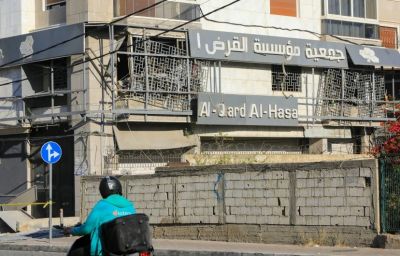
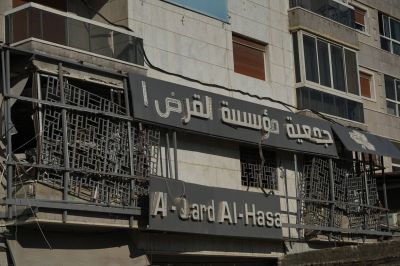
The United States is also demanding that Lebanon shut down al-Qard al-Hassan, Hezbollah's key financial institution sanctioned by Washington, which was established in the 1980s and provides financial services, including loans and ATMs, to many Lebanese.
Al-Qard al-Hassan operates as a charity and escapes the control of Banque du Liban (BDL, central bank). According to the WSJ, Washington was also behind the cancellation of a Lebanese Ministry of Social Affairs decision to expand its list of disability allowance beneficiaries to include those wounded in Hezbollah's pager attacks, on Sept.17, 2024, which also caused dozens of deaths.

 7 p.m. recap: Iran warns Egypt, Israeli soldiers vote in south Lebanon, Haret Hreik responds to Kataeb