






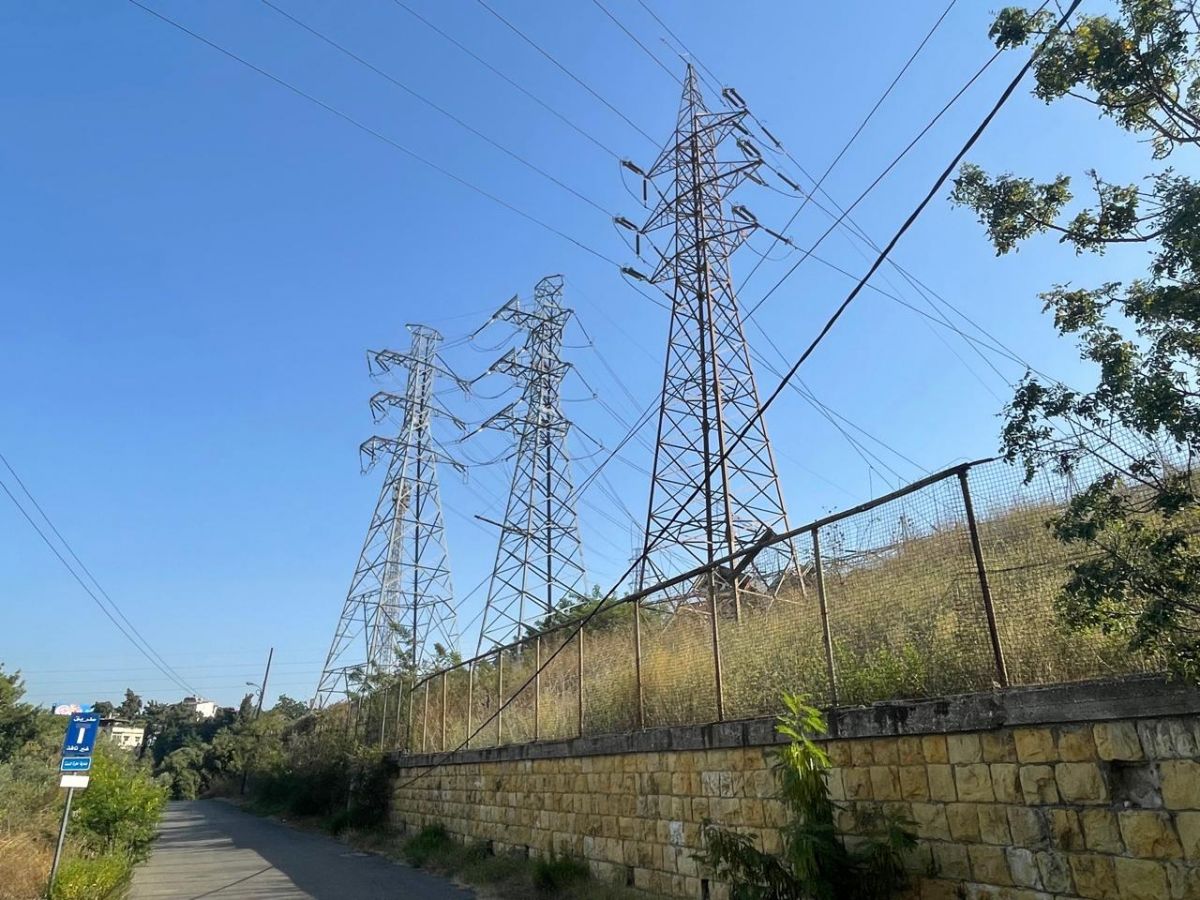
Electric poles near an Electricité du Liban (EDL) station in Jamhour, Aug. 22, 2024. (Credit: Philippe Hage Boutros)






BEIRUT — The “Gathering of Residents of Southern Border Communities,” a movement founded by activist and engineer Tarek Mazraani, denounced in a statement the continued collection of Electricité du Liban (EDL) bills and “certain water offices” — which it did not name — from residents of border villages in the years before, during, and after the war.
“This is totally unacceptable in the context of the severe economic crisis residents of this region have been experiencing for more than two years, marked by war, displacement, the destruction of homes, and the loss of income and livelihoods. This comes as the state had promised to exempt citizens affected by the war from all taxes, fees and fines,” the group said.
A screenshot shared by L'Orient Today's correspondent in south Lebanon shows the public electricity provider asking a subscriber — whose name was concealed — to pay a bill from March 2023.
The movement again urged these institutions and any other government agencies “to exempt residents of this devastated, disaster-stricken border area from all taxes, fees, fines and subscriptions for all years before, during and after the war, until the crisis ends and life returns to normal.”
EDL has long reported high levels of unpaid bills and illegal connections nationwide, particularly in regions far from the capital, well before the outbreak of the war between Israel and Hezbollah. The country’s water offices face similar issues.

