





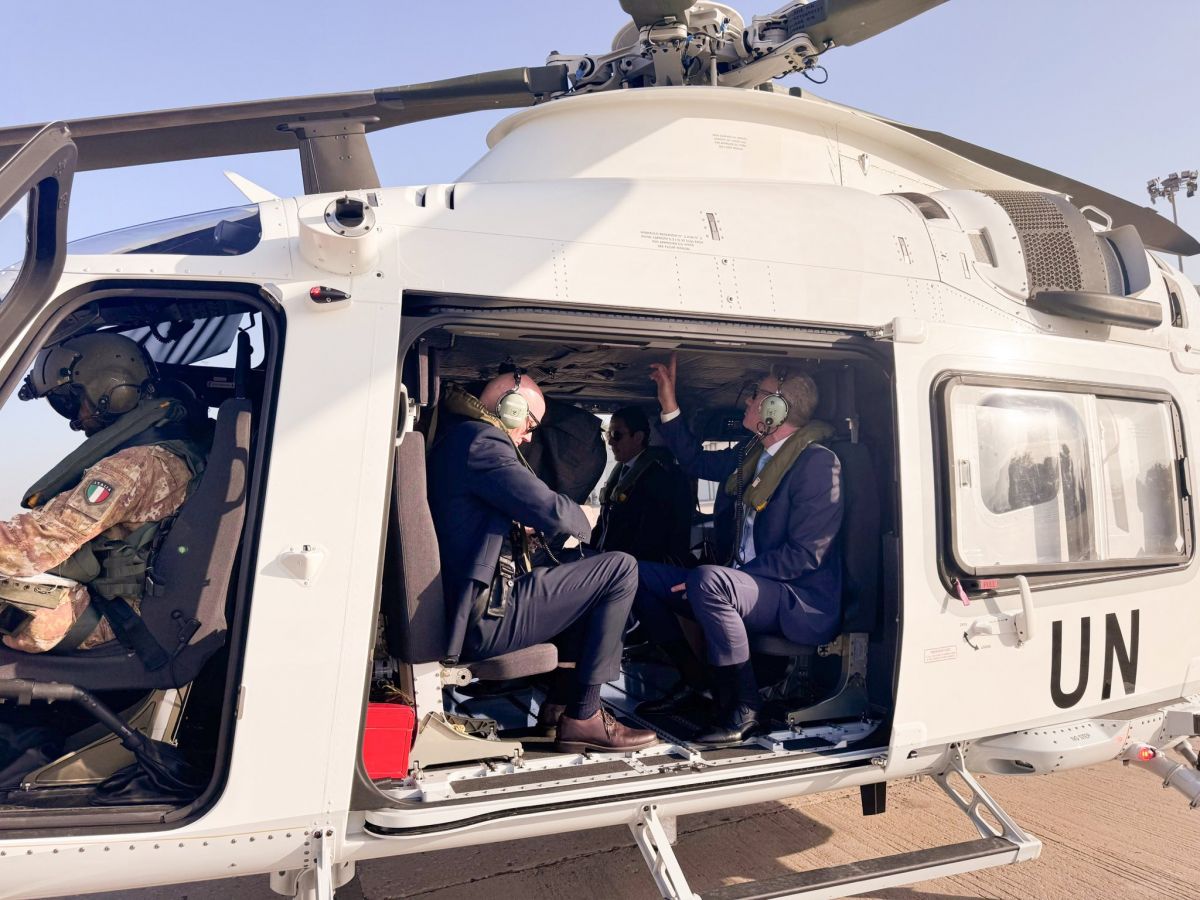
Lebanese Foreign Minister Joe Rajji during a helicopter tour with the U.N. force over border villages and along the Blue Line. (Credit: Rajji's X account)






Lebanese Foreign Minister Joe Rajji could only observe during a tour of southern Lebanon on Friday the "extent of the damage" from more than a year of war between Israel and Hezbollah in the region, a realization that led him once again to advocate for a monopoly on weapons in the hands of the state.
Speaking at the headquarters of the United Nations Interim Force in Lebanon (UNIFIL) in Naqoura, following a helicopter tour by the international force over border villages and along the Blue Line, Rajji said that flying over "areas devastated by Israeli strikes, as well as the five remaining occupied military positions," only reinforced "Lebanon's resolve to liberate its land."
He added that this resolution was part of the desire to "support the Lebanese Army in its efforts to restore the state's sovereignty, implement Resolution 1701, and carry out the government decision reserving the right to bear arms exclusively to the state and reaffirming its full authority over decisions of war and peace."
The recent war between Israel and Hezbollah, whose front in southern Lebanon was opened by the party's first shelling, has been particularly devastating, especially for the South.
In violation of the cease-fire agreement reached last November, the Israeli army maintains at least five military positions there. It continues its near-daily bombardments, which also target the Bekaa.
Upon his arrival at the Blue Helmets' headquarters, the minister was welcomed by the force commander, General Diodato Abagnara, who accompanied him during a field visit.
Rajji then signed the guestbook, expressing his "pride in visiting the Blue Helmets on the occasion of the 80th anniversary of the founding of the United Nations," and saluting UNIFIL's "essential" role in "maintaining peace and stability, as well as the sacrifices made by its soldiers in the service of Lebanon."
The head of Lebanese diplomacy also paid tribute to the sacrifices of the Blue Helmets, several of whom have been wounded in recent months by Israeli fire, and discussed the mission's future with General Abagnara, whose mandate ends at the end of 2026.
The commander assured continued cooperation between UNIFIL and the Lebanese Army during the transition phase, with a view to the full implementation of Security Council Resolution 1701 and to supporting the resilience of residents in the South, despite budgetary restrictions.
The UNIFIL commander presented the minister with the United Nations flag, a symbol of peace and prosperity, while Rajji gave him a Phoenician sculpture made after the Beirut Port explosion in 2020, crafted from wheat remnants from the destroyed silos.

 7 p.m. recap: Iran warns Egypt, Israeli soldiers vote in south Lebanon, Haret Hreik responds to Kataeb