





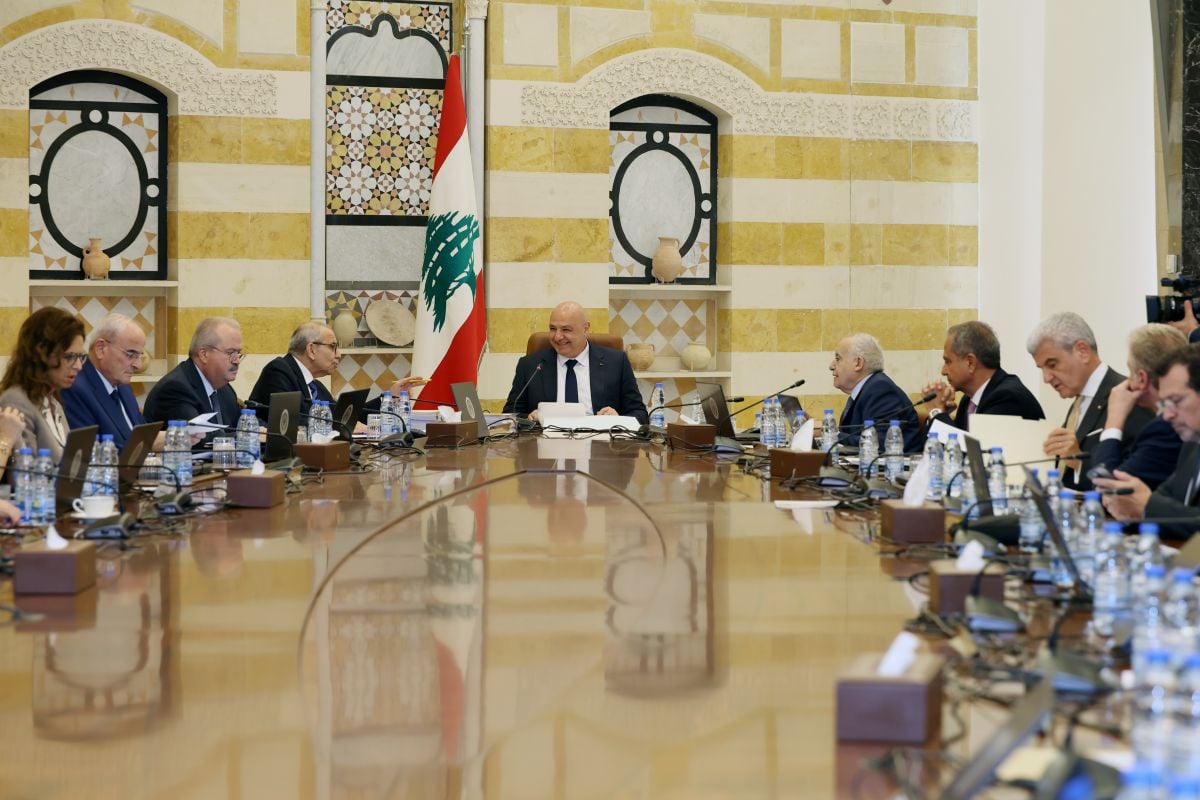
The Lebanese government meeting in Baabda Presidential Palace, on Oct. 23, 2025. (Credit: Lebanese presidency/X)






BEIRUT — Lebanon's ministers on Wednesday adopted two key measures in the hydrocarbons sector in a meeting chaired by President Joseph Aoun at the Baabda Presidential Palace, attended by Prime Minister Nawaf Salam.
According to a presidential statement, the government approved awarding the exploration and production agreement for Block 8 to the consortium TotalEnergies, QatarEnergy, and Eni.
A source familiar with the issue told L'Orient Today that the five-year contract requires TotalEnergies’ consortium to conduct 3D seismic studies within the first three years — “a relatively long period for this type of service,” the source said.
The 3D seismic study is a soil imaging technique that gives oil companies a better understanding of the hydrocarbon potential of the studied areas, thus reducing the risk of drilling without discovery.
Block 8 is one of three offshore blocks along Lebanon’s maritime border, part of the country’s exclusive economic zone (EEZ), which comprises 10 blocks in total. The border dispute with Israel was settled in October 2022 through U.S.-led negotiations.
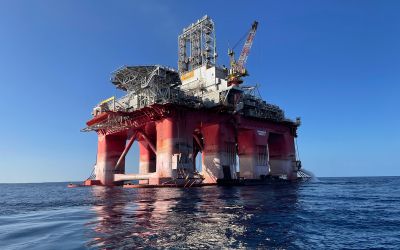
The licensing appears to have superseded TGS, a specialized firm that former Energy Minister Walid Fayad had assigned to carry out 3D seismic studies on Block 8 in late 2024. TGS had been replacing a partnership between Geoex MCG and Brightskies Geoscience (BGS), initially mandated by the same minister but which left Lebanon after Oct. 8, 2023, when Hezbollah launched its “support front” for Gaza.
In a second key decision, the government approved the maritime border agreement with Cyprus, ending a dispute frozen since 2007. The parliamentary committee on Public Works, Energy and Water, which reviewed the text multiple times, had planned to invite experts to make scientific recommendations aligned with international law and Lebanon’s interests. Progress accelerated over the summer: in early July, Aoun and Cypriot President Nikos Christodoulides agreed in a Nicosia summit to continue negotiations.
Resolving disputes with Cyprus, Israel and Syria is part of Beirut’s strategy to strengthen Lebanon’s appeal to international oil companies.
BDL governor term limits
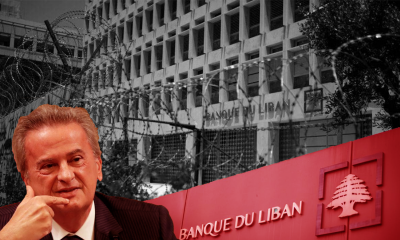
The Cabinet also approved a law limiting the term of the Banque du Liban (BDL, central bank) governor to a single renewal, according to the al-Markazia. The measure, proposed by Kataeb leader Samy Gemayel, seeks to prevent prolonged tenures like that of former governor Riad Salameh, whose 27-year tenure, the bill’s explanatory statement said, “led to the adoption of disastrous policies that contributed to the country’s collapse.”
Two other bills submitted to the government by MPs were rejected. One sought to reduce the legal interest rate on all bank loans (personal, commercial, etc.) from 9 percent to 2 percent retroactively from Nov. 17, 2019. The second, submitted by MP Hagop Terzian (Tashnag), aimed to prevent banks from writing off, devaluing or netting out deposits — a measure incompatible with ongoing restructuring and loss-distribution plans.
The presidency also announced new appointments to the Capital Markets Authority, the Tripoli Port Board of Directors, and the Lebanese Food Safety Authority. Ministers approved issuing a commemorative postage stamp for Pope Leo XIV’s upcoming visit in late November. It also announced a draft decree creating the “Fajr al-Jroud” (“Dawn of the Jurds”) medal, in reference to the battle between the Lebanese Army and the Islamic State group members in 2017 in Ras Baalbeck and al-Qaa (Baalbeck district).
Security and electoral law
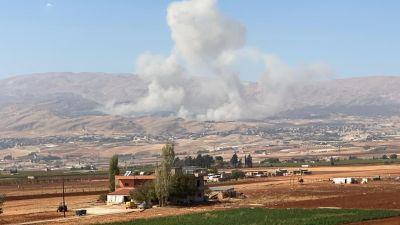
Before the meeting, Aoun and Salam met privately. At the start of the session, Aoun condemned Israeli attacks against Lebanon and said he was monitoring the situation with concerned countries and the cease-fire monitoring committee, known as the “mechanism.”
Information Minister Paul Morcos said the government called the main guarantors of the November 2024 cease-fire between Israel and Hezbollah, France and the U.S., to enforce compliance. The “mechanism,” which includes Lebanon, Israel, UNIFIL, and the two co-chairs, oversees adherence to the agreement by both parties and ensures Hezbollah’s disarmament south of the Litani River.
Morcos added that Salam stressed the importance of holding parliamentary elections on schedule in May 2026. If Parliament does not address gaps in the current electoral law — particularly Article 112, which governs expatriate voting — the government will present a draft law to resolve them.
Interior Minister Ahmad Hajjar told reporters: “What’s important is that parliamentary elections are held on schedule, as the Lebanese expect. In the coming days, the ministerial committee on elections will review the law’s details and implementation, and measures will be taken accordingly.”
Parliament Speaker Nabih Berri, quoted by MTV, said, “The government does not have the right to send a law to Parliament while there is an existing law.” He added that should the government propose amendments, they “will be considered after the eight draft laws currently on the agenda are discussed” and ruled out “any technical extension of the parliamentary elections, not even for three days.”

On Tuesday, Aoun reaffirmed that parliamentary elections will proceed “without postponement under any circumstances,” including participation by the Lebanese diaspora.
The issue has divided Parliament: 67 MPs support amending the 2017 electoral law so expatriates can vote for all 128 parliamentary seats, not just the six currently reserved, but Berri has so far refused to place the proposal on the agenda.

 Evening recap: Netanyahu announces West Bank offensive; 7 killed in Jordan church shooting; tents burned in south Lebanon
 US strike on Iran this weekend? ‘Absolutely,’ says Barrack; ‘I have no idea,’ says Trump