





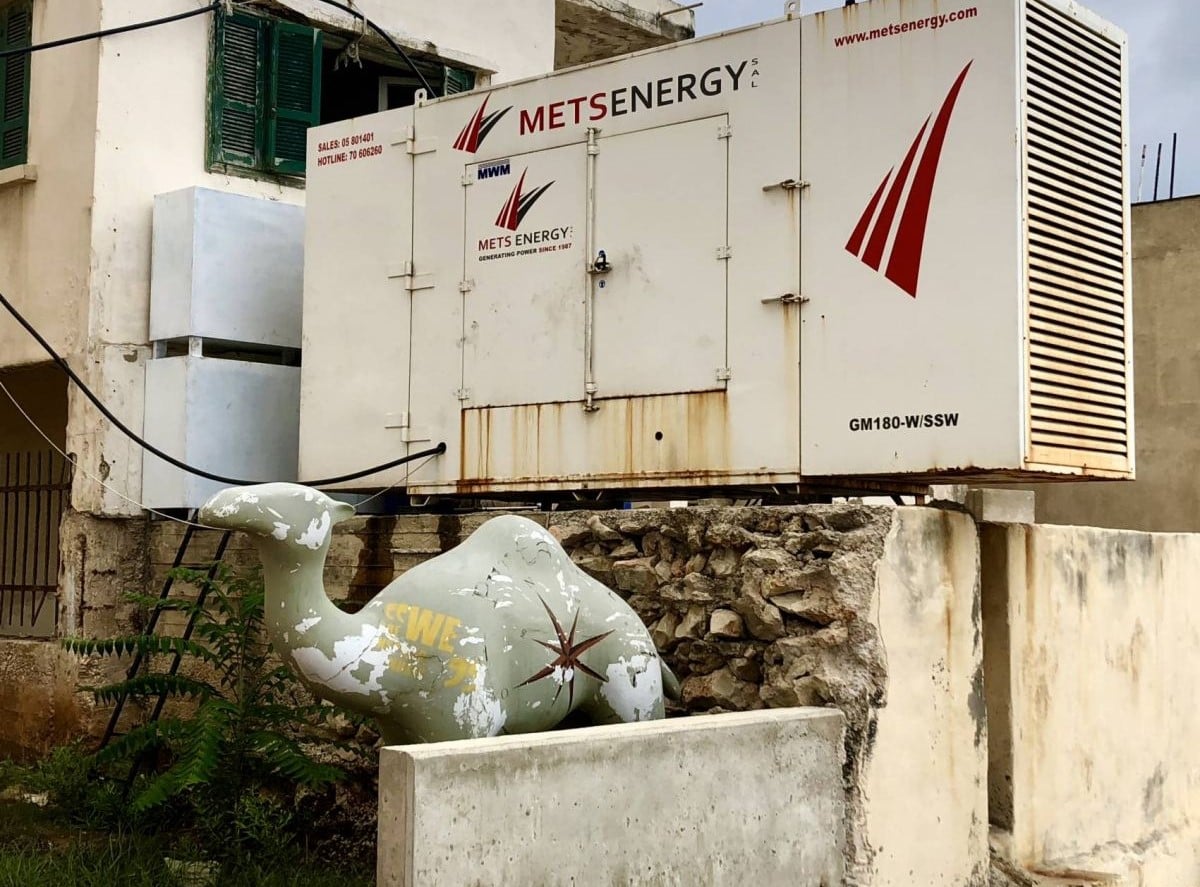
A neighborhood generator in the streets of Jounieh, in Kesrouan district. (Credit: Philippe Hage Boutros/L'Orient Today)






BEIRUT — The Association of Private Generator Owners, a nation-wide syndicate made up of a few thousand businessmen, called for the establishment of a "genuine partnership" with the state over the weekend, to supply around the clock electricity to households and supposedly reduce those households' bills, prompting a tepid response from the state-owned power utility, Électricité du Liban (EDL).
"We are not replacing the state, but filling its deficit in electricity supply," the association said in a statement released by its president, Abdo Saade.
According to Saade, this latest proposal comes after several attempts to partner up with EDL for the supply of diesel and for EDL to "buy energy produced by private generators and distribute it to the Lebanese at an appropriate price."
'Feeding the coffers of the Lebanese state'
"As part of this partnership," Saade proposed, "generator owners would ensure the collection of bills at rates set by EDL and the Energy Ministry.
"Private generators collect about 95 percent of bills, compared to only 40 percent for EDL, which would contribute to feeding the state coffers," he insisted.
A source at EDL told L'Orient Today that this collection rate was inaccurate, but still acknowledged that the public supplier is often delayed by several months in its billings. Depending on the region, subscribers are currently being asked to pay their bills for January and February, or for March and April, the source added.
Saade said he had a "very positive" phone call over the weekend with Economy and Trade Minister Amer Bisat, but did not provide any details of the call. The ministry's press office, contacted by L'Orient Today, was unable to elaborate.
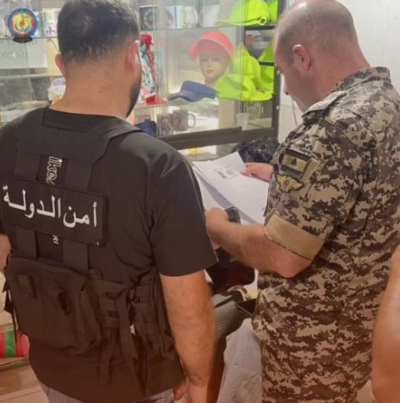
Tariffs on generator are set by the Energy Ministry at the end of each month, but it's the Economy Ministry's inspectors who are responsible for ensuring compliance. The ministry has stepped up inspections in recent weeks as the deadline for private generators owners to install meters came and went in late September.
The decision by the government to made meters mandatory dates back more than five years ago but during the crisis, Lebanon's private generator sector remained largely unregulated.
Lack of responsiveness from EDL over illegal connections
EDL issues the bills, but collection is carried out by four private contractors who have, for years, divided the country into their jurisdictions. According to a source at one of these companies, the figure put forward by the operators corresponds to that of technical and non-technical losses (theft).
"The collection rate varies depending on the region," the source said. "It's almost 100 percent in some, like Kesrouan or Metn, but much lower in other more difficult areas, such as Akkar, Hermel, and the southern suburbs of Beirut."
The source also pointed out that contractors have complained about EDL's lack of responsiveness to submitted reports and the difficulty of dealing with unregulated partnerships in the sector.
The collection rate for generator bills is so high, the source said, because operators threaten to cut power immediately in case of late payment or dispute, and subscribers have virtually no recourse or avenue through which to stake a claim.
In his statement, Saade argued, as his peers have done several times over the years, that generator owners have filled the gap left by EDL and provide a public service. However, this argument fails to address several points, including the fact that these operators acted for years without oversight, charged exorbitant prices, and often benefited from the protection of political parties with interests in the importation of hydrocarbons, generators, and related equipment.
Generators, often not equipped with the necessary filters, are also responsible for a sharp increase in air pollution in the country.
Reforms within EDL have been blocked for decades by political disputes, including the temporary-worker crisis that destabilized operations for two years in 2012.
In the end, it took the 2019 crisis for decision-makers to finally agree, three years later, to adjust EDL’s tariffs to market prices, after they had been fixed since 1994 based on a $23-per-barrel price, preventing the public supplier from being financially viable without advances from the Treasury.

 Evening recap: Netanyahu announces West Bank offensive; 7 killed in Jordan church shooting; tents burned in south Lebanon
 US strike on Iran this weekend? ‘Absolutely,’ says Barrack; ‘I have no idea,’ says Trump