






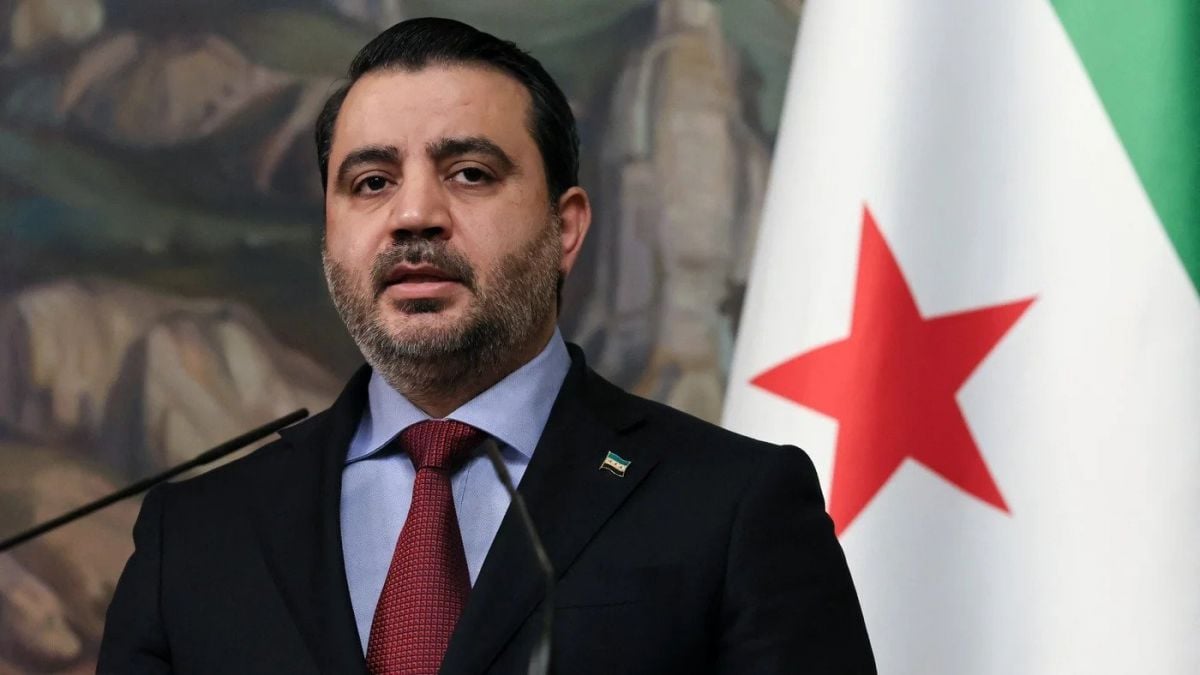
Syrian Foreign Minister Assaad al-Shaibani during a meeting in Moscow on July 31, 2025. (Credit: AFP)






Syrian Foreign Minister Assaad al‑Shaibani, who arrived in Beirut on Friday just before 11 a.m., stated that Syria wants to “overcome the obstacles of the past” in its relations with Lebanon — a turning point signaled notably by the end of the Lebanese‑Syrian Higher Council, founded in 1991 during Syria’s tutelage over Lebanon.
Shaibani’s visit to Beirut is the first by a minister from Syria’s new authorities since the fall of Bashar al‑Assad’s regime on Dec. 8, 2024. The visit is expected to allow both sides to discuss a range of issues, above all the release of Syrian detainees in Lebanon, a matter considered crucial by Damascus.

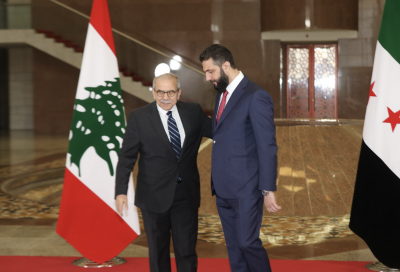
Received first at Bustros Palace by his Lebanese counterpart Joe Rajji — who had extended the invitation — Shaibani said at a press conference that his visit “expresses Syria’s new orientation toward Lebanon and reaffirms the depth of Syrian‑Lebanese relations … as well as Damascus’ respect for Lebanon’s sovereignty.”
He added that Syria seeks to “overcome the obstacles of the past and strengthen bilateral relations,” noting that both countries had been “victims of political mismanagement at certain periods.” He also thanked Lebanon for having “welcomed Syrians,” many of whom found refuge in the country since the start of Syria’s civil war in 2011.
The end of the Lebanese‑Syrian higher council
Rajji, for his part, announced that the Lebanese‑Syrian Higher Council — founded in 1991 when Lebanon was under Syrian oversight — is now part of the “past,” according to our correspondent at Bustros Palace.
He said that all future bilateral relations will henceforth be handled through “official diplomatic channels.” Earlier, Damascus had informed Lebanese authorities of its decision to suspend the Council’s activities. The Higher Council was created under the so‑called Fraternity and Cooperation Agreement of 1991, signed under President Elias Hrawi. Over time, Syria’s 2005 military withdrawal, the assassination of Prime Minister Rafic Hariri, and the opening of the Syrian Embassy in Beirut in 2008 weakened the Council’s relevance — though it continued to exist in more symbolic form.
Historical context & next steps
Rajji said he and Shaibani agreed to establish committees to address all outstanding issues between Beirut and Damascus. Syria pledged, according to Rajji, to “respect the Lebanese state and not interfere in its internal affairs,” which he described as a “positive step.”
The press conference came after private and expanded talks with the Syrian delegation, which includes Justice Minister Mazhar al‑Louais, intelligence chief Hassan al‑Salameh, Deputy Interior Secretary General Abdel Qader Tahan, and other political representatives. Shaibani later traveled to Baabda to meet with President Joseph Aoun.
Detainees and borders
This high‑level diplomatic visit — postponed several times — was preceded by missions from the Syrian Foreign and Justice ministries aimed at exploring ways to improve bilateral relations. Its importance is heightened by Damascus’ desire to resolve the issue of Syrian detainees in Lebanese prisons as part of a normalization process.
Beirut has proposed a judicial mechanism, but Syria has rejected earlier proposals, believing the matter should not be subject to negotiation. Lebanon continues to advocate for a joint judicial agreement that would allow detainees to be transferred to Syria to face judgment or complete their sentences.
In addition to the detainee issue, both countries must address border demarcation and control — a topic of particular interest to Saudi Arabia.
A Delayed Meeting & Another Visit Anticipated
Though a meeting between Syrian President Ahmad al‑Sharaa and Lebanese Deputy Prime Minister Tarek Mitri was expected on the sidelines of the Arab‑Russian Economic Forum in Moscow on Oct. 15, it has been postponed, according to a Kremlin announcement. Many participating countries are currently focused on implementing the cease‑fire in Gaza. Beirut also expects a renewed Syrian delegation visit in the coming weeks, which will include military and intelligence officials to discuss border matters and unresolved issues.
Reporting by L'Orient-Le Jour's reporter Salah Hijazi.
