





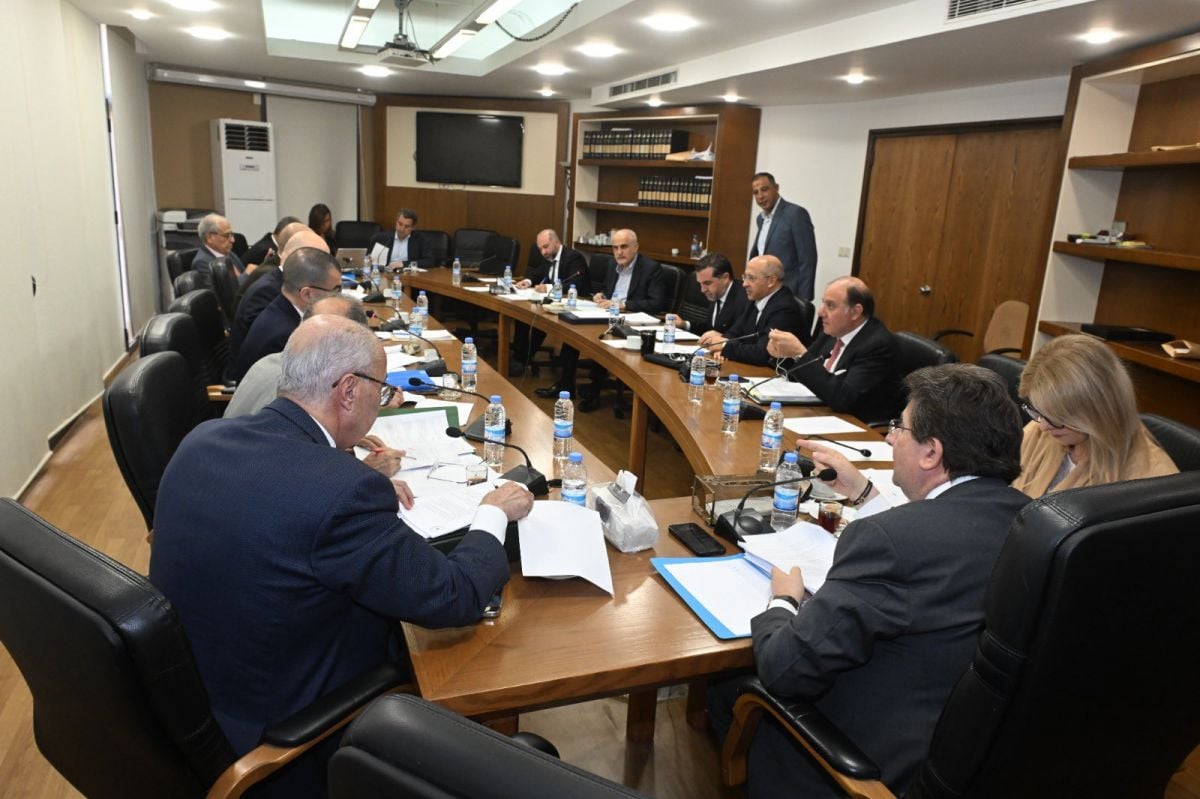
Meeting of the parliamentary sub-committee. (Credit; Ibrahim Kanaan.)






BEIRUT — The parliamentary subcommittee examining amendments to the draft law on the resolution of the banking sector approved the text on Monday, the state-run National News Agency (NNA) reported.
This draft law, considered one of the main reforms awaited from the Lebanese government, must now be adopted by the Finance Committee before being submitted to Parliament.
At the end of a meeting of the parliamentary subcommittee, chaired by MP Ibrahim Kanaan, he announced late in the afternoon that the subcommittee "has completed the study, approval, and modification of the bank resolution draft law."
"We now have a text ready to be discussed by the Finance Committee, which I will convene this week, once the report that I will begin drafting today is finalized," he added, noting that this text "will include the minutes as well as the amendments."
The draft law will be submitted to the General Assembly," he continued, noting that the Speaker of Parliament will set a date to discuss this text.
He said: "Today's session covered the bank liquidation mechanism, how to organize claims, depositors’ priority, the special court’s role and powers, appeal procedures, and the link to the financial regularity law, especially since many of its articles, including Article 36, depend on passing the deposit recovery law."
Two days ago, Finance Minister Yassine Jaber told L’Orient Today that he expected the bank resolution draft law to be submitted to Parliament before the end of the month, specifically on July 30.
“Today’s session addressed all issues related to the bank liquidation mechanism, how to organize claims, depositors’ priority over other creditors, the role, creation, and powers of the special court, the procedures for appealing decisions made by the High Banking Authority, as well as the link to the financial regularity and deposit recovery law — especially since the implementation of many of its articles, including Article 36, remains conditional on the adoption of the deposit recovery law,” said MP Ibrahim Kanaan.
Two-tier structure approved
The bank resolution law establishes the legal framework for restructuring Lebanon’s dysfunctional banking sector, in crisis since 2019. Although quickly adopted by the government, the draft law faced months of intense negotiations in Parliament. A key point of contention was criticism from Central Bank Governor Karim Souhaid, who saw the composition and powers of the proposed High Banking Authority (HBA) as undermining his authority.
During the Finance and Budget Committee’s second session on the bill, held on May 8, Kanaan announced the creation of a subcommittee to reconcile differing viewpoints and produce a “harmonized draft law.”
On July 10, Governor Souhaid presented his counterproposal to MPs, introducing a two-tier structure for the HBA instead of the single-chamber model initially proposed by the government. This revised structure, ultimately approved by the subcommittee, divides responsibilities between two chambers.
The first chamber, convened by the governor, retains the powers of the existing Sanctions Committee, including the authority to impose disciplinary measures under current legislation. The second chamber will decide the fate of banks slated for restructuring or liquidation and will oversee structural reform efforts in line with the new banking law.
The president of the Banking Control Commission (BCC) holds full voting rights in the first chamber, they may only attend the second chamber’s meetings in an advisory, non-voting capacity.
According to sources, this compromise had been negotiated in advance during several closed-door meetings between Souhaid and ministers. However, some MPs from opposition and protest movements criticized the final structure, arguing it still concentrates too much power in the hands of the Banque du Liban (BDL, central bank) governor.

 Midday recap: Hebron attack sparks Israeli crackdown, international meeting in Istanbul for regional 'de-escalation'