





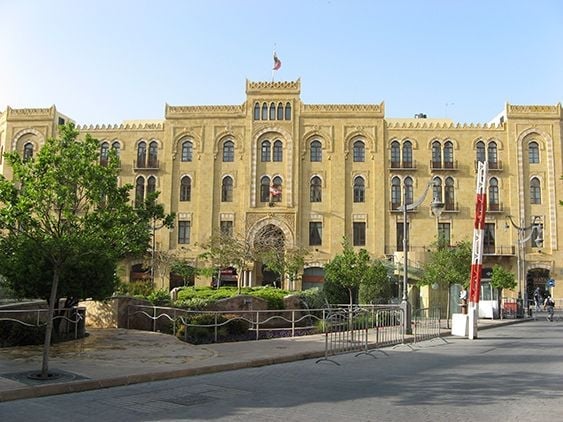
Beirut's municipality. (Credit: NNA)






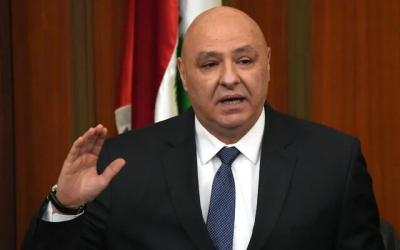
Newly elected at the Beirut Municipal Council, representative Ibrahim Zeidan was voted at the head of the municipality in the presence of Beirut Governor Judge Marwan Abboud and the newly elected municipal council members on Tuesday, according to the state-run National news Agency.
Ragheb Haddad was elected as MP after securing 13 votes.
Zeidan is aligned with Fouad Makhzoumi, while the mayor is close to the Lebanese Forces.
Facing a list including candidates representing a coalition of all major political parties in the capital, the list "Beirut Loves You," which was supported by MP Nabil Badr, of Jamaa Islamiya – and probably the Future Movement – was able to elect one of its members, Mahmoud al-Jamal, to the municipal council in Beirut.
The general won his seat at the expense of Elie Andrea, the outgoing vice-president of the municipal council, known to be close to the Greek Orthodox Metropolitan of Beirut, Elias Audi. The Islamic-Christian parity was no longer in place for the first time since 1998, since 13 of the elected municipal councilors are Muslims (9 Sunnis, 3 Shiites and one Druze), against 11 Christians.
At the level of the municipality of Beirut, the structure of local governance is particular: The authority of the elected mayor is subordinated to a state representative affiliated with the Interior Ministry.
Executive power within the municipality is vested in the mohafez, while the 24-member municipal council holds legislative power.
The council is chaired by a president, who cannot implement decisions adopted by the council without the governor's approval. In addition, the entire capital is represented on a single city council.
By contrast, for the legislative elections, Beirut is divided into two constituencies.
The municipal elections had started on May 4, and held throughout the four weekends of the month, with the voting in Beirut taking place on May 18.
Before that, the last vote was in 2016, and since municipal councils serve a 6-year term, their mandate should’ve expired in 2022. But instead of new elections, Lebanon got several delays mainly due to the 2019 financial meltdown, the 2020 Beirut Port explosion, and the usual administrative chaos.

 Evening recap: Netanyahu announces West Bank offensive; 7 killed in Jordan church shooting; tents burned in south Lebanon
 US strike on Iran this weekend? ‘Absolutely,’ says Barrack; ‘I have no idea,’ says Trump