







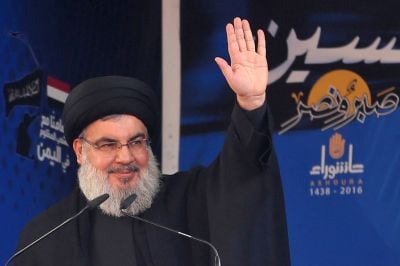
Hezbollah Secretary General Hassan Nasrallah during the yearly anniversary of the prophet's birth, Oct. 2, 2023. (Credit: Al-Manar)






BEIRUT — In an interview with Iran’s state-owned Press TV, Zainab Nasrallah, daughter of Hezbollah’s former Secretary-General Hassan Nasrallah, disputed claims that her father lived in underground bunkers. She revealed details of his daily life before his assassination in an Israeli airstrike on Beirut's southern suburbs on Sept. 27, four days after Israel intensified its war against Hezbollah.
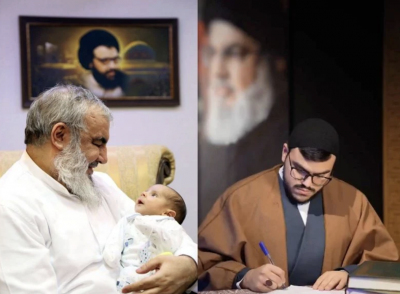
"Sayyed Hassan never used these underground areas in his daily life. They were built for wartime use, and until the latest Israeli aggression on Lebanon began in September, he resided in apartments no lower than the 5th, 6th or 8th floors,” Zainab said.
She emphasized that her father’s lifestyle was similar to that of any ordinary person. “He would drive his car with his comrades to observe the situation outside. He was never in hiding. He would take trips around Dahiyeh [Beirut's southern suburbs] to check on the people, hospitals, mosques and shops, ensuring everything was okay,” she added.
'We saw him only a few times a year'
Zainab recounted how her father’s "immense responsibilities and security concerns" limited family interactions. “We met him only a few times a year ... but those moments were precious,” she told Press TV.
“We would gathered as a family — children and grandchildren —and enjoy wonderful times together. He would inquire about each of us and ensure that we were doing well ... The grandchildren would sometimes argue over who would sit next to him, occasionally getting loud. When we tried to calm them down or asked them to stop playing for a while, he would say, ‘It’s okay; they are kids who need to play happily, release energy, and make noise.’”
She noted that family discussions were primarily centered around religious topics, with little focus on politics unless pressing issues arose and the family "sought to gain a better understanding."
'A loving father'
Zainab described Nasrallah as a “loving father, a well-mannered individual and a deeply affectionate human being, who was filled with genuine empathy for those around him."
She added that when her father was appointed the secretary-general of Hezbollah following the assassination of his predecessor sayyed Abbas Musawi in February 1992, the family felt a “heightened sense of responsibility knowing that he was now a transnational leader followed by millions globally."
When he assumed this role, "we understood we would see him less frequently and prayed for his safety, for he was not only our father but the father of an entire nation,” she added.
She expressed pride in her father’s sacrifices, including "his personal life, his young son Hadi who was martyred, and himself for the sake of the people and the cause.”
Nasrallah's eldest son, Hadi, was killed by the Israeli army in 1997 in southern Lebanon. At the time, the Israeli army kidnapped his body, and it was later recovered in a 1998 prisoners exchange deal with Israel.
Zainab asserted that her father’s martyrdom had only strengthened the resistance movement. “The martyrdom of Sayyed Hassan Nasrallah has fueled the fight against Israeli occupation and its Western hegemonic backers,” she said.
More than 4,000 people were killed in Lebanon during the war between Hezbollah and Israel, which started in October 2023 in parallel with the war in Gaza. A cease-fire, brokered by the U.S. and France, went into effect on Nov. 27. Since the cease-fire agreement, at least 34 people have been killed in Israeli fire.

