


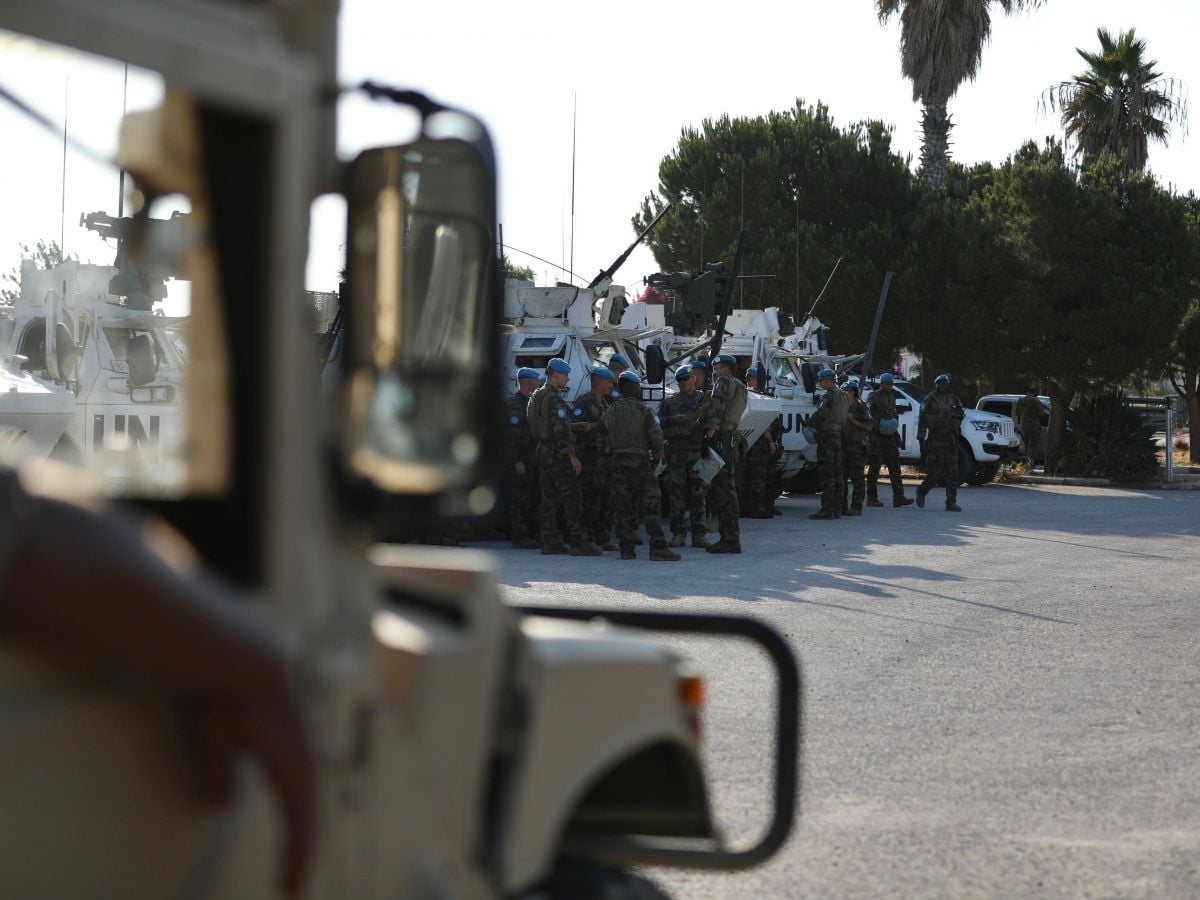
French peacekeepers from the UNIFIL French contingent in Sour, July 2025. (Credit: Matthieu Karam / L'Orient-Le Jour)






German Foreign Minister Johann Wadephul announced Saturday that Germany and France will launch a joint initiative on Lebanon aimed at increasing ‘’the chances of peace in the Near and Middle East,’’ as the mandate of the U.N. Interim Force in Lebanon, or UNIFIL, expires in December.
’’Together with France, we want to define a common policy for Lebanon to increase the chances of peace in the Near and Middle East,’’ Wadephul told the German daily Tagesspiegel ahead of the upcoming Franco-German Council of Ministers.
The announcement comes as European countries step up efforts to prepare for the post-UNIFIL period. No agreement has yet emerged on the institutional framework of a possible replacement mechanism, while Israeli forces continue to occupy more than 600 square kilometers in southern Lebanon and carry out demolition operations in villages under their control.
On June 23, French President Emmanuel Macron told Lebanese President Joseph Aoun that France had begun consultations with several countries to explore ‘’the possibilities of deploying an international force’’ in southern Lebanon. Days later, France and Italy announced plans to establish a multinational coalition to prepare for the post-UNIFIL era.
Macron said the proposed mechanism, to be coordinated with the United Nations and the European Union, would aim to strengthen Lebanon’s sovereignty, support the Lebanese army and prevent Lebanese territory from becoming a launchpad for regional escalation. Italian Prime Minister Giorgia Meloni said an international presence was needed to avoid ‘’an extremely dangerous security vacuum’’ and announced plans for an international conference bringing together European and Middle Eastern partners. Several European Union member states, including Spain, have already expressed support for the initiative.
UNIFIL’s mandate expires in December and will not be renewed in its current form. France and Italy, two of the mission’s largest contributors, are seeking to shape what follows. The force currently includes about 7,500 peacekeepers from around 50 countries deployed along the 120-kilometer Blue Line, the de facto border between Lebanon and Israel.
Turkey has also signaled its willingness to support Lebanon through military and political assistance, backing for the Lebanese army and participation in a possible NATO-led force in southern Lebanon to replace UNIFIL, including a substantial Turkish contingent.
