





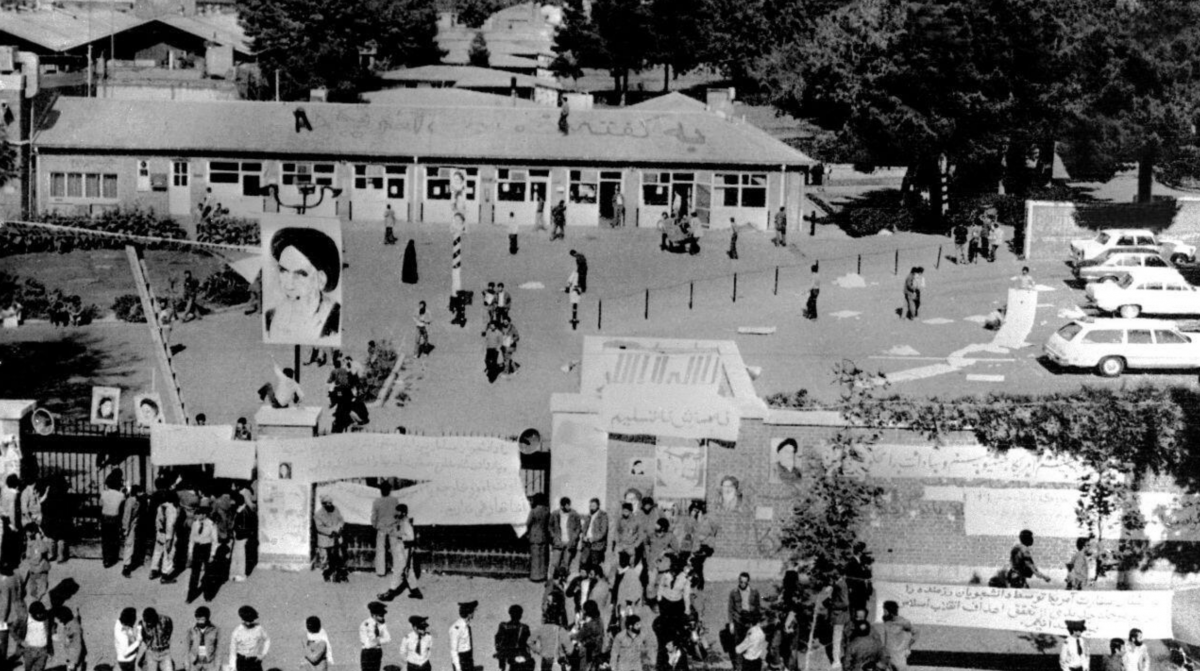
View of the United States embassy compound in Tehran on November 5, 1979, the day after the assault by supporters of Ayatollah Khomeini on the building and the taking of hostages. (Credit: archive photo/ AFP)






In the aftermath of WWII, Washington was not yet seeking to rule the Middle East. At times, it even hoped that London and Paris would continue to shoulder part of the burden there. But the old order was breaking apart faster than expected. In Arab capitals, the words "independence," "neutrality," and "national dignity" were gaining new strength. In the United States, they were soon translated into another language: that of the Cold War. "It was oil interests that initially motivated U.S. involvement in the Middle East, particularly in the (Arab-)Persian Gulf region," says David Lesch, professor of history at Trinity University in San Antonio, Texas. "However, American engagement accelerated after the war due to the weakening of its allies, Great Britain and France, and the beginning of the...
In the aftermath of WWII, Washington was not yet seeking to rule the Middle East. At times, it even hoped that London and Paris would continue to shoulder part of the burden there. But the old order was breaking apart faster than expected. In Arab capitals, the words "independence," "neutrality," and "national dignity" were gaining new strength. In the United States, they were soon translated into another language: that of the Cold War. "It was oil interests that initially motivated U.S. involvement in the Middle East, particularly in the (Arab-)Persian Gulf region," says David Lesch, professor of history at Trinity University in San Antonio, Texas. "However, American engagement accelerated after the war due to the weakening of its allies, Great Britain and France, and the beginning of the...

 7 p.m. recap: Iran warns Egypt, Israeli soldiers vote in south Lebanon, Haret Hreik responds to Kataeb