






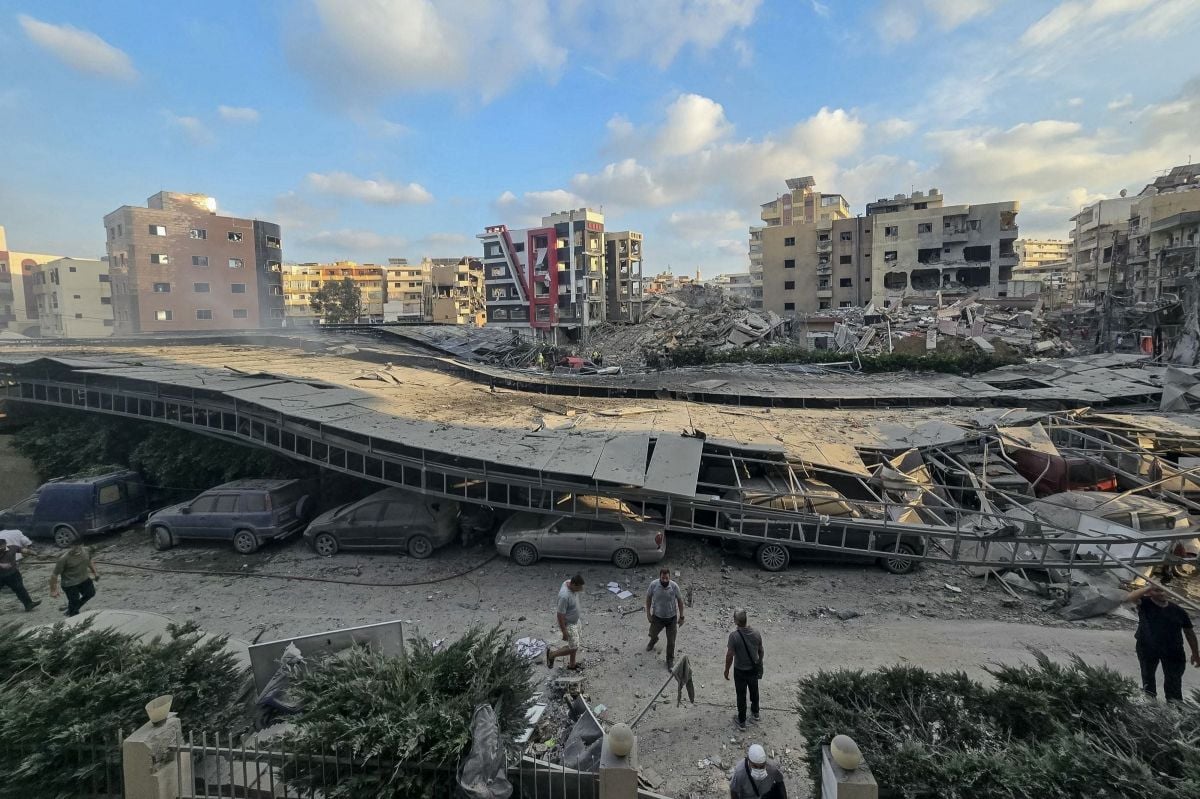
Rubble in the parking lot of Jabal Amel Hospital after Israeli strikes, in Sour, on June 1, 2026. (Credit: Kawnat Haju/AFP)






BEIRUT — Health Minister Rakan Nasreddine said during a tour of hospitals in the Sour district on Tuesday that “any reconstruction project for public and private hospitals is a top priority."
Since the resumption of the war between Hezbollah and Israel on March 2, Israeli strikes have damaged 17 hospitals and forced the closure of three. According to the latest figures published on Monday by the Health Ministry, Israeli attacks killed 135 health workers and wounded 406 others in Lebanon in the same period.
On Tuesday, Nasreddine, accompanied by a delegation, toured hospitals in Sour to assess the impact of recent Israeli strikes, evaluate damage to healthcare facilities, and identify their needs for the coming phase, according to the state-run National News Agency (NNA).
The visit was also attended by Amal Movement MPs Ali Khreis, Inaya Ezzeddine, and Hassan Ezzeddine.
On June 11, an Israeli strike near Hiram hospital wounded 10 staff members and caused material damage. Around 10 days earlier, Israeli strikes near Sour’s Jabal Amel Hospital killed at least four people, the Health Ministry said, and wounded 127, including 39 members of the hospital’s medical, nursing, and administrative staff. In the same period, an Israeli strike on Tibnin Hospital (Bint Jbeil district) injured 11, including a doctor and five medical personnel, and caused significant damage to the building.
The minister began his tour at Hiram Hospital in Abbasieh, where board chairman, Salman Eidibi, said: "Hiram Hospital's buildings sustained direct damage, and the war also affected its staff, with a number of doctors, nurses, and workers injured while carrying out their humanitarian duty with courage and dedication."
He expressed hope that damaged hospitals in the South would receive special attention for rapid rehabilitation and development, enabling them to continue serving their communities and prepare for any future emergency.
'Systematic Israeli attacks'
For his part, Nasreddine praised Hiram Hospital, noting that it had “offered martyrs on the altar of the nation as a result of systematic Israeli attacks.”
The minister then visited Jabal Amel Hospital. There, MP Ali Khreis said that “all hospitals in the South are symbols of resilience and resistance against the Israeli enemy."
Nasreddine reiterated that “the attacks targeting the healthcare sector were systematic, but the message was clear: hospitals continue to serve our people despite all circumstances." "Hand in hand, we will rebuild them in Sour, Nabatieh, Mais al-Jabal, Marjayoun, and across the entire South."
The health minister then headed to the Lebanese Italian Hospital. From there, he said that financial dues were being followed up with the Ministry of Finance to ensure hospitals receive their payments, and confirmed ongoing work on donations. He reiterated that “any reconstruction project for public and private hospitals is a top priority, as are infrastructure, healthcare teams, and damaged ambulance and firefighting equipment, which must be compensated, ” adding that they would "place all our capabilities, however modest, at their disposal."
Finally, at Tibnin Governmental Hospital, Nasreddine was received by Amal Movement MP Ayoub Hmeid, hospital director Mohammad Hamadeh and the village mayor Nabil Fawaz. He toured the hospital’s departments and surroundings areas damaged by Israeli airstrikes.
He also announced “the provision of a financial grant worth $250,000 to the hospital’s administration to enable it to carry out its role in providing healthcare to the steadfast residents.”
In early June, the Israeli army accused Hezbollah of using Tibnin governmental hospital, in the Bint Jbeil district of south Lebanon, and of "transferring its wounded fighters" there — claims swiftly denied by the Lebanon's Health Ministry and the hospital’s management, who described them as "fabrications" and "false allegations."
South Lebanon has seen relative calm since June 20, after the U.S. pressured Israel to halt its offensive in Lebanon to avoid derailing negotiations with Iran. Six days later, Lebanon and Israel reached a framework agreement following direct negotiations in Washington. The agreement, which begins with an Israeli withdrawal from two "pilot zones" in occupied southern Lebanon and their handover to the Lebanese Army, was strongly criticized by Hezbollah and the Amal Movement.

 8 p.m. recap: Israel again threatens Beirut’s south suburbs; 2 ships hit near Hormuz; Riyadh football matches canceled