



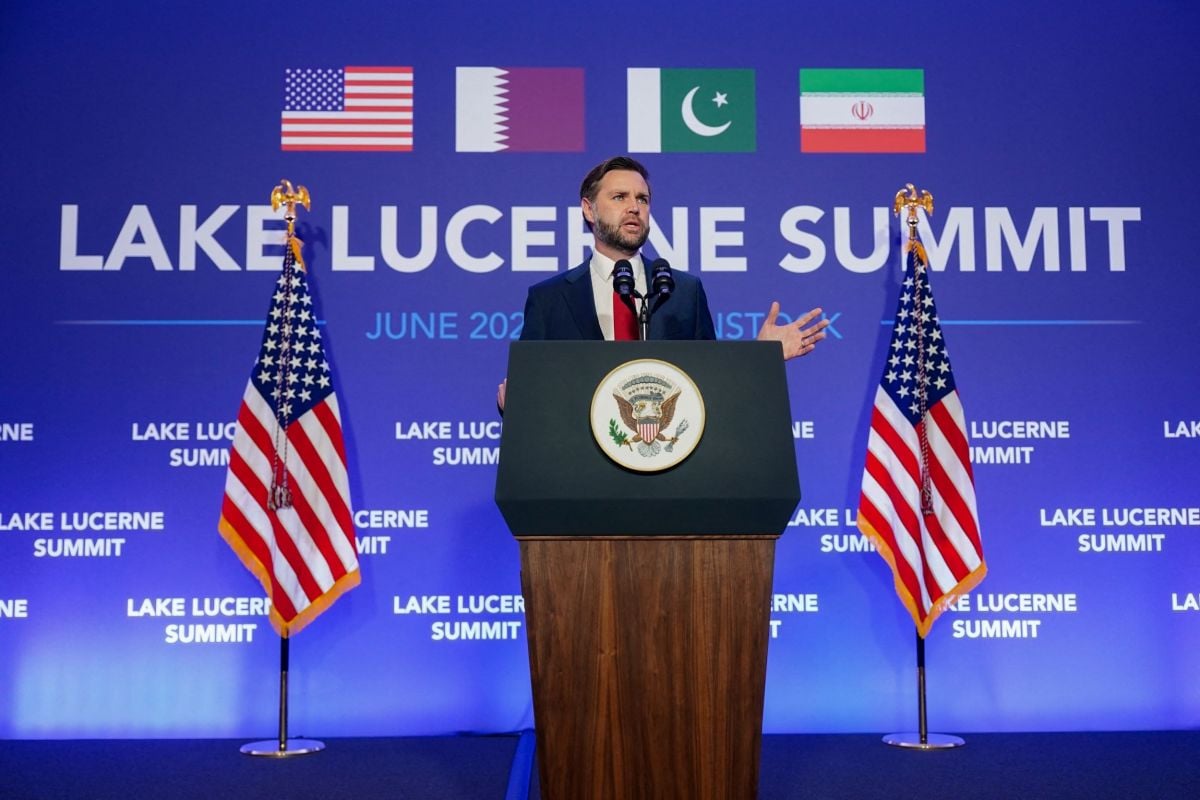
U.S. Vice President JD Vance addresses the media after high-level talks between the United States and Iran at the Lake Lucerne summit in Switzerland, June 22, 2026. (Credit: Nathan Howard/AFP)






BEIRUT — Responding to a letter sent by Lebanese Forces leader Samir Geagea on Monday, U.S. vice president, JD Vance, responded on Tuesday, saying that the "contacts the U.S. is conducting with Iran regarding Lebanon are not aimed at granting Tehran any role in determining Lebanon’s future or influencing its decisions, but rather at ensuring Tehran exerts pressure on Hezbollah to comply with its commitments and obligations."
In his letter, Geagea had urged Vance to completely separate the Lebanese issue from negotiations with Iran, following talks in Switzerland where the Hezbollah-Israel front took center stage. Geagea's letter came two days after Vance addressed Lebanese Christians, saying that if they have been attacked in the current war with Israel, it is because Hezbollah fighters "hid among them, provoking a response by the Israeli army."
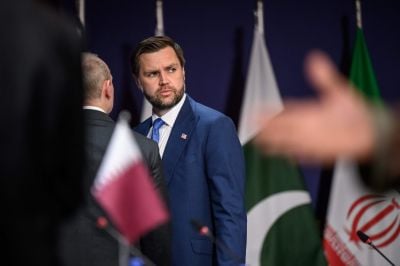
Vance stressed on Tuesday that the United States views President Joseph Aoun and the Lebanese government as the "sole legitimate authority in Lebanon," and that "Washington intends to work with the Lebanese state in a way that enables it to protect its sovereignty and consolidate its legitimate authority."
Vance further noted his ongoing follow-up with U.S. officials concerned with the Lebanese file, affirming the "U.S. administration’s interest in developments in Lebanon and its support for the country’s sovereignty and legitimate institutions."
On Sunday, the Hezbollah official in charge of relations with Christian entities and parties, Mohammad Khansa, denounced in a statement the "provocative remarks" by Vance a day earlier, which "show the extent of the racist and sectarian mentality prevailing in the White House."
Lebanon was a central point of negotiation in talks between Iran and the United States, which began Sunday in Switzerland, leading to the creation of a "deconfliction" mechanism for Lebanon, though its details remain unclear. This comes as Lebanese authorities have initiated their own process of direct negotiations with Israel — rejected by Hezbollah — under U.S. auspices. Many have argued that including the Lebanese issue in these regional negotiations has allowed Iran to regain, at least apparently, leverage over the matter.
During the war that re-escalated on March 2, Israel carried out a ground invasion of Lebanon, occupying nearly 6% of Lebanese territory, in a strip about 10 kilometers wide along the southern border. Israel leveled nearly 70 villages in this so-called "buffer zone," rendering them uninhabitable in a Gaza-like campaign of ethnic cleansing. The area also includes several Christian areas, largely spared by Israeli strikes, the inhabitants of which have mostly chosen to stay despite the fighting.

 7 p.m. recap: 1 person killed near border with Lebanon; 200 kilos of explosives carried by mules; Riyadh shuts its airspace