





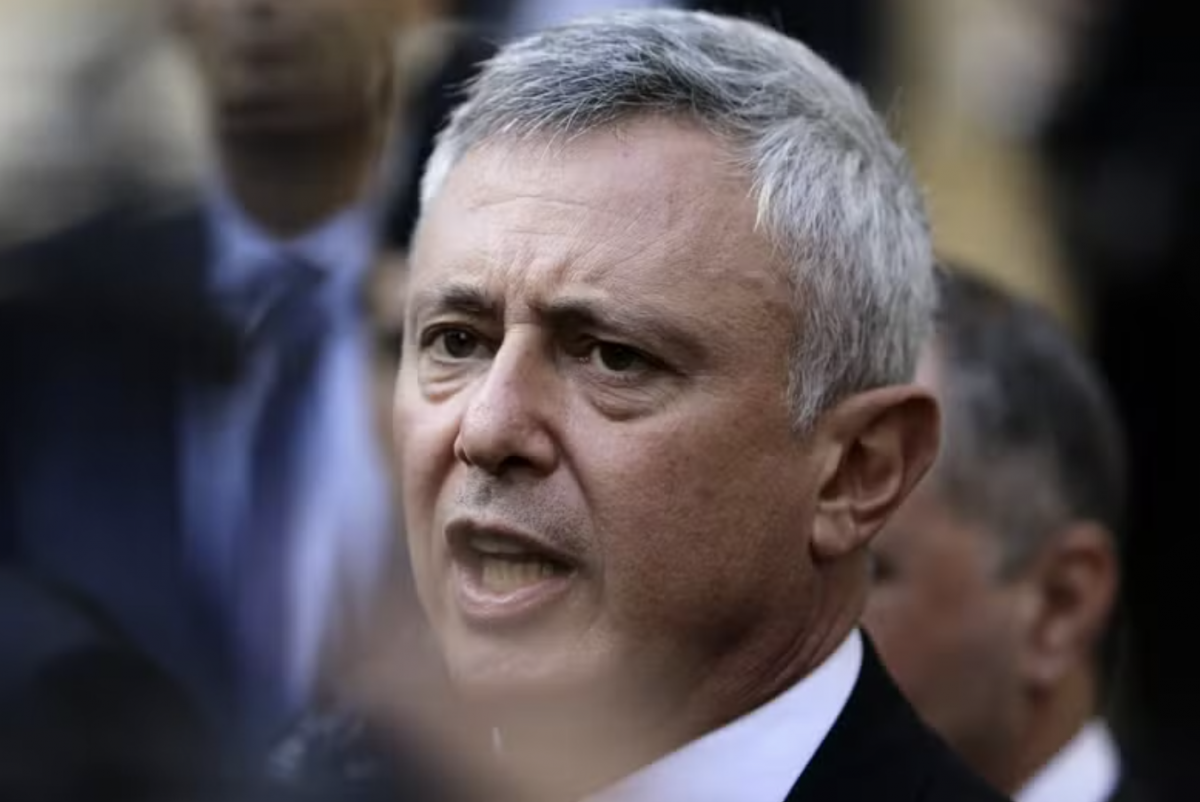
Marada leader Sleiman Frangieh in Beirut, in October 2016. (Credit: AFP file photo)






The United States on Thursday added Marada Movement leader Sleiman Frangieh, as well as Hezbollah’s deputy head of the political bureau, Mahmoud Qomati, to the Treasury Department’s Specially Designated Nationals and Blocked Persons (SDN) sanctions list (OFAC), as part of its measures targeting individuals and entities linked to Hezbollah.
Another individual, Wael Constantine, based between Iraq and Lebanon, was also added to the list. "The Lebanese officials designated today have used their influence to hinder the peace process in Lebanon and delay Hezbollah’s disarmament," the Treasury stated in a release.
In its statement, the Treasury said, "Hezbollah relies on a network of officials to maintain its power and exert its influence at every level of Lebanon’s political and security apparatus."
In this context, it noted that Frangieh "has used his strategic alliance with Hezbollah to serve his own political ambitions." "Frangieh accepted financial support from Hezbollah in exchange for backing Hezbollah’s efforts to target the parliamentary seats of reformist and independent members during Lebanon’s legislative elections," the Treasury accused.
He is designated "for having provided, directly or indirectly, material assistance, sponsored or provided financial, material, or technological support, or goods and services to or in support of Hezbollah."
"U.S. sanctions do not concern us in any way, especially since what we are accused of is supporting a component of our country in the face of a Zionist enemy that occupies our land and kills our people. We have always been and remain in favor of peace, but opposed to surrender. This decision will not affect our position; it will only reinforce our conviction," Frangieh reacted on X.
العقوبات الأميريكية لا تعنينا لا من قريب ولا من بعيد خصوصاً وأنّ تهمتَنا أننا مع مكوّن من بلدنا ضدّ عدوّ صهيوني يحتلّ أرضنا ويقتل شعبنا. ونحن كنّا ولا نزال مع السلام ولكن ضدّ الاستسلام وهذا التصرّف لن يؤثّر على رأينا بل يزيدُنا قناعةً به.
— Sleiman Frangieh (@sleimanfrangieh) June 18, 2026
Regarding Qomati, the U.S. Treasury said he "coordinates the smuggling of cash from Iran for Hezbollah and advocates for Hezbollah’s interests in Lebanon." He is designated "for having acted or purported to act for or on behalf of Hezbollah, directly or indirectly," the statement added.
Washington specified that these designations were made under Executive Order 13224, as amended by Executive Order 13886, targeting financial and logistical support networks for "terrorist" organizations under the secondary sanctions regime relating to Hezbollah.
"Hezbollah must disarm for Lebanon to achieve a safe and prosperous future," said Treasury Secretary Scott Bessent. "The Treasury will continue to target Hezbollah’s financial networks and hold accountable those who enable the group to undermine the Lebanese state and threaten prospects for lasting peace."
Several companies were also targeted by these sanctions, including al-Ahd Company for Trade and Investment (Syria), al-Shafa Administrative Services (Iraq), Globe International SPC (Oman), Globe Technology Providers (Lebanon), and Tyke SAL (Lebanon). The two Lebanon-based companies are, according to Washington, associated with individuals already targeted by the United States, including Alaa Hassan Hamieh, Bahaa Addin Hachem and Mohammad Hassan Hamieh.
The Treasury also detailed what it described as a financial network centered on Alaa Hamieh and Bahaa Addin Hachem, co-owners of Globe Technology Providers SARL (Globe SARL). This Lebanese company is described as the technical branch of al-Ahd Company for Trade and Investment, a business established in Syria and presented by Washington as linked to Hezbollah.
According to U.S. authorities, Mohammad Bazzal, described as an official in Hezbollah’s financial team, played a decisive role in early 2024 in facilitating contracts between Globe SARL and the former Syrian regime of Bashar Assad.
The Treasury said that Damascus agreed that a company sanctioned by Washington, G.M. Farm, described as affiliated with Hezbollah’s financial apparatus, would supply and operate equipment through its local agent, al-Ahd Company, a business owned by Yaser Hussein Ibrahim, described as close to the Assad regime.
These contracts reportedly amounted to almost $10 million. Profits from these projects were then distributed among the Talaqi group, which Washington describes as controlled by Hezbollah, al-Ahd Company, and Globe SARL, which is also said to be involved in other income-generating activities for Hezbollah’s financial network.
The U.S. Treasury also stated that Alaa Hamieh controls Globe International SPC, a company based in Oman and presented as a subsidiary of Globe SARL. Its bank accounts reportedly processed payments totaling several hundred thousand dollars, notably for projects linked to Hezbollah and other enterprises already subject to U.S. sanctions.
Just under a month ago, the U.S. Treasury announced sanctions targeting nine individuals accused of supporting Hezbollah. For the first time, two active-duty Lebanese officers were directly targeted by Washington: the head of the national security department at General Security, Brig. Gen. Khattar Nassereddine, and the head of the southern suburbs branch in military intelligence, Col. Samir Hammoud. U.S. authorities accuse them of sharing intelligence with Hezbollah.
Other sanctioned figures included three Hezbollah MPs and officials: Hassan Fadlallah, Ibrahim Moussawi, and Hussein Hajj Hassan, as well as former minister and party executive council chief Mohammad Fneich. Iran’s ambassador to Beirut, Mohammad Reza Shaibani, and two Amal Movement officials, Ahmad Assaad Baalbaki and Ali Ahmad Safawi, were also targeted in the same measures.

 2 p.m. recap: Pit discovered north of Beirut, Hezbollah warns of ‘imminent explosion’ in the streets, settlers arrested in West Bank